Amazon Built 1,000 Leo Satellites. Service Comes Next
Amazon has built its 1,000th Leo satellite, but 396 are in orbit. Here is what production, launches and ground work mean for its planned 2026 internet debut.

Written by AI. Bob Reynolds
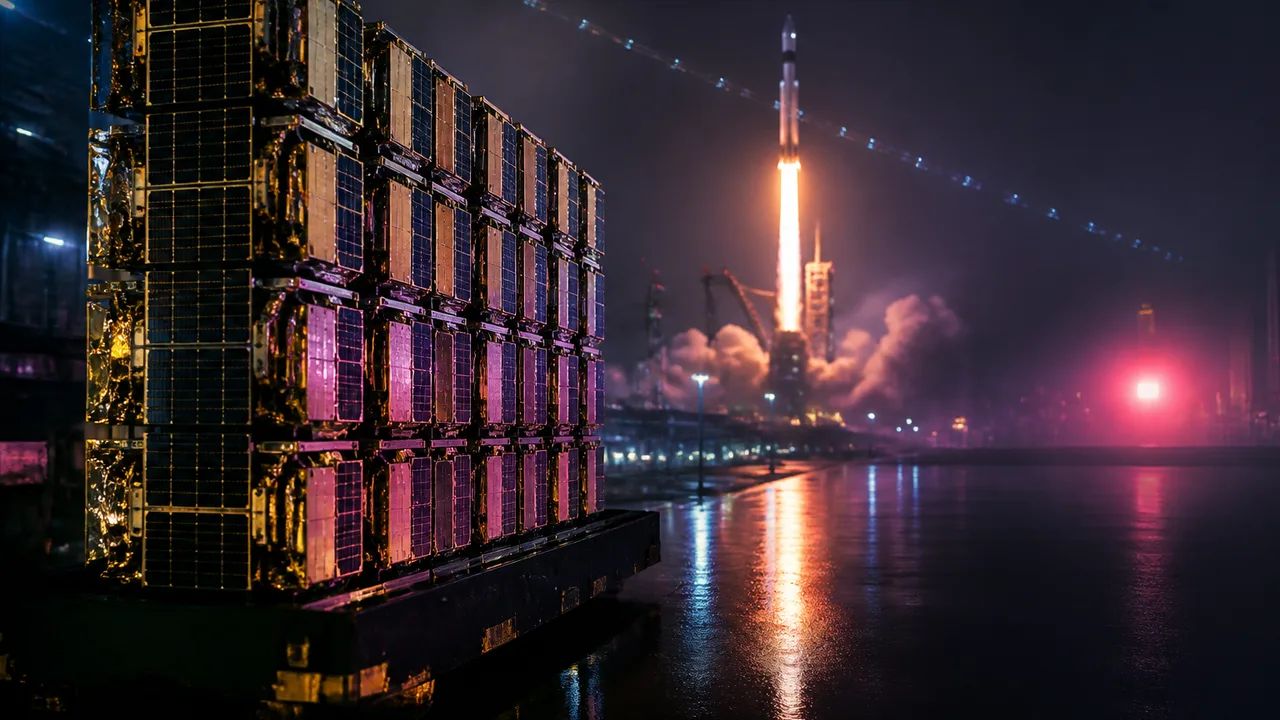
Amazon has built its 1,000th Leo broadband satellite at its factory in Kirkland, Washington. The company says 396 are in orbit, and it plans to start offering initial service in 2026. Those numbers describe different jobs. A satellite leaving the production line still needs a launch; one in orbit may still need to reach its final position; a network of positioned satellites still needs work on the ground before customers can use it.
Amazon is preparing to enter a satellite internet market where SpaceX’s Starlink has a substantial head start. Its immediate question is whether a growing stock of spacecraft can become a working service on the timetable its executives have set. Its longer question is how quickly that service can reach more places and withstand interruptions.
The Work After the Factory
Rajeev Badyal, who leads Amazon’s satellite effort, told Ars Technica that the satellites already in orbit are enough for initial service. Chris Weber, Amazon’s vice president of business, put the on-orbit count at 396 and said the company was still raising satellites to their final positions and doing ground work. Weber said the plan was to launch initial service in 2026. That is Amazon’s assessment of readiness and its target date, rather than a service customers can yet buy.
Badyal described subsequent flights as adding coverage and resilience. On Amazon’s account, the next rocket is not necessarily the gate that must open before the first customer connects. It is part of the route to a larger, sturdier network. Meanwhile, positioning spacecraft already aloft and completing the ground work remain on the path to opening service. A launch can deliver equipment to space; it cannot finish those other jobs for Amazon.
Production director Paul Palcisco described another handoff. Amazon paces its factory against its model of launch frequency and keeps a buffer of completed satellites so a rocket does not arrive without a payload ready. Building ahead of launches can protect a launch opportunity from a factory delay. It also means a rising production total, by itself, cannot tell a prospective customer when service will reach an address. To answer that, Amazon would have to turn manufactured spacecraft into deployed capacity and make the rest of the network ready for use.
“1,000 built” is a cumulative production milestone. “396 in orbit” describes a different stage at a particular time. The gap between them cannot simply be labeled a pile of finished satellites waiting for rockets: the production figure does not specify where every spacecraft went or its present status. For now, the company’s account of orbital positioning and ground work is more informative about the first service launch than the factory total alone.
Why the Factory Took Years
Amazon has been developing its low-Earth-orbit broadband constellation for the better part of a decade. Palcisco said the company took over an empty 170,000-square-foot building in December 2022 and turned it into a satellite factory over the following 15 months. The unusual complication was that the team was building the factory while engineers were still designing the spacecraft. Palcisco said the first qualification satellite taught the team what it needed to change, including changes to a facility it had just opened.
That sequence explains why making the 1,000th unit deserves attention. Producing a working prototype and producing spacecraft repeatedly are different manufacturing problems. Badyal described finding quality and reliability issues as the design met production. Palcisco said a satellite takes several weeks to pass through manufacturing and testing, even as completed units can come off a production line at a faster pace because multiple satellites are in process. A factory that can keep launches supplied is an achievement built from those revisions, rather than a machine that appeared fully formed when the first rocket was booked.
It also explains the lag a customer sees. Amazon had to design a satellite, establish a way to make many of them and arrange for them to reach orbit before it could offer a service at scale. Reaching a production milestone shows progress on the middle task. The remaining work sits at the joins between tasks, where a schedule can be harder to judge from a single headline number.
The Comparisons Worth Making
Starlink offers a scale check. On September 22, Amazon had around 400 satellites in orbit and SpaceX more than 11,000. Those are rounded, dated figures, not a comparison of service quality. They do show why Amazon’s 1,000th built satellite should not be read as parity with Starlink’s deployed fleet. A larger fleet does not answer every question about price, coverage or customer experience, but it gives SpaceX a substantial lead on the measure of spacecraft already aloft.
Amazon has another route into the market besides inviting individual households to sign up. It is working with Uzbekistan’s Uztelecom to extend connectivity to remote areas through an existing internet provider. In September, Leo was testing with employees and selected enterprise customers, while public service had yet to launch. The partnership illustrates a practical first use for a new satellite network: filling gaps alongside infrastructure that already serves communities. It does not supply a date when a household in Uzbekistan will be connected.
Eutelsat’s OneWeb program supplies a different comparison. Airbus completed the first 32 new OneWeb satellites in Toulouse, and they were being prepared to ship for a SpaceX launch as part of Eutelsat’s planned program of 669 new spacecraft. Eutelsat is renewing a network that already serves customers; Amazon is preparing its initial Leo service. Their batch sizes therefore say little about which company is closer to its own customer goals. Both cases show the same handoff: finishing a spacecraft and booking a ride for it are separate steps.
For a potential Leo customer, the next useful milestones are more concrete than another factory count. Has Amazon put additional satellites in orbit and moved the existing fleet into position? Has it completed the ground work needed to offer the initial service it plans for 2026? Where can people or businesses actually order it, and what can they use it for? Amazon’s 1,000th satellite answers a question about what its factory can make. Its first paying connections will answer a different one.
More Like This
SpaceX Launches 27 Starlink Satellites, Lands Booster at Sea
A Falcon 9 launched 27 Starlink satellites from Vandenberg on Sept. 6. What the routine flight reveals about the industrial pace of low-Earth orbit.

SpaceX Hits 600 Falcon 9 Booster Reuses
SpaceX reached 600 flight-proven Falcon 9 booster launches on July 13-14, 2026. Here's what that number actually means for spaceflight economics.

Grok 4.5 Benchmarks, Costs, and Coding Performance
Grok 4.5 is cheaper than GPT 4.5 and Claude Opus 4 — but does that make it the right coding model? A clear-eyed look at what it actually delivers.

Booking Holdings CEO on AI, Scale, and Survival
Booking Holdings CEO Glenn Fogel survived the dot-com crash and now faces the AI wave. His take on moats, agentic travel, and job displacement is worth your time.