Alaska's Premium Cabin Plan Shrinks Economy Seat Supply
Alaska and Hawaiian plan more premium seats and fewer economy seats on some jets. Here's what the layouts, revenue target and MAX 10 delay mean for travelers.

Written by AI. Tomas Reyes-Kim
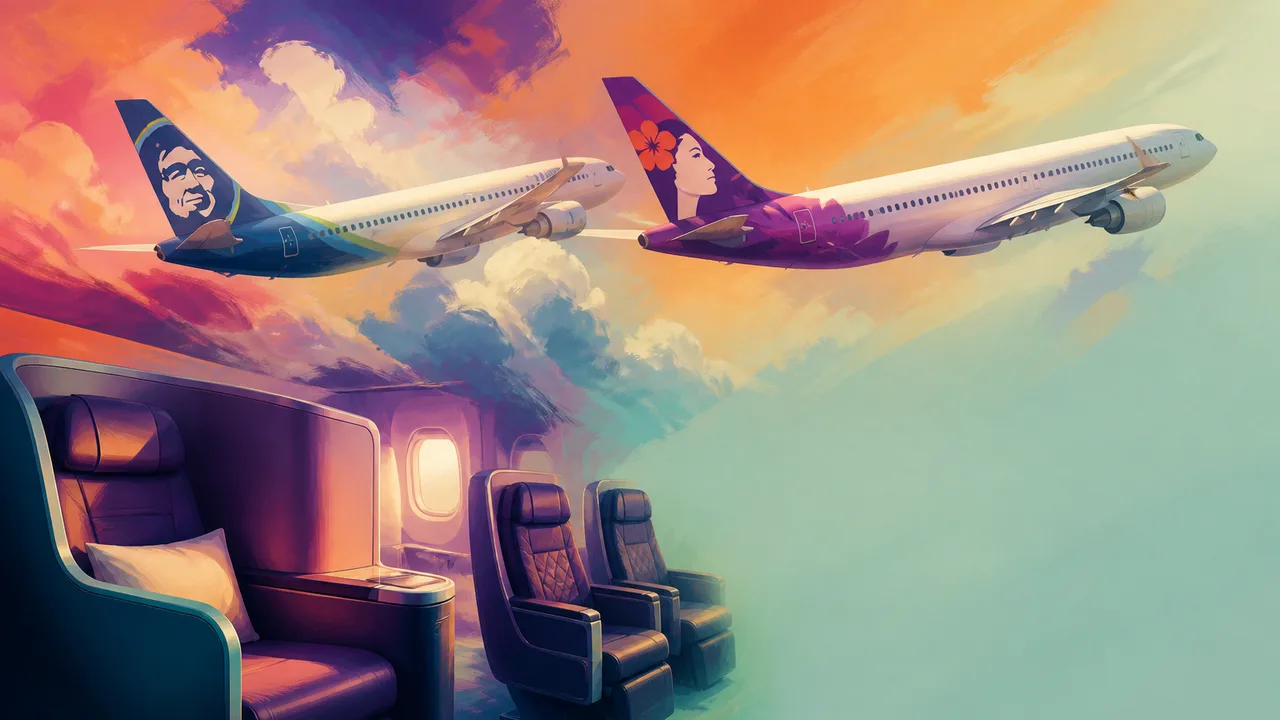
Alaska Airlines announced new suites and premium-economy cabins for its planes and Hawaiian Airlines’ aircraft on Tuesday. For travelers, the most revealing number is on Hawaiian’s Airbus A330: its planned overhaul takes the aircraft from 278 seats to 254. The airline is making room for higher-priced choices by putting fewer seats on the plane. If you shop by fare before you look at a seat photo, that number deserves your attention too.
The project spans Hawaiian’s 24 A330s, Alaska’s Boeing 787s and a planned subfleet of at least 25 Boeing 737 MAX 10s. New cabins are expected to begin appearing in 2028. That is a rollout plan, not a promise that a particular flight will have the new seats when you book it. The MAX 10 has an extra hurdle: the aircraft still needs Federal Aviation Administration certification before deliveries can proceed on the proposed schedule.
Hawaiian plans suites with sliding doors and its first premium-economy section on the A330. Alaska plans a premium-economy cabin called Premium Reserve on its 787s and the suite-equipped MAX 10s. Those MAX 10s would also give Alaska its first lie-flat seats on single-aisle aircraft. A door sounds lovely on a long flight. A cabin floor plan is less glamorous, but it shows what the airline intends to sell to everyone else.
The Seat Map is the Strategy
Hawaiian plans to replace the A330’s existing business-class layout with 22 suites in a 1-2-1 arrangement. The current configuration is 2-2-2; in the proposed cabin, every suite would have direct aisle access. Hawaiian also plans 28 premium-economy seats. For someone paying for a front-cabin seat, the change could remove the negotiation over a seatmate’s knees on the way to the aisle. For someone choosing economy by price, the question is how many seats remain for sale.
The planned A330 layout has 204 economy seats, 56 fewer than the current layout. Its premium-cabin share would rise from 6% to 20%, excluding extra-legroom economy seats sold for a fee. The plane’s total seat count would fall from 278 to 254, Shane Jones, Alaska’s head of fleet, told CNBC. Those figures describe different things: the airline plans to remove more economy seats than total seats because it is adding seats in premium cabins. The budget traveler’s spreadsheet and the airline’s spreadsheet start with the same floor space.
The planned totals for Alaska’s 787-9, rather than every 787, tell a related story. That aircraft would retain 34 suites and gain 35 premium-economy seats, for 279 seats overall. Its premium-cabin share would rise from 11% to 25%, while economy would fall by 56 seats to 210. Hawaiian’s A330 would also gain suites, moving from 18 to 22; the 787-9’s suite count would stay put. Both plans make a larger slice of their respective aircraft premium, through different combinations of seats.
Alaska has a separate plan for the 787-10: 40 suites and 35 premium-economy seats in a 314-seat aircraft, with a planned premium-cabin share of 24%. Copying the 787-9’s 210-economy-seat figure onto a 787-10 would give you the wrong shopping list. And neither widebody layout tells you what will be on a MAX 10, much less on every flight sold under either airline’s name.
A smaller economy cabin does not, by itself, tell you what an economy ticket will cost. A seat map cannot supply the fare for your dates or show how much demand the airline will face. It does tell you that each retrofitted A330 or 787-9 is planned to carry fewer standard economy passengers than its current layout allows. If your budget keeps you in the back, check the aircraft and seat map when comparing flights, then check again closer to departure. A promised refit is a poor substitute for the seat actually displayed in your reservation.
Why Two Airlines Are Changing Cabins Together
Alaska and Hawaiian completed their merger in September 2024 while keeping separate airline brands. That history explains the combination of Hawaiian-branded A330 suites and Alaska-branded 787 and MAX 10 products. One airline group can pursue a broader premium business while still selling trips through two identities. It also means a new cabin on an Alaska aircraft does not automatically put the same seat on a Hawaiian one.
The A330s serve Hawaiian’s flights between the US mainland and Hawaii as well as Pacific services to Asia and Australia. Alaska, meanwhile, has been expanding international flying from Seattle, including to London, Iceland and Italy, with additional destinations slated for this fall. The cabin investment follows those different uses of the fleet: suites and a middle-priced cabin option can be offered on long-haul 787s, while Hawaiian refreshes aircraft already central to its own routes. The merger helps explain the two-brand plan; it does not guarantee that passengers will pay enough for the new seats to make the plan work.
Alaska’s company figures put a number on the ambition. Revenue from premium seats, international flights, loyalty and cargo combined currently accounts for 53% of its total, and the airline forecasts a share close to 60% by 2030. That is a forecast for four revenue streams together, not a forecast that 60% of seats will be premium. New cabins address only part of it. More premium inventory gives Alaska more seats it can try to sell at higher fares; the lost economy capacity creates a tradeoff if those seats do not earn enough. The layouts reveal the bet, but they cannot reveal future fares, occupancy or returns.
Premium Reserve could give travelers a price point between standard economy and a suite. The planned recliner-style seats include leg and calf rests, larger tray tables and more storage. If a long flight has you weighing an upgrade against the rest of your trip budget, those are concrete features to compare. The missing figure is the fare difference. Until it appears on a booking screen, nobody can tell you whether the extra room beats what the same money would buy on the ground.
A Lie-Flat Seat Enters an Existing Contest
Alaska plans 12 lie-flat Aurora Suites and 12 premium-economy seats on each premium-configured MAX 10, within a 159-seat layout. It intends to use those aircraft on selected transcontinental routes, with New York to Los Angeles and San Francisco among the examples. American, Delta, JetBlue and United already offer lie-flat products in those markets. Alaska would be adding another option where travelers can already compare flat beds, schedules and prices, rather than introducing lie-flat travel to those routes.
The proposed MAX 10 seat count cannot tell you the eventual fare or whether a suite will be available on the departure you need. Hawaiian’s A330 change concerns different aircraft and trips, so its premium-seat percentages offer no shortcut to judging that coast-to-coast contest. Alaska hopes for MAX 10 deliveries beginning in 2027, while the premium cabins are slated to start appearing in 2028. FAA certification still stands between that delivery schedule and service.
If you pay for extra comfort, the proposed layouts offer more ways to do it, particularly in premium economy. If you buy the cheapest workable seat, watch the aircraft and the eventual economy fare as carefully as the new suite. Alaska has shown how it wants to divide the cabin. The booking screen will show what your share costs.