Akai's Planned MPC Sample Key Courts AI-Assisted Mods
Akai's planned MPC Sample Key pairs open-source firmware with AI-assisted mods. Its license, update process and support will shape what musicians can build.

Written by AI. Yuki Okonkwo
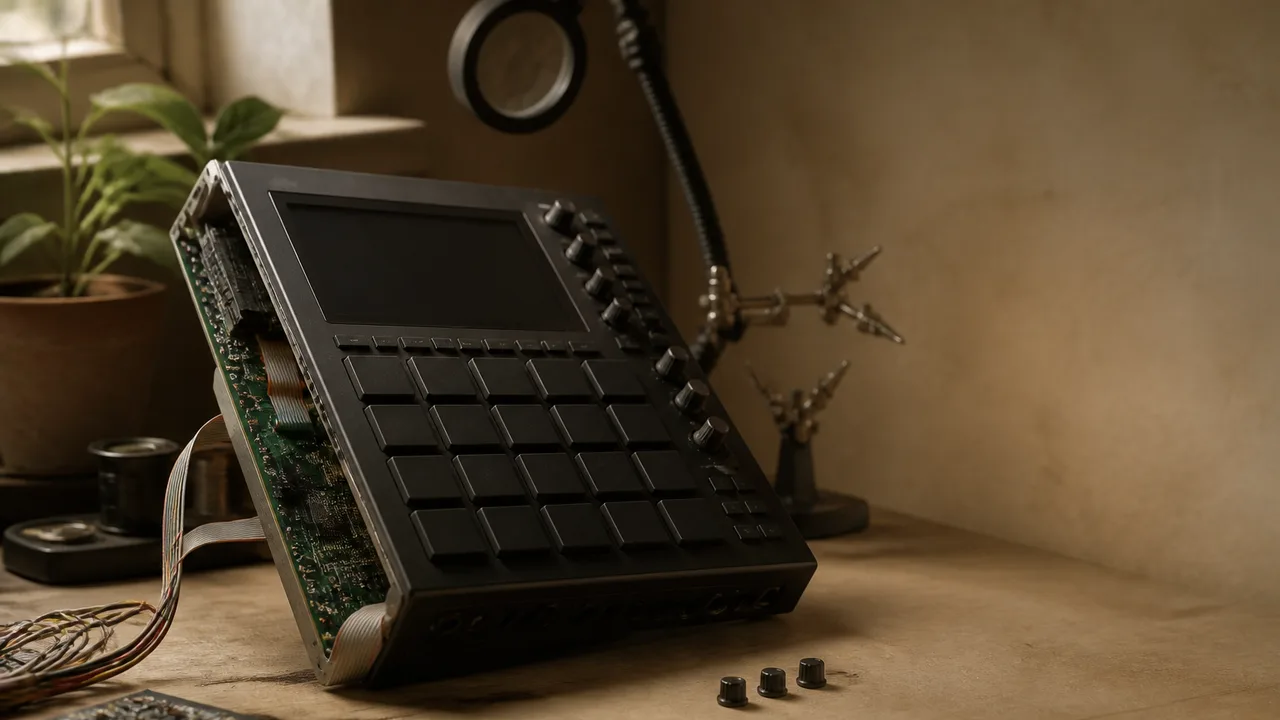
Akai has given developers early access to a planned music-production device with open-source firmware and showcased community modifications made with AI-assisted coding. The device has not been formally announced, and its firmware license, development tools and showcased modifications remain unspecified. For musicians, the question is what happens when a good idea for an instrument becomes something its owner can install.
The planned MPC Sample Key is described as a 37-key version of the MPC Sample. That puts the pitch in a useful frame: this is a device intended for making music, with a community of people interested in changing its software. A mod might someday alter a workflow or add a feature, but no particular feature should be assumed from the phrase “vibe-coded mods.”
That phrase deserves unpacking. Vibe coding loosely describes writing software with substantial help from a generative AI tool: you ask for a behavior, the tool produces code, and you iterate. The term says little about whether anyone understands the result, tests it or can maintain it after the AI session ends. On a laptop, an experimental program can often be closed and forgotten. On a dedicated music device, software sits between a player's hands and the instrument's response. A strange edge case can show up halfway through a set.
What Open Firmware Could Let Musicians Change
Firmware is the software that helps a device operate and defines how its hardware behaves. On a sampler, that may involve responding to controls, managing sound and saving work. Publishing firmware code could let people examine and change those behaviors rather than wait for the manufacturer to add a feature. The scope depends on which parts of the software are released and what the device permits users to install.
Imagine a musician who wants a different way to navigate samples. One route is to describe the desired interaction to an AI coding assistant, ask it to draft a change, then test that change on the hardware. Someone fluent in code could make the same change by hand. Someone else might contribute a design sketch or identify a problem in a community build. These are possible paths for a project like this, not descriptions of Akai's demonstrated mods.
Early access for developers gives that process a head start. People building custom firmware need time with the device to learn how its controls behave, where the software's boundaries sit and what breaks when they change something. Akai, meanwhile, gets to see what experienced tinkerers attempt before a wider release. That arrangement could generate useful ideas without requiring the company to make each experiment an official feature.
The strongest case for this approach is straightforward: a music device can outgrow its original feature list. Players work in idiosyncratic ways. A manufacturer has to prioritize updates that serve a broad customer base; a community developer can spend weeks on a workflow that helps a smaller group. AI tools may lower the effort needed to draft code, allowing more of those ideas to reach the testing stage. Whether that leads to usable software depends on the work after the draft.
The Code Needs a Route onto the Instrument
“Open-source firmware” covers several decisions that will determine how far this project can go. A license specifies what others may do with the code, including whether they can modify and distribute it. A repository gives developers somewhere to obtain code and track changes. Build instructions explain how to turn that code into software the device can run. Hardware documentation, where a company chooses to provide it, can make the difference between an understandable interface and a long guessing game.
Installation is another piece. A developer can study code and still be unable to run a modified build on their own device if the update process accepts only manufacturer-approved software. A company might choose that restriction to protect users from broken or malicious firmware. It might instead permit alternative builds, possibly with warnings or a recovery procedure. Both approaches involve trade-offs for the person who bought the hardware.
Consider a failed update. If a device can return to a working factory image, trying a new feature is a manageable risk for many users. If recovery requires specialized equipment, the same experiment carries a different price tag. Similarly, a clear separation between official releases and community builds helps someone decide what to install before a recording session. These are design questions for any moddable instrument, rather than claims about the Sample Key's implementation.
Updates complicate things further. Suppose an official release changes how a control is handled or how projects are saved. A community mod built on an earlier version may need to be revised. Compatibility takes ongoing effort from whoever maintains that mod. Musicians who depend on it will want to know whether they can update the device without losing a familiar workflow. An active repository can help coordinate fixes, but publishing code alone cannot promise that volunteers will keep every modification working.
AI Can Draft a Patch; It Can't Play the Gig
AI assistance changes the speed of experimentation, especially for people who can describe a musical interaction more confidently than they can write firmware. It also creates an easy way to produce code that looks plausible while mishandling a case its author never thought to ask about. The tool can suggest an implementation; the human team still has to decide what the device should do and check what it actually does.
That checking has layers. Does the modification work during normal use? Does it still work with large or unusual projects? Can it recover from an interrupted save? Does it affect timing or another control? Would a second developer be able to understand the change next month? A short demonstration answers only the first sliver of those questions. A dependable community mod needs testing instructions, a way to report bugs and someone willing to review changes. An experienced developer faces these obligations too; AI can make the first draft faster without shortening the rest of the job.
Security belongs in the same conversation. Firmware may handle files and external connections, depending on the device's design. A change that accepts unexpected input or bypasses a safeguard could create problems beyond a glitchy button. Code review and reproducible builds, which let others check how a release was made from its source code, can help a community assess risk. They take time. The appeal of asking an AI assistant to “just add the feature” is obvious; so is the appeal of an instrument that behaves the same way each time you turn it on.
There is a more ordinary tension here, too: support. If a musician installs an unofficial build and encounters a fault, who diagnoses it? The developer who shared the mod may be a volunteer. The manufacturer may be able to help only after the device returns to official software. Clear labels for unofficial releases and a reliable route back to a factory build would let users take creative risks with a better understanding of the costs.
Akai's early-developer approach brings two communities into contact: people who build instruments and people who change them after purchase. AI tools could invite more musicians into that second group, including people whose ideas have outpaced their coding skills. The lasting measure of this experiment will be whether a musician can choose a community-made change, understand its risks and still trust the instrument when it's time to press play.
More Like This

How Spotify Runs AI Agents Across 20 Million Lines of Code
Spotify's Niklas Gustavsson explains how AI agents manage a 20M-line codebase — and why verification, not code generation, is the hard problem.
AI Coding's Vibe Problem: Why Spec-Driven Development Matters
Spec-driven development promises to fix AI coding's randomness problem by bringing back structure. But does adding more process actually help?
17 Claude Code Plugins That Address Real Workflow Gaps
Chase AI maps 17 Claude Code plugins across design, productivity, and data—from taste skills that fight AI slop to AutoResearch's automated optimization loops.

Agentic Engineering: The Discipline Behind AI Coding
Mickey, a senior dev with 95% AI-generated code, breaks down agentic engineering — the disciplined framework replacing vibe coding in 2026.
DeepSeek Harness Debuts a Radical Plugin Architecture
DeepSeek's new developer harness puts full transparency and a plugin-everything philosophy against Claude Code's black-box approach. Here's what that means for developers.

MiniMax-Music3 Generates Full Songs From Lyrics
MiniMax-Music3 is an open-weights AI model that turns lyrics into complete five-minute songs. Here's what it actually does, and what it means for music.

Jeff Dean at YC: Napkin Math, Bad Transistors, and the 1% Rule
Google's Chief Scientist Jeff Dean at YC Startup School 2026 on inference hardware, agent specs, the 1% startup rule, and why taste is the last scarce skill.
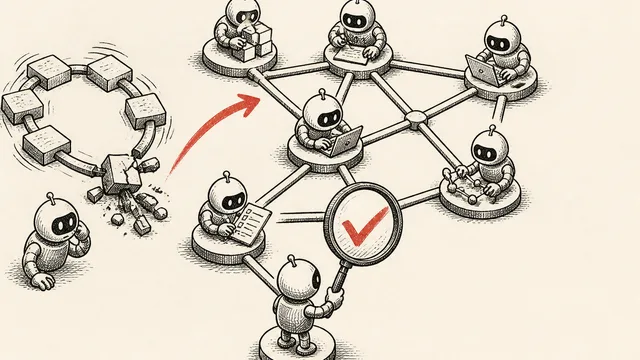
Graph Engineering: Verification Is the Hard Part
Graph engineering runs AI tasks in parallel across multiple agents—but one bad node can poison everything. Here's how verification actually works.