AI's Impact on Education: Terence Tao's Vision
Terence Tao discusses AI's role in reshaping education, emphasizing critical thinking over rote memorization.

Written by AI. Priya Sharma
In a rapidly evolving world where artificial intelligence (AI) is becoming increasingly integrated into daily life, the education sector faces a unique set of challenges and opportunities. Fields Medal-winning mathematician Terence Tao offers a thought-provoking perspective on how AI is transforming education, urging a shift from traditional memorization to a focus on verification and critical thinking.
AI's ability to generate seemingly flawless answers presents a paradox. As Tao points out, "[Our] ability to produce high-quality presentation has far outpaced our ability to produce high-quality content." This discrepancy underscores the need for students to develop skills in assessing the validity of information. The problem isn't new, but AI magnifies it. In the past, poorly presented content often indicated low-quality information. Today, AI can dress inaccuracies in a convincing façade, making critical evaluation skills more crucial than ever.
Tao suggests that education must pivot towards training students to validate information. This involves moving beyond a passive reception of knowledge to active engagement. He envisions a future where AI-generated content is used as a learning tool, challenging students to critique and correct it. "Here's a question I would have assigned, but I've given it to ChatGPT and this is the answer they give. It's wrong. Please critique it," Tao notes, highlighting an innovative approach some educators are already exploring.
While AI poses challenges, it also offers significant advantages, particularly in the realm of mathematics. Tao sees AI as a complementary tool for mathematicians, capable of addressing a multitude of medium-difficulty problems that might otherwise remain unsolved. "AI's best use case is not to target the most high-profile problems, but actually on the millions of medium difficulty problems," he observes. The scale at which AI can operate is unparalleled—solving even a fraction of these problems represents a substantial advancement.
The integration of AI into education raises broader questions about the nature of collaboration in mathematical research. Tao acknowledges that the traditional methods of mathematical work haven't changed substantially in centuries, relying heavily on small-scale collaborations. However, he advocates for modernizing these workflows to make mathematics more collaborative and accessible, integrating AI tools to expand the scope and impact of research.
One of the more philosophical challenges posed by AI's integration into education is the question of trust. Can AI eventually police its own outputs, or will human oversight always be necessary? Tao likens AI to random number generators—unreliable yet immensely useful when paired with rigorous verification methods. This analogy suggests a future where AI supports human efforts, provided its outputs are carefully vetted.
As we stand on the cusp of this educational transformation, the role of educators is more critical than ever. Preparing students for an AI-saturated world requires not only teaching them facts but also equipping them with the skills to navigate and interrogate the vast sea of information AI can produce. Tao's insights remind us that while the methods may change, the core of education—fostering curiosity and critical thinking—remains constant.
The question that lingers is whether educational institutions can adapt swiftly enough to this new paradigm. As AI continues to evolve, will our educational approaches keep pace, or will they lag behind, stuck in outdated methodologies? Terence Tao's vision offers a roadmap, challenging educators to rethink and reshape the future of learning in the age of AI.
More Like This
Mastering AI for Learning: Avoiding the Brain Fog
Navigate AI's role in learning without losing your cognitive edge. Explore insights from Dr. Justin Sung.
Generative AI in Education: Opportunities and Challenges
Exploring how generative AI reshapes education, fostering critical thinking and personalized learning.
Navigating Learning Challenges in an AI-Driven World
Explore how AI and evolving skills are reshaping learning, with strategies to stay competitive.
Exploring Math's Role in Understanding the Universe
Delve into the need for new math to solve universe's mysteries with insights from Terence Tao on StarTalk.
The Calculator Moment Returns: Why Kids Need Both AI and Pencils
AI tutors are doubling learning outcomes while students lose the ability to read chapters. The answer isn't choosing sides—it's remembering what we learned in 1975.
Unlocking New Skills After 50: The 'Pillar & Playground' Approach
Explore how the 'Pillar & Playground' method helps those over 50 learn efficiently, leveraging crystallized intelligence and cognitive flexibility.
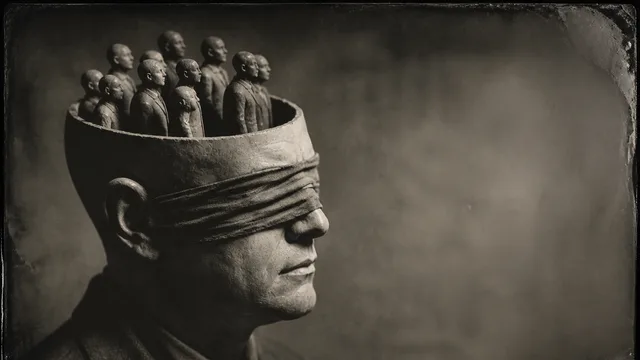
Bonhoeffer's Philosophy of Stupidity, Explained
Philosopher Jonny Thomson explains Bonhoeffer's three elements of stupidity—outsourced thinking, willful ignorance, and conformity—and why they threaten democracy.

Adam Riess on the Hubble Tension and Cosmic Expansion
Nobel laureate Adam Riess explains why two precise measurements of the universe's expansion rate keep disagreeing—and what that could mean for cosmology.