Generative AI in Education: Opportunities and Challenges
Exploring how generative AI reshapes education, fostering critical thinking and personalized learning.

Written by AI. Samira Barnes
The integration of generative AI into education isn't merely a topic of academic debate; it represents a fundamental shift in how we prepare students for a rapidly evolving future. The IBM Technology video, featuring Jeff Crume, posits AI not as a threat, but as an opportunity to elevate educational experiences. Yet, as with any technological advancement, the devil lies in the details—or more specifically, in the policy implications.
The Promise of AI in the Classroom
Generative AI's potential to customize learning experiences is one of its most lauded features. Crume argues for a shift from rote memorization to fostering critical thinking, suggesting that AI can serve as a versatile educational tool. "We need to embrace this technology and use it to elevate education," he states, urging educators to adapt rather than resist.
AI's capacity for personalized tutoring is particularly noteworthy. An AI system can adapt to individual learning speeds and styles, offering tailored explanations and exercises. However, describing AI as an "infinitely patient tutor" oversimplifies the reality. AI's patience is not akin to human empathy; it follows programmed protocols, which may not suit all learning nuances.
Bridging Educational Gaps
A compelling argument for AI in education is its potential to bridge gaps in underserved communities. With AI systems accessible via cloud computing, students in remote or resource-poor areas can access quality educational resources. However, this vision requires robust infrastructure and policy support to ensure reliable internet access and data privacy protections. Without these, the digital divide could widen rather than narrow.
Just-In-Time Learning: A Feasible Reality?
Crume suggests that AI can provide "just-in-time education," but this requires scrutiny. While AI can indeed deliver quick access to information, the quality and depth of understanding it offers are contingent on the data it analyzes. There's a risk of students receiving superficial knowledge if AI systems aren't calibrated to promote deep learning. Policymakers must consider how to regulate AI systems to ensure educational content meets pedagogical standards.
Critical Thinking in the AI Era
The video emphasizes critical thinking as an essential skill in an AI-driven world. AI's ability to generate information doesn't absolve students from evaluating its validity and relevance. As Crume notes, "AI will do some things, say some things that might not even be true." This calls for a curriculum that intertwines AI literacy with traditional educational goals. Students must learn not only to use AI tools but also to critically assess the information they generate.
Ethical Considerations and Policy Implications
The integration of AI into education raises significant ethical questions. Crume highlights the need for robust AI literacy and ethical training. Students must understand AI's limitations and the potential societal impacts of its use. This is where policy and regulation play crucial roles. Legislation must address data privacy, algorithmic bias, and the ethical use of AI in classrooms. Policymakers face the challenge of crafting regulations that foster innovation while safeguarding students' rights.
The Classroom After the AI Shift
AI in education is not a panacea, nor is it a passing trend. As Crume puts it, "The jobs of the future will require the best tools in order to stay competitive." Our educational systems must evolve to integrate AI responsibly, preparing students to navigate a future where AI is ubiquitous. The question remains: how will policymakers balance technological advancement with ethical responsibility to ensure AI's benefits in education are equitably distributed?
More Like This
Cline CLI 2.0: Open-Source AI Coding Tool Goes Terminal
Cline CLI 2.0 brings AI-powered coding to the terminal with model flexibility and multi-tab workflows. But open-source AI tools raise questions.
Decoding AI: Navigating the Future of Machine Learning
Explore AI's evolution with insights on machine learning, NLP, and generative AI. Understand its impact on privacy and digital safety.
Agent Development Kits: AI That Acts, Not Just Chats
IBM's ADK framework promises autonomous AI agents that sense environments and take action. The gap between prototype and policy remains wide.
AI Ad Tool Claims to Replace $10K Agencies: What It Actually Does
AppSumo tested MagicFit, an AI tool promising agency-quality ads at a fraction of the cost. Here's what it can and can't do for e-commerce sellers.

Are UK Graduates Ready for the AI Job Market?
UK universities are banning AI while employers demand fluency in it. A new FT film maps the skills gap — and the policy vacuum sustaining it.
Exploring Claude Code: Potential and Policy Impacts
A deep dive into Claude Code's capabilities and its implications for tech policy and industry standards.

AI Chip Smuggling and the US-China Tech Divide
FT's Eleanor Olcott investigates the black market for Nvidia AI chips reaching China despite US export controls — and what it reveals about the tech race.
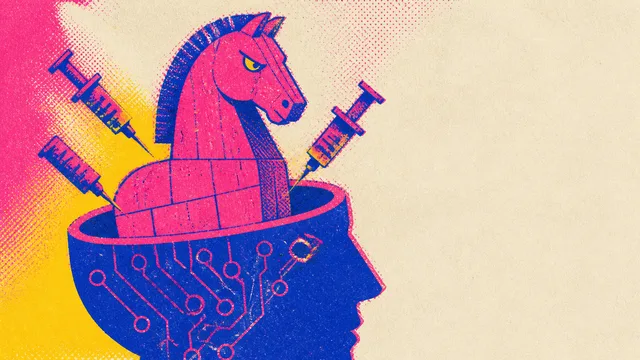
Promptware: When AI Agents Become Attack Vectors
Prompt injection attacks on AI agents follow a structured kill chain — and existing legal frameworks have almost nothing to say about who's liable when it works.