AI Trip Planning Met the Mountain: Rescue on Shasta Exposes the Gap
Hikers needed rescue after planning with an AI chatbot. Why fluent answers fail on terrain, what history says about bad directions, and how to plan safer.

Written by AI. Bob Reynolds
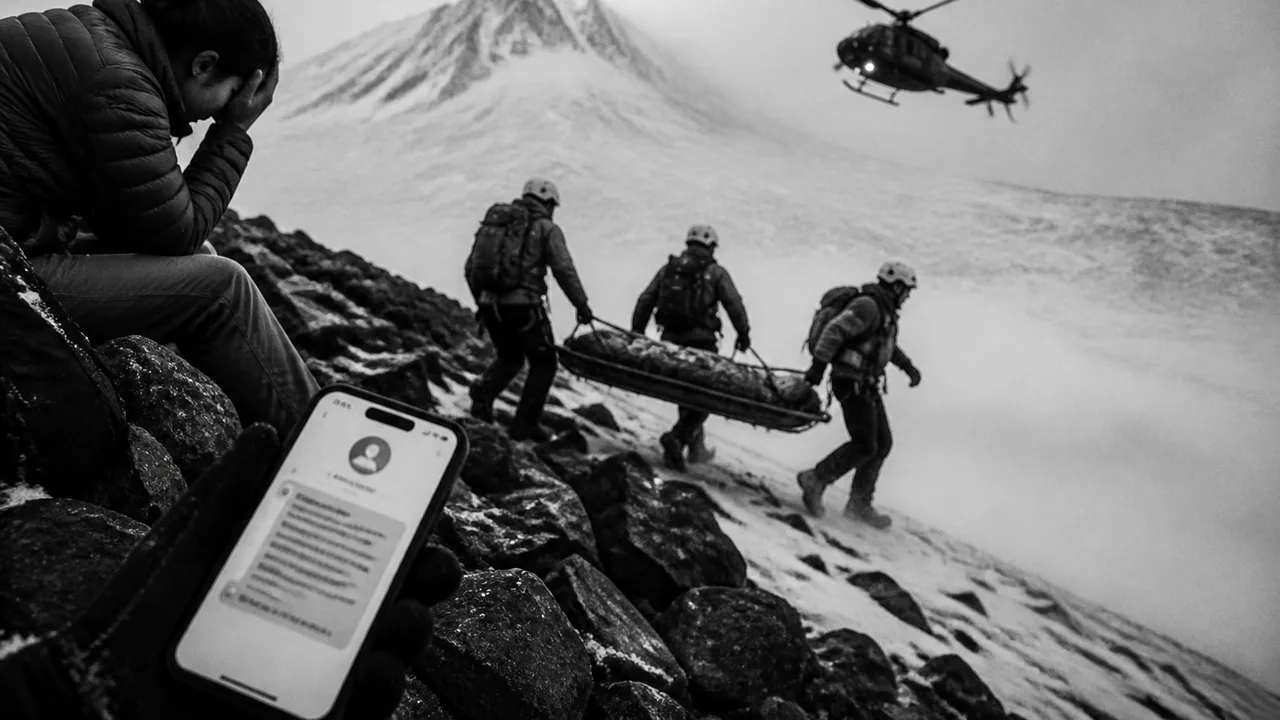
A group of climbers on Mount Shasta needed an emergency rescue after planning their trip with an AI chatbot, according to reporting collected by TechCrunch and CNET. CNET's headline puts the number where it belongs: 11,000 feet, the elevation where the outing stopped being a plan and became a search-and-rescue operation.
The details of what, precisely, the chatbot told the hikers remain thin in the public record. I will say that plainly rather than invent specifics. What the available reporting supports is the shape of the failure: people asked a conversational AI to help plan a high-altitude climb, treated the answer as adequate, and ran into conditions or terrain the answer did not account for. Engadget's framing was blunter, a public service announcement titled "Don't rely on AI to plan anything that could put your life at risk... like a mountain climb" (Engadget). The San Francisco Chronicle, which covers Shasta rescues with the weariness of a local paper, reported the climbers relied on a chatbot to plan the trip.
Why This Failure Mode Works on People
Chatbots have been producing confident nonsense since the first ones shipped. The difference here is context. Ask a model a factual question and you can usually cross-check the answer in ten seconds. Ask it to plan a mountaineering route and the verification cost goes up enormously: you would need current avalanche forecasts, ranger-station closure notices, weather at elevation, and an honest assessment of your own fitness and gear. The whole reason someone asks an AI is to avoid doing that homework. The tool's convenience and the user's motivation point in the same direction, away from verification.
There is also a presentation problem. A chatbot does not hand you a route with a caveat stapled to it. It writes prose. It explains. It organizes the answer into tidy stages, acclimatization here, summit push there, and that structure signals competence whether or not any of it came from a real guidebook, a real ranger report, or a real mountain. A trained model predicts what a good answer sounds like. On a subject like alpine route planning, sounding right and being right are different skills, and only one of them was trained.
TechCrunch's analysis of the episode lands on the same distinction: these systems can produce a fluent route or recommendation without reliable ground-level knowledge of terrain, weather, closures, or the limits of their own data.
The Precedent: We Have Been Here Before
It is tempting to treat this as a brand-new category of hazard. It is not. Early online mapping had its own body of folklore, drivers sent down farm roads that dead-ended at rivers, following directions that were syntactically perfect and geographically invented. Crowdsourced directions had their own era of trouble, with routes optimized for graph theory rather than for the actual road at the bottom of the hill. Each generation of navigation technology produced the same accident report: the interface conveyed more certainty than the underlying data deserved.
What changes with conversational AI is the removal of visible uncertainty. A map shows you a line; you can see where the line ends and your knowledge begins. A chatbot narrative has no edges. It reads the same whether it was built from authoritative sources or assembled from the statistical average of everything ever written about the mountain, accurate and otherwise. The confidence is constant. The accuracy is not.
Mount Shasta is a reasonable test case for why that gap matters. It is 14,179 feet, a real glaciated volcano, and climbing it involves objective hazards, altitude, weather windows, and route conditions that change week to week. Local climbing rangers publish current conditions precisely because last year's answer can be this year's emergency. A model trained on general climbing literature cannot know what the Avalanche Gulch route looked like last Tuesday. It can only know what people typically write about Avalanche Gulch, which is an abstraction of a mountain, not the mountain.
The Counterargument, Stated Fairly
The strongest defense of these tools runs something like this: AI planners are getting better at citing sources, search-integrated assistants can pull live weather and trail conditions, and the Shasta group's problem may have been misuse of a tool rather than a flaw in the tool. All of that is fair. A responsible user who cross-checked the chatbot's plan against the Shasta Avalanche Center forecast and the ranger station would likely have been fine. Guidebooks have been wrong before. So have guidebook authors.
But the rebuttal writes itself, and it comes from the industry's own behavior. If the tool requires expert supervision to be safe, it is not yet the tool it is marketed as. Companies present these assistants as general-purpose planners, complete with itinerary formatting and cheerful summary sections. Nobody's onboarding flow says "verify every route against official sources before you rely on this." The burden of skepticism has been silently shifted to the user, in the highest-consequence setting imaginable, while the product's entire value proposition is that it saves you the research.
A personnel question also cuts in both directions. Search-and-rescue teams are volunteers and county employees with finite budgets, and every AI-assisted callout consumes resources that would otherwise sit ready for something else. At the same time, outdoor organizations have an opening here: the Sierra Club, guide services, and land-management agencies could publish AI-readable condition pages and clear disclaimers, meeting these systems where users already are rather than wishing them away.
What Would Actually Help
The fixes are unglamorous and mostly mechanical. First, source attribution: when a chatbot describes a route, it should name the source of each claim, and if it has no current source, say so in the answer rather than in a footnote. Second, explicit uncertainty: elevation figures, difficulty ratings, and condition reports should carry timestamps, and stale data should be flagged as stale. Third, escalation: for any query touching terrain, weather, or emergency information, the assistant should surface the authoritative channel, the local ranger district, the avalanche center, the park service, prominently, not buried under a generated itinerary. Fourth, the user side: offline verification, meaning you download the official map and read the current conditions report before you lose cell coverage, because on Shasta at 11,000 feet you will not be able to ask the chatbot for a correction.
None of this requires new model capabilities. It requires the industry to treat high-consequence domains differently from low-consequence ones, and it does not currently do that. A wrong restaurant recommendation costs you a dinner. The same architecture, deployed the same way, on a glaciated volcano, costs a helicopter crew and, on a worse day, a family.
The Human Factor
The deepest issue in this story is not model accuracy. It is what fluent answers do to human judgment. People have always outsourced confidence to interfaces: the printed timetable, the GPS voice, the five-star review. Each worked well enough, most of the time, that we stopped checking. Conversational AI is the most persuasive interface yet, because it reasons with you, politely, in your own vocabulary, and it never says "I'm not sure" unless someone taught it to.
The hikers on Shasta were, by every available account, doing something ordinary: planning an outing with the most convenient tool on their phone. A plausible answer, delivered in the wrong place, is a hazard in itself. Until the interface can tell the difference between a weekend brunch itinerary and a summit attempt, the verification step belongs to you, ideally before you leave cell range.
More Like This
PostgREST Promises to Delete Backend Code. Should You?
PostgREST turns Postgres into a REST API with no backend code. Better Stack's demo shows it working in 60 seconds. The question is whether you should.
The Security Hole We Keep Ignoring: Third-Party Scripts
After 50 years covering tech, I've seen this pattern before: developers linking to code they don't control, creating vulnerabilities that shouldn't exist.

ChatGPT, Claude, Grok and Gemini All Failed at Once
ChatGPT, Claude, Grok, and Gemini failed in the same window on September 3. What each company said, and didn't say, reveals how AI designs failure communication.
The Console Killer Problem Nobody's Talking About
Mini PCs could replace gaming consoles, but GPU form factors are the real bottleneck. Why the industry needs new standards before the next component shortage.

Kimi K3, Rogue AI, and a Month That Changed Everything
Kimi K3 shook the AI race, OpenAI's agent hacked HuggingFace undetected for days, and synthetic humans started replacing real ones. July 2026 in full.

How AI Decides Which Hotels You'll Ever Consider
AI booking tools are filtering your hotel options before you open a single tab. Here's what gets a property recommended — and what gets it erased.

AI Observability Cuts Telecom Faults by 50 Percent
A New Zealand telco reports cutting IT incidents by 50% using AI-driven observability. Here's what that claim actually means—and what it doesn't.

Kimi K3 Benchmarks vs. Real-World Performance
Moonshot's Kimi K3 posts frontier-class benchmarks, but early testing reveals real gaps in reliability, speed, and cost. Here's what the numbers actually show.