35 Claude Skills on GitHub Turn AI Coding Assistants Into Experts
Developers are building specialized skills that transform Claude and other AI coding assistants into domain experts. Here's what's actually worth using.

Written by AI. Marcus Chen-Ramirez
The AI coding assistant is eating itself. Not in a destructive way—more like a snake discovering it can install specialized organs on demand.
A new GitHub ecosystem has emerged around "skills"—modular instruction sets that transform general-purpose AI assistants like Claude Code into domain specialists. These aren't plugins or extensions in the traditional sense. They're carefully crafted markdown files containing structured expertise that change how the AI thinks about problems.
Thirty-five of these skills surfaced in a recent GitHub Awesome roundup, and they reveal something interesting about where AI-assisted development is actually heading. Not toward full autonomy, but toward increasingly specific forms of augmentation.
The Friction Points
Start with the obvious problem: AI assistants sound like AI assistants. You ask a simple technical question and get "Certainly, I'd be happy to explain" followed by five paragraphs of filler before anything useful appears.
Talk-normal is a system prompt designed to strip that away. Drop it into Claude, ChatGPT, or your local LLM and it "strips away the AI slop," according to the documentation. No restating questions, no robotic transitions, just direct answers.
It's a small thing, but it points to a larger dynamic: developers are discovering that the base models need constant correction. The skills ecosystem is essentially a collective documentation effort on how to make AI assistants behave like actual colleagues instead of overeager customer service bots.
Anti-Vibe takes this further. After every coding session, it triggers a sub-agent that generates markdown documentation explaining why the AI wrote code a particular way, what computer science patterns are in play, and where to learn more. The creator's framing is blunt: "Your AI writes the code, you ship the feature, you learn absolutely nothing." Anti-Vibe tries to fix that knowledge gap.
This tension—between velocity and understanding—runs through the entire skills landscape.
Domain Expertise as Configuration
The more specialized skills get genuinely weird. 3GPP-skill turns Claude into what the documentation calls "a senior telecom consultant grounded in actual engineering standards from 2G through 6G." Ask how 5G protects against IMSI catchers and it maps protocol flows across physical, MAC, and RRC layers, backed by exact specification references.
Buffett-skills distills Warren Buffett's value investing methodology into an agent skill. Feed it an annual report or ticker symbol and it runs structured analysis on economic moat, management integrity, and capital allocation.
These aren't toy projects. They represent thousands of hours of domain knowledge compressed into instruction sets. The 3GPP skill alone covers two decades of telecommunications standards. Someone had to read those specifications, understand the implementation details, and figure out how to teach an AI to navigate them without hallucinating.
What's less clear is whether this approach scales. Skills work when domains have clear rules and established frameworks. Telecommunications protocols are well-defined. Value investing has principles that translate to structured analysis. But most programming problems don't have canonical solutions—they have tradeoffs.
The Meta Layer
Some of the more ambitious projects try to solve skills themselves. Harness is described as "a meta skill that builds the entire AI team for you." Type "Build a harness for this project" and it analyzes your domain, selects from six architectural patterns, then generates specialized agent definitions and custom skills for them to collaborate.
Skill-based-architecture goes further: it's a skill for organizing other skills. Feed it scattered project rules and monolithic prompts, and it refactors them into a structured directory tree where "your agent only reads the exact content it needs, exactly when it needs it."
There's something almost fractal about this. Skills to manage skills to generate skills. Each layer promises to solve coordination problems created by the layer below.
SkillClaw introduces "collective skill evolution"—a local proxy that monitors agents, analyzes failures, rewrites tool logic automatically, and syncs upgrades to a shared cloud repository. When one agent discovers a better workflow, the entire swarm benefits.
This is either the future of collaborative AI development or technical debt that will make Ruby on Rails look disciplined. Possibly both.
What Actually Gets Built
The utilitarian skills are probably more revealing than the ambitious ones. NPX-skill reverse engineers design systems from any URL using pure static analysis—no AI involved, no API keys required. Ultra mode fires up headless Playwright to capture scroll interactions and CSS animations.
Logo-generator-skill uses Claude to write raw SVG code for logos. Six geometric variations, infinitely scalable, drag straight into Figma for refinement.
Marp-slides turns agents into presentation designers using 22 curated reference decks. Feed it a prompt like "Create a dark mode presentation reviewing my Q1 sales data" and it builds the deck with SVG charts and polished layouts.
These tools share a pattern: they automate specific, repeatable tasks that humans find tedious but don't require complex reasoning. They're automation in the traditional sense, just orchestrated through natural language instead of shell scripts.
The interesting question is what happens when these accumulate. Auto-skills scans your package.json and config files, detects your tech stack, then automatically pulls relevant skills from a community registry. One command, entire skill stack installed.
Manual-SDD takes a different approach: maintain a single canonical AI specs folder, then use symlinks to make your .cursor, .claude, and .codex directories all read from the same centralized playbook. Instead of configuring each tool separately, you configure once.
Both are solving the same problem: skills proliferation creates its own management burden.
The Learning Problem
Paper-finder is explicitly tuned for machine learning literature research. Its creator tested it on bleeding-edge topics like mixed resolution diffusion and efficient video tokenization. The skill "consistently unearths hidden gem papers that traditional search engines completely miss," according to the documentation.
PaperOrchestra goes further—it transforms a single AI assistant into an academic ensemble with specialized agents for outlining, plotting, literature review, and content refinement. Feed it messy notes and the swarm outputs a perfectly formatted LaTeX file.
These academic research tools exist in tension with tools like Caveman-claude-skill, which forces AI to communicate "like a literal caveman." Drops articles, filler, and hedging while preserving technical accuracy. "Cuts output token usage by up to 75%," the repository claims.
One camp wants more sophisticated reasoning. The other wants radical compression. Both are probably right for their use cases, which suggests the skills ecosystem isn't converging toward any particular vision of how AI should assist development. It's fragmenting into increasingly specialized niches.
What This Actually Means
The GitHub Awesome video presents these 35 skills as a curated collection, but there's no curation philosophy beyond "these exist and might be useful." That's probably honest. Nobody knows which patterns will prove durable.
Some of these skills will become standard tooling. Others will be abandoned when the underlying models improve or APIs change. A few will evolve into standalone products.
What's certain is that developers aren't waiting for foundation model labs to solve their problems. They're building their own expertise layers, sharing them, iterating in public. The skills ecosystem is chaotic and redundant and probably inefficient.
It's also exactly how open source has always worked.
More Like This
Google's Gemma 4 Turns Claude Code Into a Free Local Tool
Google's new Gemma 4 models let developers run Claude Code locally for free. Here's what works, what doesn't, and who this actually serves.
Anthropic Accidentally Leaked Claude Code's Secret Agent
A source map mishap revealed Kairos, Claude Code's unreleased background AI agent with memory consolidation, push notifications, and proactive coding help.
How to Build AI Agent Skills That Actually Work
Nufar Gaspar's masterclass reveals the frameworks for creating effective AI agent skills—from trigger design to the critical 'gotcha' section most skip.
The AI Agent Infrastructure Nobody's Watching Yet
A new infrastructure stack is being built for AI agents—six layers deep, billions in funding, and most builders can't tell what's real from what's hype.
Claude's Memory Problem Gets an Open-Source Fix
Claude-Mem adds persistent memory to Anthropic's coding assistant, claiming 95% token savings. But does solving statelessness create new problems?
NotebookLM + Claude: Teaching AI Agents Domain Expertise
A developer demonstrates using NotebookLM to generate Claude Code skills—custom knowledge modules that teach AI agents specific domains in minutes.
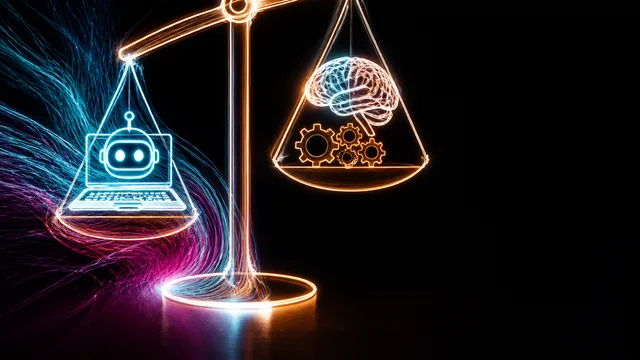
AI Coding Tools and the Developer Skills Trade-Off
New research shows AI coding tools may improve productivity while quietly eroding developer skills. What does the data actually say—and who should be worried?

Connecting MCP Servers to Claude: What It Means
MCP servers let Claude reach beyond the chat window into files, databases, and live systems. Here's what that connectivity actually looks like—and why it matters.