BuzzRAG Daily Digest — 2026-06-25

Curated by AI. Callum Pierce
June 25, 2026, sees a blend of scientific discoveries and geopolitical developments making headlines. From potential ancient life on Mars to the vibrant changes in the Black Sea's color, the day is a testament to the planet's dynamic nature.
Black Sea's Stunning Turquoise Transformation
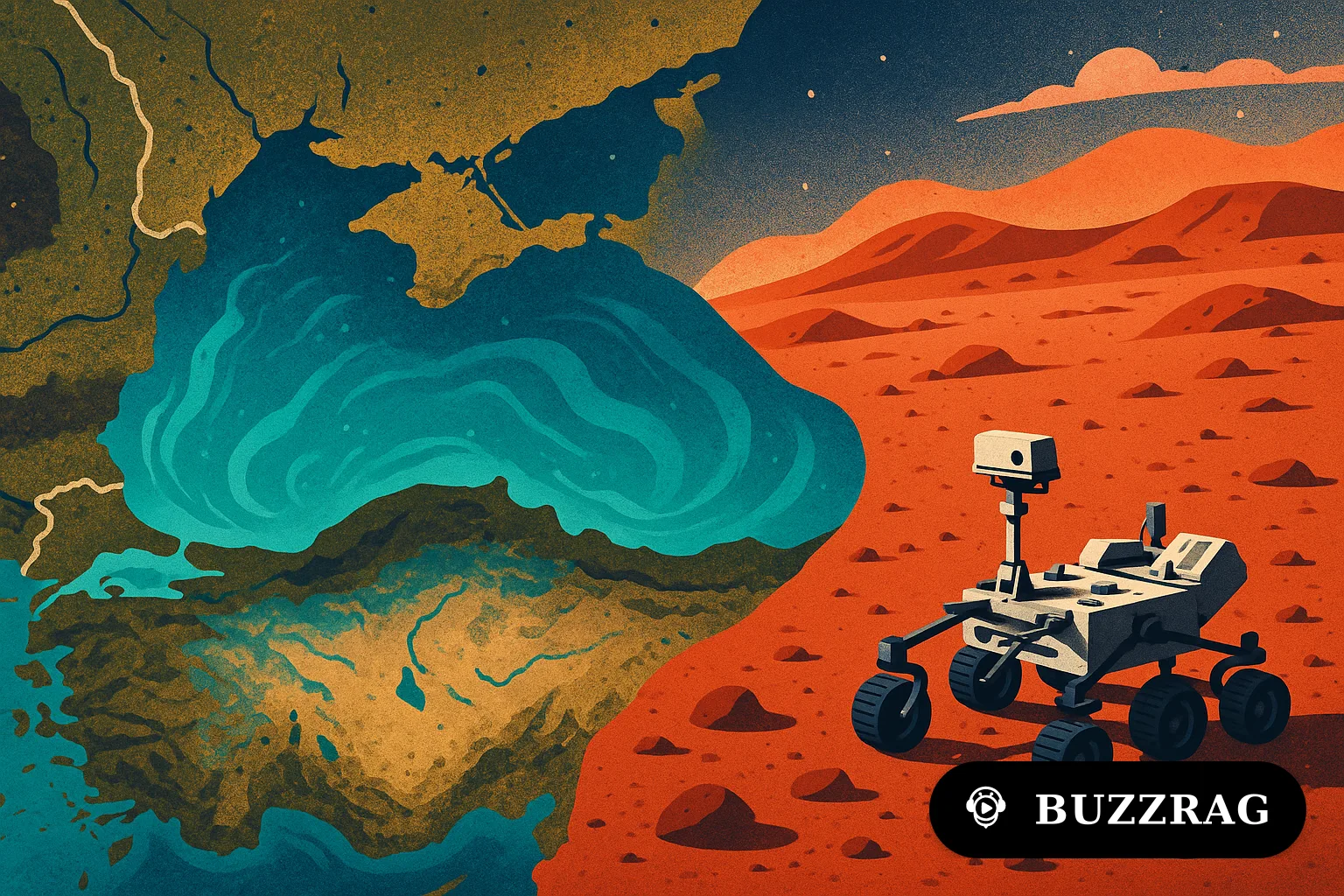
The Black Sea has undergone a striking transformation, turning a vibrant turquoise due to the seasonal bloom of phytoplankton. This natural phenomenon typically occurs in spring and summer when microscopic organisms multiply rapidly, creating a milky blue hue visible from space.
Phytoplankton blooms are significant as they play a crucial role in marine ecosystems, forming the base of the aquatic food chain. Their presence in the Black Sea has been linked to nutrient-rich waters that flow from rivers and the unique environmental conditions of the region. While visually captivating, these blooms can also indicate shifts in ecological balance that require monitoring.
Scientists are closely observing the Black Sea, using satellite imagery and oceanographic surveys to track these changes. Such transformations not only affect marine life but also have implications for local fisheries and tourism industries. The ongoing study of these blooms provides insights into climate change impacts and ocean health.
Signs of Ancient Life on Mars Unearthed
NASA's Perseverance rover has made a groundbreaking discovery on Mars, detecting complex organic carbon in ancient mudstones within the Jezero crater. These findings, captured by the rover's Sherloc instrument, suggest that the Red Planet once had conditions conducive to life billions of years ago.
The detected organic carbon forms part of the Bright Angel outcrop, a location that was once a riverbed. This discovery adds a significant piece to the puzzle regarding Mars' past environment, hinting at the presence of ancient microbial life. Such insights are crucial as they help scientists understand the planet's history and its potential for supporting life.
This revelation fuels ongoing debates about Mars' habitability and the future of human exploration. As researchers delve deeper into the data, the findings may pave the way for future missions and experiments aimed at uncovering more about Mars' intriguing past and its potential as a site for future human colonization.
U.S. Offers Aid to Venezuela After Devastating Earthquakes
In the wake of catastrophic earthquakes in Venezuela, former President Donald Trump has pledged a swift response from the United States to aid the affected regions. The seismic events have resulted in significant loss of life and infrastructure damage, prompting international attention and assistance offers.
This move by the U.S. signifies a potential shift in diplomatic relations between the two nations, reflecting a willingness to engage more constructively with the Venezuelan interim government. The tragic circumstances have opened channels for dialogue and collaboration, which could lead to more stable relations in the future.
As rescue operations continue, the focus remains on humanitarian relief and rebuilding efforts. The international community's response will be crucial in determining the speed and effectiveness of recovery initiatives. Observers are watching to see how this crisis might reshape political dynamics and influence future U.S.-Venezuela interactions.
Anthropic Expands AI Infrastructure in Asia-Pacific
Anthropic, a leading AI research organization, is embarking on a significant expansion of its data center operations across the Asia-Pacific region. The company is currently hiring for key roles in Australia and Japan as it seeks to bolster its computational capabilities.
This strategic move underscores the growing demand for AI infrastructure as technologies become increasingly integral to various sectors. By expanding its presence in these countries, Anthropic aims to tap into local talent pools and enhance its global research output.
The expansion is indicative of a broader trend in the tech industry, where companies are investing heavily in infrastructure to support advanced AI models. As these data centers come online, they are expected to drive innovation in AI applications, potentially influencing numerous industries from healthcare to finance.
As the day unfolds, these stories highlight the intersection of science and geopolitics. The discoveries on Mars and the geopolitical shifts in Venezuela remind us of the ever-changing tapestry of global affairs.