BuzzRAG Travel Desk — 2026-10-05

Curated by AI. Mariel Fontaine, Travel Desk Editor
Today’s travel stories look beyond the postcard: at the labor behind convenient services, the policy choices that shape trip costs, and the environmental foundations of hospitality. Cruise routes and a Verona food ritual offer a more personal view of how travel habits and destinations are changing.
Berlin’s delivery convenience raises questions about worker conditions
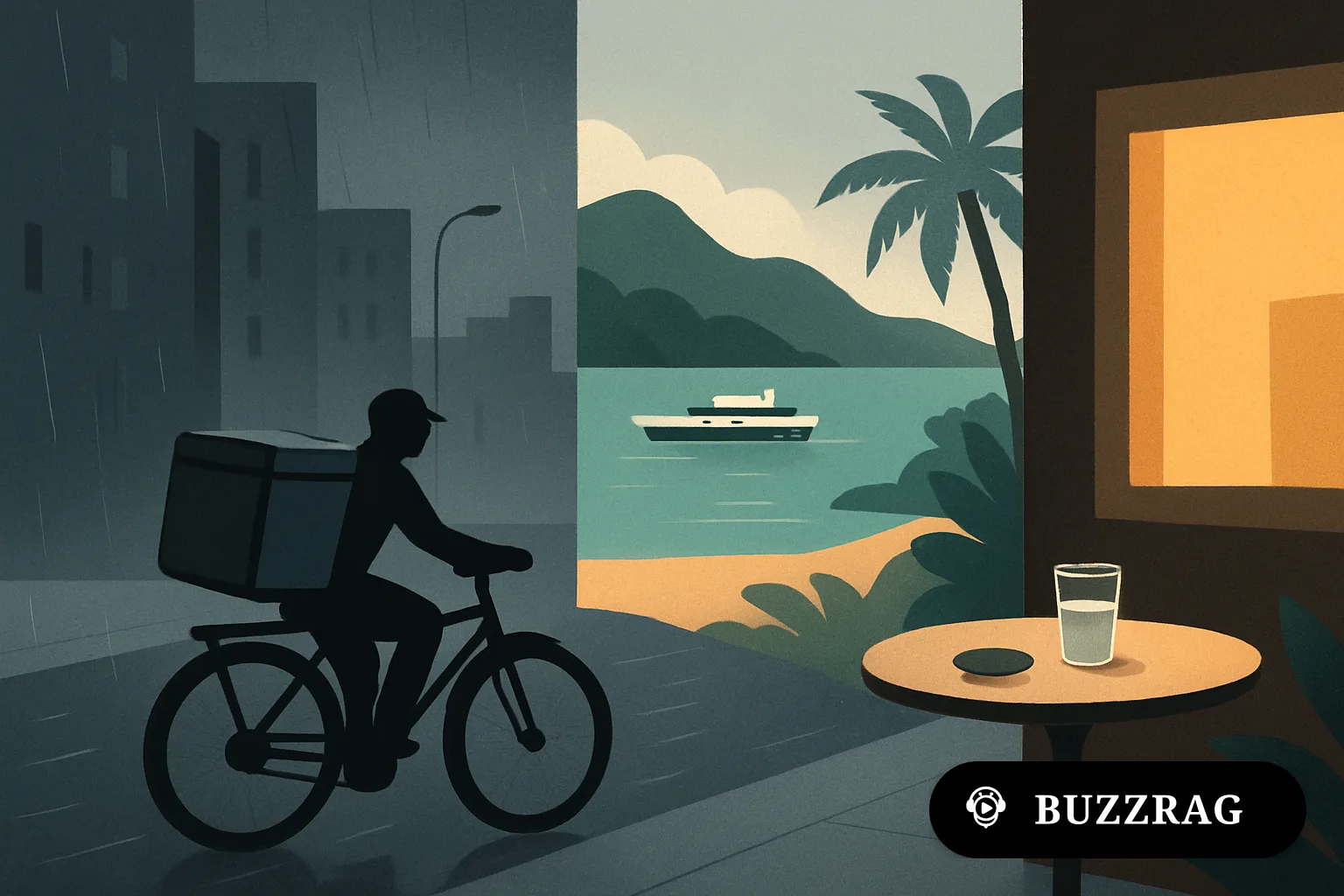
A report on food delivery in Berlin challenges the easy image of ordering dinner after a long day. Its framing points to a familiar imbalance: customers experience a few taps and a quick meal, while the people making that convenience possible can be less visible. The article’s opening invokes the German phrase “Keine Lust zum Kochen” — not feeling like cooking — as a route into that everyday dependence on delivery platforms.
The headline characterizes the service’s labor conditions as exploitative, but the available excerpt does not specify the practices or workers’ accounts behind that claim. That distinction matters: questions about pay, employment status, scheduling and safety should be grounded in reporting rather than assumed from the label alone. For visitors, delivery can be part of how a city is experienced, but it is also part of its local economy. The useful test is whether convenience for consumers rests on fair, transparent conditions for couriers, and whether companies and regulators make those conditions legible.
Maldives tax delay leaves travel businesses seeking clarity
The UK travel association ABTA is seeking clarification after reports that the Maldives has delayed a planned 17% tax described as potentially disruptive. The report signals uncertainty rather than a settled change: travelers and businesses still need confirmation of when the measure would take effect and how it would apply. A second travel-trade source, TTG, is also cited in the item’s corroboration.
Tax changes can affect more than the final price of a holiday. Their impact depends on what transactions they cover, whether existing bookings are treated differently, and how the costs are divided among visitors, operators and local businesses. For an island destination where tourism is central to the economy, policy decisions also sit alongside questions about public revenue and the distribution of tourism’s costs and benefits. Until officials publish clear rules, travelers should be cautious about assuming that quoted prices or booking terms have changed. The next useful information will be the government’s formal timetable and any guidance for operators.
In Verona, aperitivo is a local ritual, not a fixed formula
A traveler’s search for the “perfect” aperitivo in Verona begins with a useful admission: the ritual can mean different things in different Italian cities. Broadly, it brings together a drink and a small bite before a meal, but the article describes the custom as having a distinct local character in Verona — and notes that it can even be enjoyed early in the day.
That variation is part of what makes food travel more than a checklist of dishes. Aperitivo is both a way of eating and a social rhythm, and treating it as a single standardized experience can obscure the local habits that give it meaning. The excerpt does not name particular bars, prices or dishes, so readers should not mistake the premise for a practical venue guide. Instead, it points toward a better approach: ask what the custom looks like where you are, follow local timing, and leave room for a version that may not match expectations formed elsewhere in Italy.
Indonesia’s hospitality sector weighs nature as a business investment
Hospitality and food-service leaders in Indonesia are making a business case for investing in nature, according to a report from a sustainability discussion held in Jakarta. The event, titled “Building Resilience Through Nature: Why Investing in Nature Matters for Business,” brought together industry voices and was organized by Artotel Group, The Bimasena and Bumiterra. Its central argument is that nature-related spending is shifting from a corporate social responsibility exercise toward a business consideration.
That shift could matter in a country where tourism depends on healthy landscapes and ecosystems, but the event’s claims should be read as an industry discussion, not proof that investment is already delivering measurable results. The key questions are practical: what is being funded, which communities and ecosystems benefit, and how outcomes will be tracked over time. For hotels and food businesses, resilience can involve reducing pressure on the places that attract visitors in the first place. Credible follow-through will depend on transparent targets and local perspectives, not just a change in how companies describe sustainability.
New river cruise ships signal interest beyond Europe
Three ships due to join AmaWaterways are attracting interest from Asian travelers looking beyond Europe’s established river-cruise routes, according to the report. The first named vessel, AmaNubia, is scheduled to begin operating on the Nile in November 2026. Its itinerary pairs a Nile cruise with hotel stays in Cairo, combining time on the river with a city visit.
The report suggests a wider appetite for river journeys outside the routes most familiar to many international cruise customers, though it provides no booking figures or evidence of how large that interest is. Egypt’s combination of river travel and major urban and historic sites gives operators a different itinerary proposition, while the inclusion of Cairo adds the logistics of a land stay to the cruise experience. As the new sailings begin, useful measures will include actual demand, how trips distribute time and spending across destinations, and what travelers are told about local context. The other two ships and their routes are not detailed in the available account.
Montreal takes a larger role in a 2028 cruise itinerary
A report says Holland America Line’s 2028 itinerary will focus heavily on Montreal as political tensions between the United States and Canada continue. The item links the route’s emphasis on the Canadian city to that broader relationship, but the excerpt offers no itinerary details, official explanation from the cruise operator or evidence that geopolitics directly shaped the planning.
Cruise schedules are commercial decisions as well as travel plans: ports, turnaround arrangements and passenger demand all influence where ships call. Montreal’s prominence may offer travelers a longer or more central visit, but the practical value depends on details such as time in port, transport connections and what is included in the route. The political framing also deserves care. A single itinerary cannot by itself establish a wider shift in cross-border travel, and a 2028 schedule may change before departure. For now, the clearest story is a reported route choice whose rationale and on-the-ground implications remain to be clarified.
The next test is whether reported shifts translate into verifiable changes: clearer tax rules, accountable nature spending and better visibility into the labor behind travel conveniences. And as new routes take shape, the details—who benefits, how places are represented and what visitors actually encounter—will matter more than the itinerary headline.