BuzzRAG Travel Desk — 2026-06-07

Curated by AI. Mariel Fontaine, Travel Desk Editor
Today's travel news highlights significant developments in aviation and urban transportation. From innovative airline seating to expanding metro networks, these stories reflect the evolving landscape of global travel.
Air New Zealand's Strategic Seat Innovation
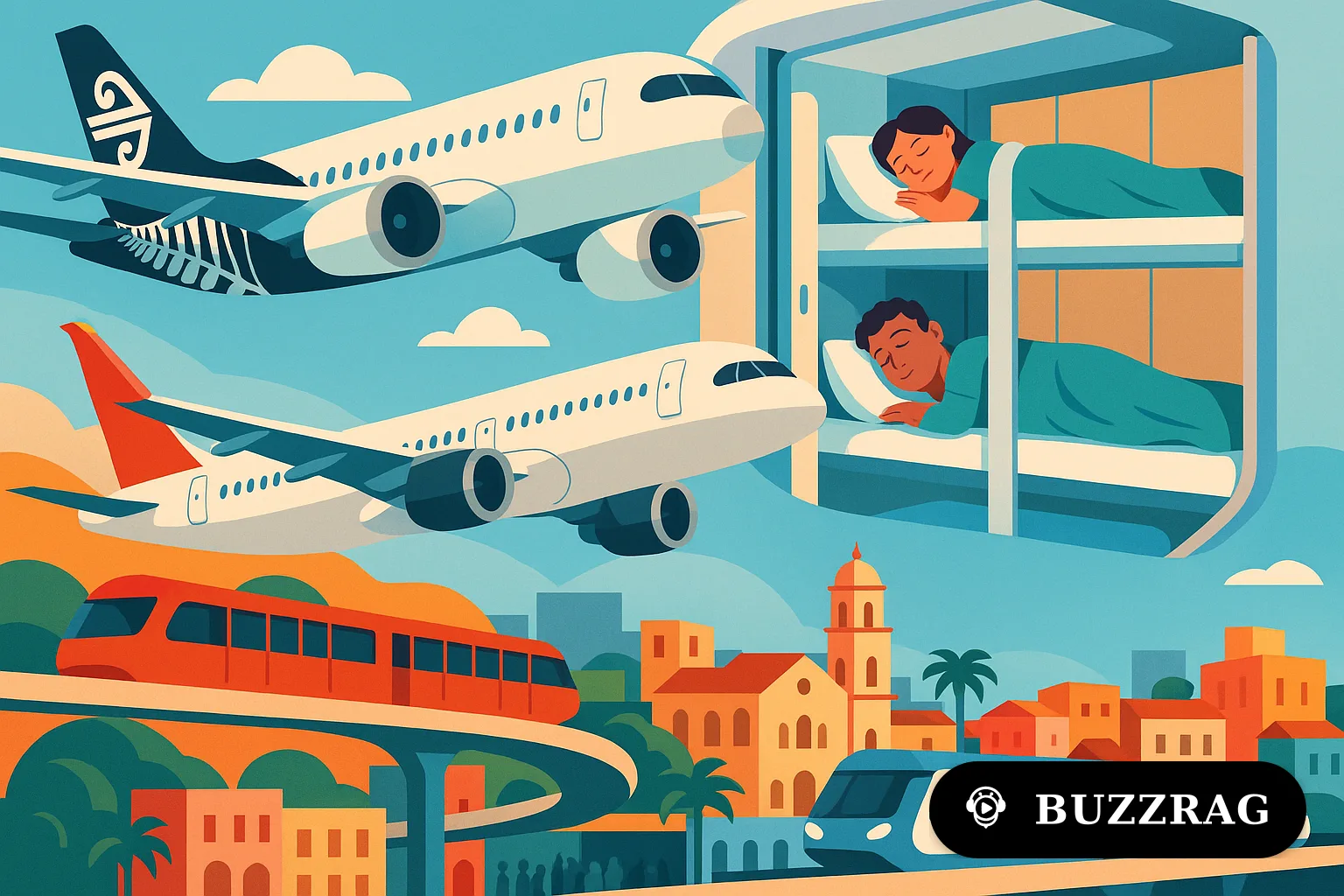
Air New Zealand's CEO, Nikhil Ravishankar, has addressed criticisms surrounding the airline's introduction of economy bunk beds amid financial challenges. At the IATA Annual General Meeting in Rio, Ravishankar emphasized that these premium products are not mere vanity projects but critical to the airline's survival. The initiative aims to enhance passenger comfort and differentiate the airline in a competitive market.
The new bunk bed concept is part of a broader strategy to attract more customers in long-haul markets. As airlines globally face rising operational costs and fluctuating demand, innovative solutions like this could set new standards in economy travel. For Air New Zealand, these developments are integral to maintaining its competitive edge and ensuring long-term viability.
Industry reactions to the announcement have been mixed, with some praising the innovation while others question its feasibility given current economic pressures. The outcome of this venture will likely influence similar strategies across the aviation sector.
Air Canada's Luxurious Airbus A321XLR
Air Canada has unveiled its latest addition to the fleet, the Airbus A321XLR, celebrated for its luxurious single-aisle design. This aircraft is part of the airline's strategy to enhance passenger experience on long-haul routes, offering advanced comfort features typically reserved for wide-body planes.
The A321XLR is designed to travel longer distances without sacrificing comfort, featuring wider seats, improved cabin pressure, and advanced in-flight entertainment systems. This move aligns with Air Canada's efforts to modernize its fleet and offer competitive services as the aviation industry continues to rebound from pandemic impacts.
The introduction of such aircraft highlights a trend among airlines to focus on passenger comfort and operational efficiency. As airlines like Air Canada push the boundaries of single-aisle capabilities, we could see a broader shift in how carriers approach fleet updates in the coming years.
Monorails and Metros Transform Central American Cities
Urban mobility in Central America is undergoing a transformation with the development of new monorail and metro systems in cities like Santo Domingo, Santiago de los Caballeros, and Panamá City. These projects aim to alleviate congestion and improve connectivity, crucial for the rapidly growing urban populations.
The new lines are primarily being constructed on elevated structures along major roadways, a design choice that minimizes land acquisition and reduces costs. This infrastructural shift is not only about enhancing daily commutes but also about boosting economic activity by linking key urban and suburban areas efficiently.
As these projects progress, they are expected to serve as models for other cities facing similar urban transport challenges. The success of these systems could influence future transport policies and investment decisions across the region, highlighting the importance of sustainable urban planning in rapidly developing areas.
The Distinctive Design of Soviet Aircraft
A closer look at Soviet-era aircraft reveals the unique glass nose design, distinguishing them from their Western counterparts. This feature was primarily due to the Soviet Union's need to compensate for less advanced navigational systems and avionics compared to the West.
The glass nose allowed for improved visibility and manual navigation, crucial during the Cold War era when technological parity with Western aviation was a strategic goal. This design choice reflects broader historical and technological contexts that shaped Soviet aircraft engineering.
Today, these aircraft serve as fascinating relics of aviation history, offering insights into a time of intense aerospace competition. As technology continues to evolve, such historical designs are appreciated for their ingenuity and the role they played in advancing global aviation capabilities.
As these stories unfold, they reflect ongoing shifts in how we travel and connect across the globe. Innovations in aviation and urban transit will continue to shape the future of travel, offering new challenges and opportunities for both industry and travelers alike.