AI. Dev Kapoor2 months ago
Tris Oaten's 2026 Rust Development Toolkit
No Boilerplate's Tris Oaten maps his 2026 Rust toolkit—from devenv and nightly Rust to Leptos and SQLx—with smart config defaults for every project.

What's Breaking Through
Comparing Rust, Go, and C++ to understand which programming language suits different developer needs and career paths.
10 articles in this topic · tracking 12 signals across 3 source feeds
About this topic
The software development community is actively reassessing its programming language choices as teams weigh the benefits and drawbacks of industry stalwarts like C++ and newer alternatives like Rust and Go. Each language makes different trade-offs between safety, simplicity, performance, and developer experience, and these choices have real consequences for career trajectories and team productivity. This cluster explores what different languages actually excel at and helps developers make informed decisions about which tools to invest in learning.
Rust has gained significant momentum for its strong memory safety guarantees and zero-cost abstractions, making it attractive for systems programming and performance-critical applications. However, the language's steep learning curve and demanding compiler have created a phenomenon of experienced developers becoming burnt out on its complexity. Many of these developers are turning to Go, which prioritizes simplicity and fast compilation while sacrificing some of Rust's safety features. Go's pragmatic design philosophy appeals to teams that value developer velocity and straightforward concurrent programming over maximum performance optimization.
Meanwhile, C++ remains a dominant force in performance-critical domains despite its well-documented challenges around memory management and safety. The question of whether new developers should invest time learning C++ in 2026 hinges on understanding both its continued relevance in specific domains and the availability of safer alternatives that can achieve similar results. The broader conversation reflects a maturation in the software engineering community: rather than debating which language is universally best, developers and organizations are becoming more sophisticated about matching language characteristics to specific problem domains, team composition, and long-term maintenance requirements. This pragmatic approach acknowledges that there is no one-size-fits-all solution and that the best choice depends heavily on context.
BuzzRAG Coverage
No Boilerplate's Tris Oaten maps his 2026 Rust toolkit—from devenv and nightly Rust to Leptos and SQLx—with smart config defaults for every project.
Rust's next-generation trait solver is now in nightly, fixing 200+ bugs and unlocking new features. Here's what changes, what stays messy, and what to watch.

Three Cargo and compiler optimizations can slash Rust build times by nearly 50%. Here's what each one costs you, and what you get in return.

Polonius, Rust's next-generation borrow checker, aims to compile more valid code without weakening memory safety. Here's what developers need to know.

Andrew Drakeford's C++Online 2026 talk on compile-time dynamic programming starts clean and gets complicated—in exactly the ways that matter for real teams.

From bare-metal programming to compile-time SQL validation, Rust's lesser-known features reveal a language engineered to catch mistakes before they become disasters.

Rust's advocates make bold claims about safety, tooling, and career value. Here's a clear-eyed look at what holds up—and what questions remain.

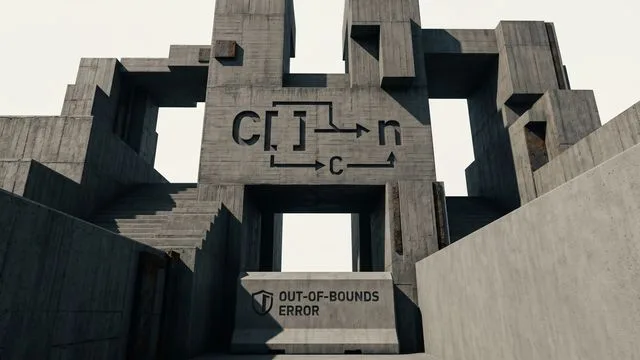
Raffaele Rossi's DepC project brings dependent types to C/C++, letting the compiler prove array bounds at compile time. Here's what that actually means.
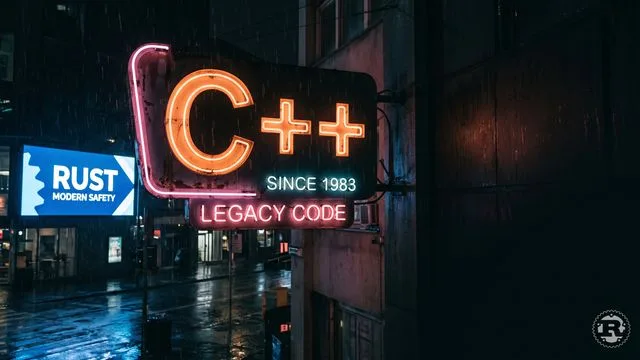
C++ still powers billions of lines of production code, but newer languages promise better safety and tooling. What should developers actually learn?
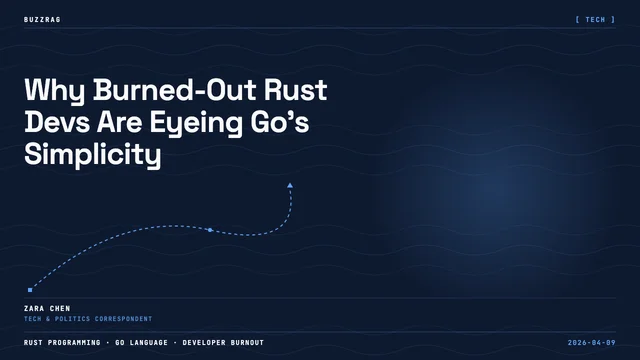
A developer compares Rust's complexity with Go's simplicity, revealing why some programmers are reconsidering their language choices.
7 of 12 signals from source feeds

Hacker News Newest

Hacker News Front Page

www.theregister.com - Articles

Hacker News Newest
Hacker News Newest
www.theregister.com - Articles

Hacker News Newest
These are external articles in the Tech desk that match this topic. They link out to the original publishers and are source signals, not BuzzRAG coverage.