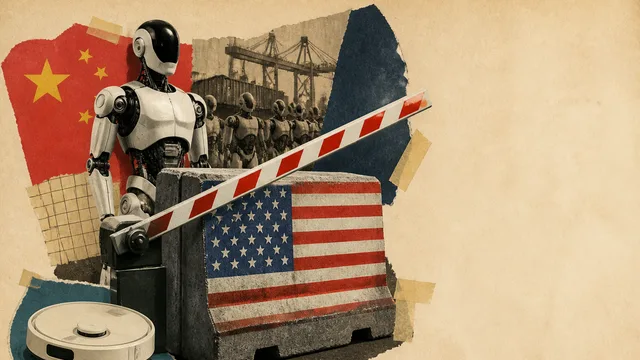
The United States is taking direct action to restrict the importation and deployment of foreign-made humanoid robots, with particular focus on Chinese manufacturers. The White House has implemented a ban targeting new Chinese humanoid robots, marking a significant escalation in the tech competition between the US and China. This policy initiative reflects broader concerns about maintaining technological dominance and preventing adversarial nations from gaining ground in robotics innovation.
The ban represents a strategic move to protect American interests in robotics development and manufacturing. By restricting foreign humanoid robots, particularly those from China, the administration aims to slow technological advancement by competitors while potentially boosting domestic robotics companies. The restriction applies to new models entering the market, suggesting a comprehensive approach rather than a temporary measure. This policy sits within the larger context of tech nationalism and industrial policy, where governments increasingly view critical technologies as matters of national security and economic competitiveness.
The implementation reflects geopolitical tensions and the broader US-China technology rivalry that has intensified over recent years. Similar to previous restrictions on semiconductors, AI chips, and other advanced technologies, the humanoid robot ban targets a domain seen as crucial for future economic and military applications. While the immediate impact may be limited given the current stage of humanoid robot commercialization, the policy signals the administration's intent to shape the development trajectory of emerging technologies. For the robotics industry, the ban creates a bifurcated global market and raises questions about international collaboration in this rapidly evolving field.