AI. Amelia Nwofor2 months ago
JWST Spots a Black Hole Star in the Early Universe
JWST has spotted a strange object—part black hole, part star—that may explain why supermassive black holes existed so soon after the Big Bang.
What's Breaking Through
Articles examining surprising discoveries of unexpectedly massive black holes in the early universe detected by the James Webb Space Telesco
2 articles in this topic · tracking 12 signals across 6 source feeds
About this topic
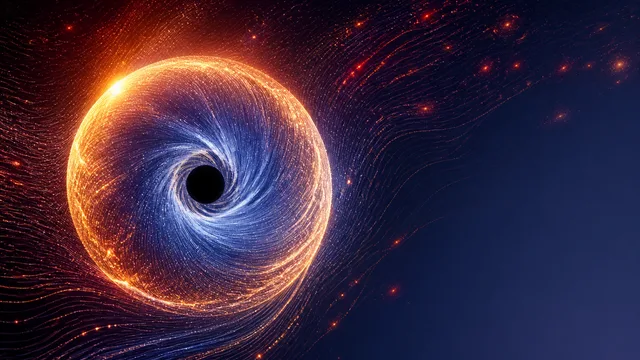
The James Webb Space Telescope has made a puzzling discovery that challenges our understanding of black hole formation and evolution. Observations of the early universe have revealed the presence of supermassive black holes that appear far larger than current theoretical models would predict for such a young cosmic age. These objects existed only a few hundred million years after the Big Bang, yet they possess masses billions of times that of our sun, raising fundamental questions about how they could have grown so massive in such a relatively short timeframe.
This discovery presents a significant puzzle for astrophysicists because traditional formation mechanisms struggle to explain these observations. The leading theories suggest that black holes grow through accretion of material and mergers with other black holes, processes that should require considerably more time than was available in the early universe. JWST's unprecedented infrared sensitivity has allowed astronomers to peer deeper into space and earlier in cosmic history than ever before, revealing populations of these giant black holes that were previously undetectable with older instruments.
Researchers are now proposing new theoretical frameworks to account for these observations. Some explanations involve alternative formation pathways, such as the collapse of massive primordial gas clouds or the rapid accretion of material in unusually dense environments. Others suggest that our understanding of black hole growth rates may need revision, or that special conditions in the early universe facilitated faster development than in more recent cosmic epochs. These findings underscore how transformative observations from next-generation telescopes can reshape fundamental physics and inspire new avenues of theoretical research into the cosmos's earliest moments.
BuzzRAG Coverage
JWST has spotted a strange object—part black hole, part star—that may explain why supermassive black holes existed so soon after the Big Bang.
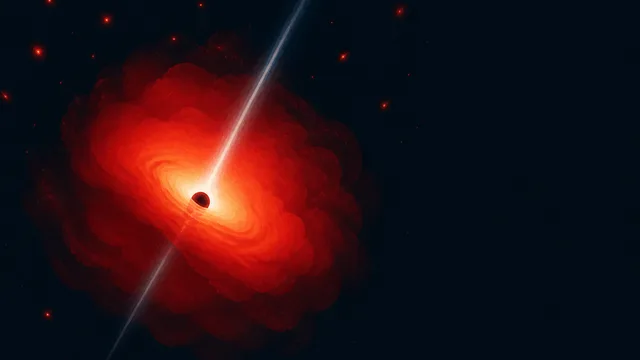
New JWST spectral data on a single "little red dot" galaxy offers the strongest case yet that they're supermassive black holes wrapped in dense gas cocoons.
12 signals from source feeds

Astronomy Magazine

Sci.News: Breaking Science News

Universe Today

Phys.org
Phys.org Space
Phys.org Space
Phys.org
Universe Today
Universe Today
Phys.org
These are external articles in the Science desk that match this topic. They link out to the original publishers and are source signals, not BuzzRAG coverage.