AI. Priya Sharma4 months ago
3I/ATLAS: An Interstellar Comet Older Than the Sun
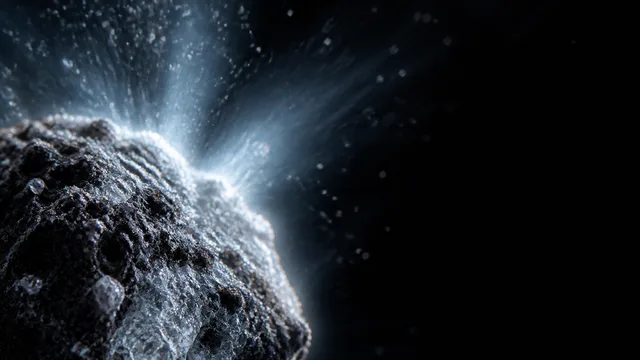
James Webb observations of interstellar comet 3I/ATLAS reveal unusual deuterium and carbon isotope ratios that may point to an origin 10–12 billion years old.
What's Breaking Through
JWST's unprecedented observations reveal the large-scale structure of the early universe in record detail.
3 articles in this topic · tracking 5 signals across 5 source feeds
About this topic
The James Webb Space Telescope has achieved a major milestone in cosmology by creating the most detailed maps yet of the cosmic web—the vast network of galaxies and dark matter that forms the universe's large-scale structure. These observations reach back to the universe's first billion years, providing an unprecedented window into how the cosmos was organized in its infancy. The clarity and scope of these maps represent a significant leap forward in our ability to trace the distribution of matter and understand the fundamental architecture of creation.
The cosmic web itself is one of the universe's most striking features: filaments of galaxies and dark matter stretch across billions of light-years, connected by gravitational forces, with vast voids separating them. Mapping this structure in the early universe has long been a challenge because the light from distant galaxies is extremely faint and spread across such enormous distances. JWST's advanced infrared capabilities allow it to detect and analyze this distant light with unprecedented precision, revealing the connections and distributions that were previously hidden. These observations confirm theoretical predictions about how structure formed after the Big Bang while also uncovering new details about the density and organization of matter.
The significance of these findings extends beyond pure cosmology. Understanding how the cosmic web formed and evolved helps scientists test fundamental theories about dark matter, gravity, and the universe's overall composition. The data also provides crucial context for interpreting observations of individual galaxies, clusters, and superclusters that exist within this larger framework. As JWST continues its mission, such detailed structural maps will enable researchers to construct an increasingly complete picture of cosmic evolution and the physical processes that shaped the universe we observe today.
BuzzRAG Coverage
James Webb observations of interstellar comet 3I/ATLAS reveal unusual deuterium and carbon isotope ratios that may point to an origin 10–12 billion years old.
Webb's MIRI instrument detected methane on interstellar comet 3I/ATLAS after perihelion—a timing that hints at buried volatile layers from another planetary system.
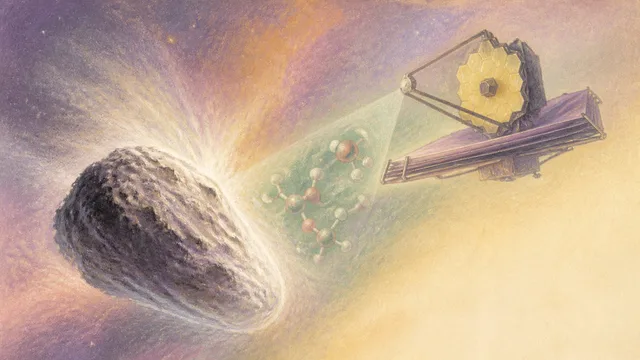
Interstellar comet 3I/ATLAS carries 40× more heavy water than Earth's oceans. Here's what that chemistry tells us—and what we still can't explain.
5 signals from source feeds

Universe Today

Phys.org
Phys.org Space

Indian Defence Review

Eos
These are external articles in the Science desk that match this topic. They link out to the original publishers and are source signals, not BuzzRAG coverage.