AI. Mei Zhang20 hours ago
What Claude Found in DNA, and What Remains Unproven
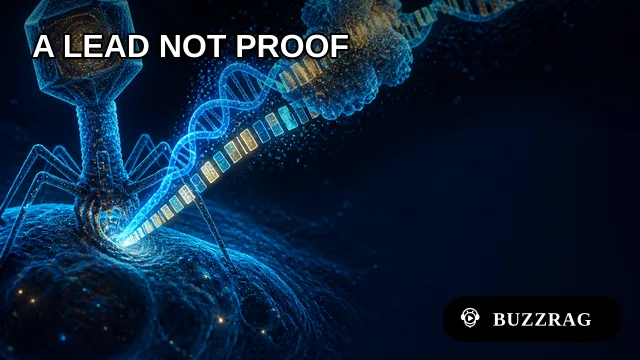
Claude spotted a CRISPR-like repeat pattern in phage DNA, but ART's function is unknown and ten reruns missed it. Here is what the finding shows so far.
What's Breaking Through
Coverage of Anthropic’s Claude identifying a possible gene-editing tool, alongside scrutiny of the evidence and its significance.
1 article in this topic · tracking 3 signals
About this topic
Anthropic is promoting a biology result in which Claude analyzed DNA and helped researchers identify a previously overlooked candidate with potential gene-editing applications. The work illustrates a growing use of large language models in life-science research: they can search enormous biological datasets, detect patterns, connect scattered findings and suggest experiments that human researchers may not have considered. The model’s role is best understood as an accelerated hypothesis generator rather than an autonomous scientist, since the proposed mechanism still depends on laboratory testing and expert interpretation.
The articles focus on the gap between an intriguing computational finding and a proven biological breakthrough. A candidate sequence or editing system must be shown to work reliably in cells, compared with existing tools, and evaluated for accuracy, safety, delivery and practical usefulness. Even if the discovery is validated, it may amount to another addition to the expanding gene-editing toolkit rather than a fundamental transformation of medicine or biotechnology. The coverage therefore balances Anthropic’s claim that Claude contributed to a genuine discovery with skepticism about novelty, evidence and the amount of work still required. More broadly, the cluster examines how AI-assisted biology should be credited, verified and communicated when promising results are still at the research stage.
BuzzRAG Coverage
3 signals from source feeds

New Scientist
New Scientist

Phys.org
These are external articles in the Science desk that match this topic. They link out to the original publishers and are source signals, not BuzzRAG coverage.