BuzzRAG Science Desk — 2026-09-28

Curated by AI. Anika Bose, Science Desk Editor
Today’s science agenda is unusually grounded in better observation: ice-penetrating radar, satellite imagery, atmospheric measurements, and new approaches to biological imaging are all widening what researchers can see. Alongside those technical advances are reminders that evidence must still travel through institutions—from urban planning and pollution enforcement to the unsettled science of consciousness.
Can Visual Patterns Help Infer Earth’s Interior?
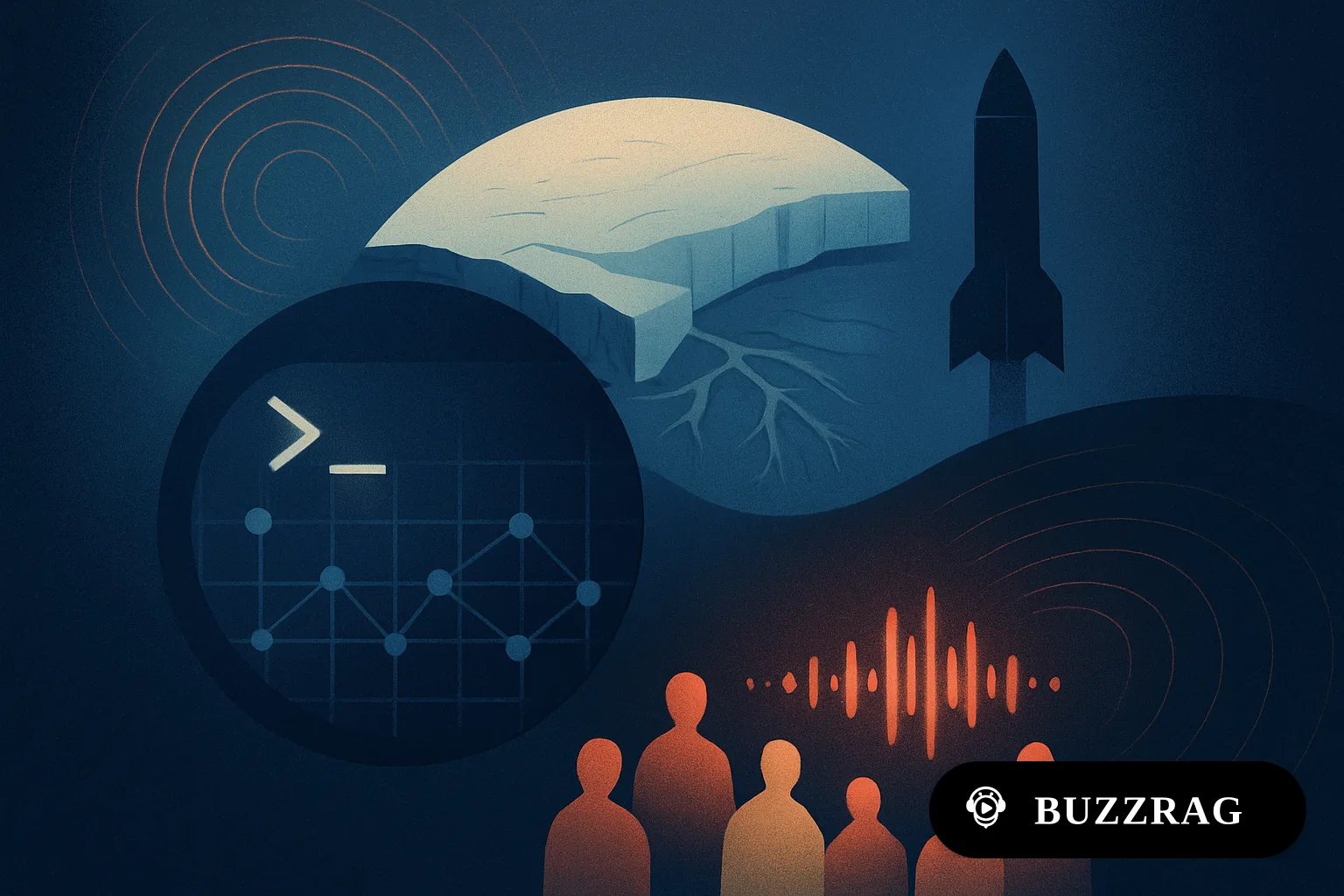
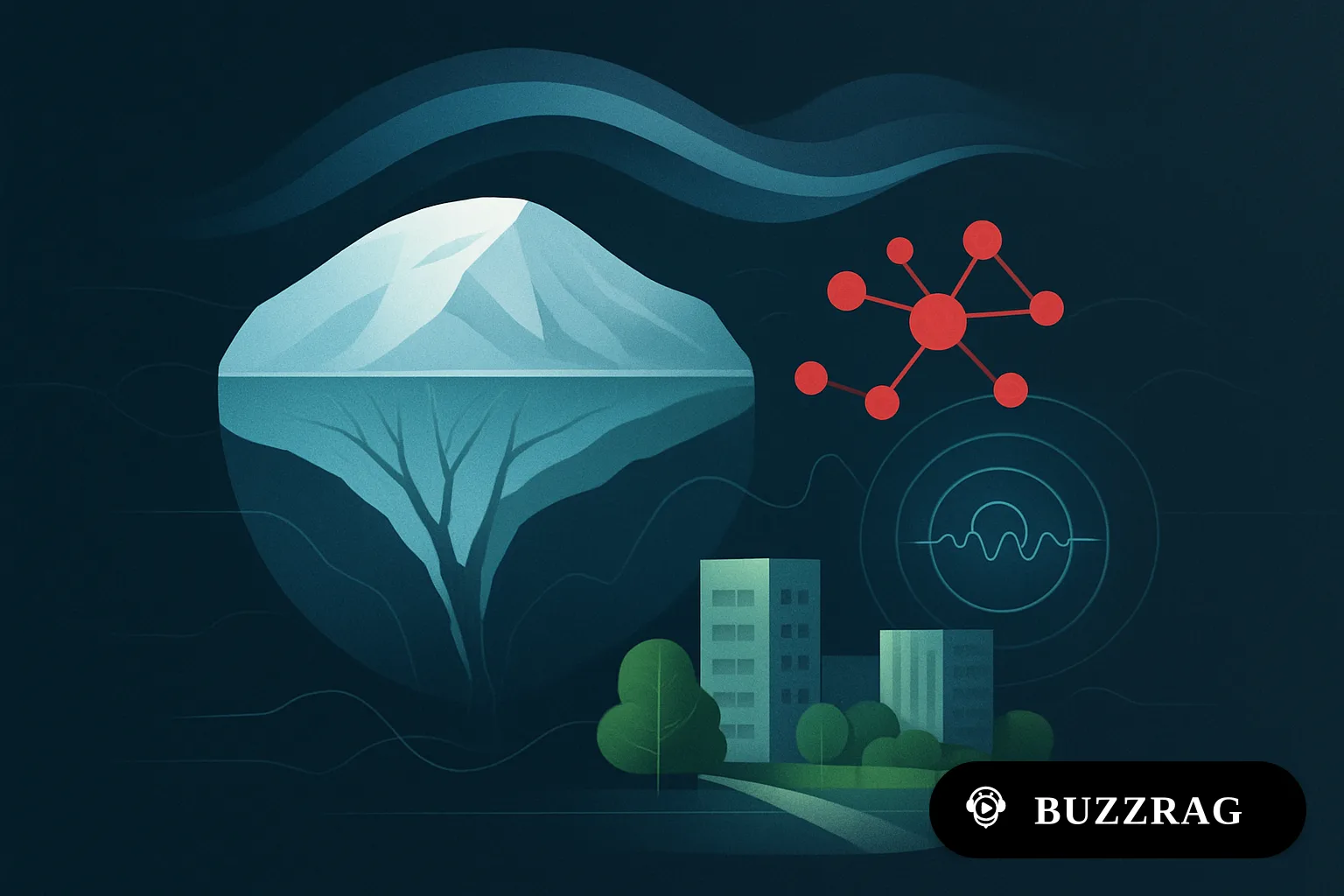
A new arXiv preprint describes a machine-learning pipeline that first learns visual structure from 33,140 natural, satellite, and texture images, then uses physical observations to infer properties of the Earth. The authors report that the same frozen representation can map spatial coordinates into high-resolution fields such as compressional-wave velocity, an ambitious attempt to connect generic pattern recognition with geophysical inference.
The intriguing claim is also the reason for caution. This is a preliminary, non-peer-reviewed result, and performance will depend on the quality, coverage, and assumptions built into the physical observations used for calibration. Generic image features may help organize complex spatial information, but they do not replace geological constraints or direct measurements. Independent tests on regions and datasets not used in development will show whether the method is genuinely informative or mainly adept at reproducing patterns in its training setup.
Antarctic Observations Strengthen Southern Hemisphere Forecast Tests
Forecast experiments suggest that adding radar observations from Antarctica can improve predictions of atmospheric rivers in the Southern Hemisphere. These long, moisture-rich corridors can deliver intense precipitation, and their paths are difficult to model when the Antarctic continent and surrounding Southern Ocean—areas with sparse conventional observations—are poorly sampled.
The finding highlights a basic but consequential feature of weather prediction: model sophistication cannot fully compensate for missing information about the atmosphere’s initial state. The reported gains come from tests, so they should not yet be read as a guarantee of better forecasts for every storm or region; improvement can vary with assimilation methods, model resolution, and the observing network. More sustained observing campaigns and evaluations across seasons will determine how much the radar data improves warnings in operational use.
Metal-Free Probes Combine Deep-Red Fluorescence With MRI Contrast
Researchers report metal-free molecules that emit deep-red light in water and enhance contrast in test MRI images, addressing two persistent limitations of biomedical imaging. Fluorescence can reveal fine cellular detail but is rapidly weakened by tissue, while MRI reaches deep into the body but usually offers less microscopic specificity. Combining complementary signals could eventually provide a richer view of biological processes.
For now, the evidence appears to be at the chemistry and proof-of-concept stage rather than a clinical breakthrough. The important questions include whether the molecules remain stable in living systems, how toxic or rapidly cleared they are, whether their optical signal survives real tissue depth, and whether their MRI performance is strong enough to justify biological use. Animal studies, pharmacokinetic measurements, and comparisons with established contrast agents will determine whether the dual-imaging concept can move beyond test samples and images.
Why Urban Nature Works Best Within Daily Reach
Campaigners are arguing that wildlife-rich green spaces should be created close to where people live, rather than treating nature as something accessed mainly through distant parks or protected areas. The proposal brings together an ecological aim—providing habitat and connectivity—with a public-health concern: making everyday contact with vegetation, shade, and wildlife possible for more urban residents.
Proximity is not a substitute for habitat quality. Small patches can support pollinators, birds, cooling, and storm-water management, but their benefits depend on design, maintenance, safety, and how well they connect to larger habitats. Access also has an equity dimension: greening projects can improve neighbourhood health while raising rents or displacing residents if they are not paired with housing protections. The strongest case will come from projects that measure biodiversity and heat reduction alongside who uses the space and who can continue to live nearby.
A Persistent River Pollution Complaint Tests Environmental Oversight
Residents in Bristol say an oil-like substance has surfaced for years, with reported effects on wildlife, while efforts to secure a definitive investigation have felt painfully slow. The account points to a familiar gap between observing pollution and identifying its source: intermittent discharges, contaminated ground, ageing infrastructure, and complex jurisdiction can all make responsibility difficult to establish.
Anecdotal reports and visible harm warrant investigation, but they do not by themselves identify the chemical, pathway, or polluter. A credible response would require repeated sampling upstream and downstream, chemical fingerprinting, flow and groundwater studies, biological monitoring, and transparent publication of results. The case also illustrates why environmental enforcement needs clear ownership and timely escalation: delayed evidence collection can allow contaminants to disperse and leave communities arguing from symptoms rather than a reconstructable chain of cause.
Consciousness Research Reconsiders the “Stream” of Experience
A new theoretical contribution challenges the assumption that waking consciousness is best understood as a smooth, continuous stream of representations. Its alternative framing treats experience as temporally uneven—more like a sequence with gaps, overlaps, and changing rhythms—and argues that this shift could help reconcile disagreements about the neural correlates of consciousness.
The proposal is a conceptual intervention, not a decisive new measurement of awareness. Its value will depend on whether it generates testable predictions that distinguish a genuinely punctuated or asynchronous experience from a continuous process sampled imperfectly by experiments. Researchers will need to connect the framework to time-resolved neural recordings, behavioural reports, masking and attention tasks, and possibly disorders of consciousness. The field’s central challenge remains the same: translating subjective reports and neural signals into mechanisms without smuggling the conclusion into the experiment’s definitions.
The common thread is not simply technological novelty but better links between observation and inference—whether the target is bedrock, storm moisture, a tumour, or a changing mind. The next useful signals will be validation: independent mapping, out-of-sample model tests, longer observing records, biological safety studies, and measurements that turn public concern into accountable environmental evidence.