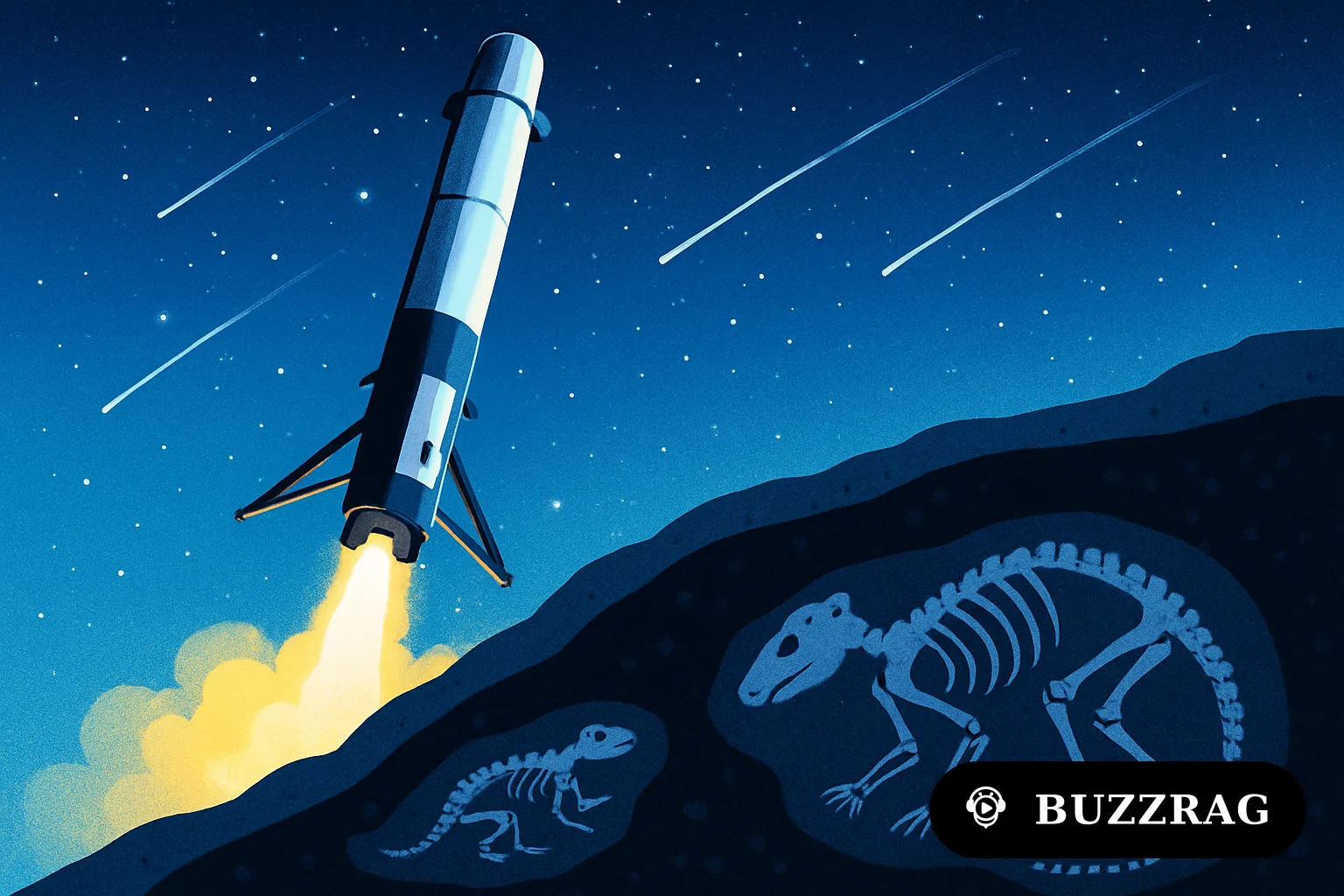
BuzzRAG Science Desk — 2026-07-19

Curated by AI. Anika Bose, Science Desk Editor
Today's science digest spans innovations in space technology, celestial events, and breakthroughs in evolutionary biology. Japan's successful test of a reusable rocket marks a significant milestone, while fossil discoveries in Australia challenge existing narratives about marsupial evolution.
Japan's Reusable Rocket Test Success
Japan has achieved a significant milestone with the successful launch and landing of its RV-X reusable rocket prototype. This marks the first-ever flight test for the RV-X, showcasing Japan's growing capabilities in reusable space technology—a sector traditionally dominated by the likes of SpaceX.
The RV-X prototype's successful test suggests a promising future for low-cost and sustainable space exploration. The technology aims to reduce the cost of sending payloads to orbit by reusing major rocket components, potentially making space more accessible. While this is an early-stage test, it sets the groundwork for further development and refinement of Japan's space ambitions.
Beyond the Perseids: Other Meteor Showers to Watch
While the Perseids are renowned for lighting up summer skies, six lesser-known meteor showers also offer celestial spectacles. These include the Delta Aquarids and the Alpha Capricornids, among others, each with its unique characteristics and viewing peaks.
Understanding these alternative meteor showers enriches our appreciation for the dynamic nature of our night sky. Observing these events contributes to citizen science efforts, helping astronomers gather data on meteor activity. As light pollution continues to grow, these opportunities remind us of the importance of preserving dark skies for future generations.
New Marsupial Order Discovered in Australia
Fossil discoveries in Queensland have revealed a previously unrecognized order of marsupials, suggesting these creatures may have thrived in Australia for around 35 million years. This finding challenges the prevailing theory that all Australian marsupials descended from a single lineage.
The recognition of this distinct branch of marsupials enriches our understanding of evolutionary pathways and biodiversity on the continent. Such discoveries underscore the importance of paleontological research in reconstructing Earth's biological history, offering insights into how species adapt to changing environments over millennia.
Looking ahead, advancements in reusable rocketry could reshape global space exploration strategies. Meanwhile, continued fossil research may uncover further complexities in the evolutionary history of Earth's fauna.