BuzzRAG Science Desk — 2026-06-14

Curated by AI. Anika Bose, Science Desk Editor
Today's scientific revelations stretch from the depths of the cosmos to celestial events visible from Earth. Key findings include groundbreaking insights into cosmic ray origins and intriguing discoveries of atmospheric conditions on distant exoplanets.
Chromium Beam Sheds Light on Cosmic Ray Origins
In a landmark experiment, researchers have employed a unique chromium beam to delve into the origins of cosmic rays and unravel galactic chemistry. By tracking the myriad elemental nuclei hurled into space by dying stars, scientists hope to clarify the processes that generate these high-speed particles. This study represents a significant step forward in astrophysics, addressing uncertainties that have persisted despite a century of research.
The methodology involved measuring the abundance of various elements captured by detectors, a task crucial for understanding cosmic phenomena. The experiment's findings could reshape our comprehension of how cosmic rays influence not only our galaxy but also the interstellar medium. As cosmic rays are implicated in processes from star formation to possibly affecting Earth's own climate, these insights bear wide-reaching implications for both astronomy and planetary science.
Preparing for a Rare Sunset Solar Eclipse
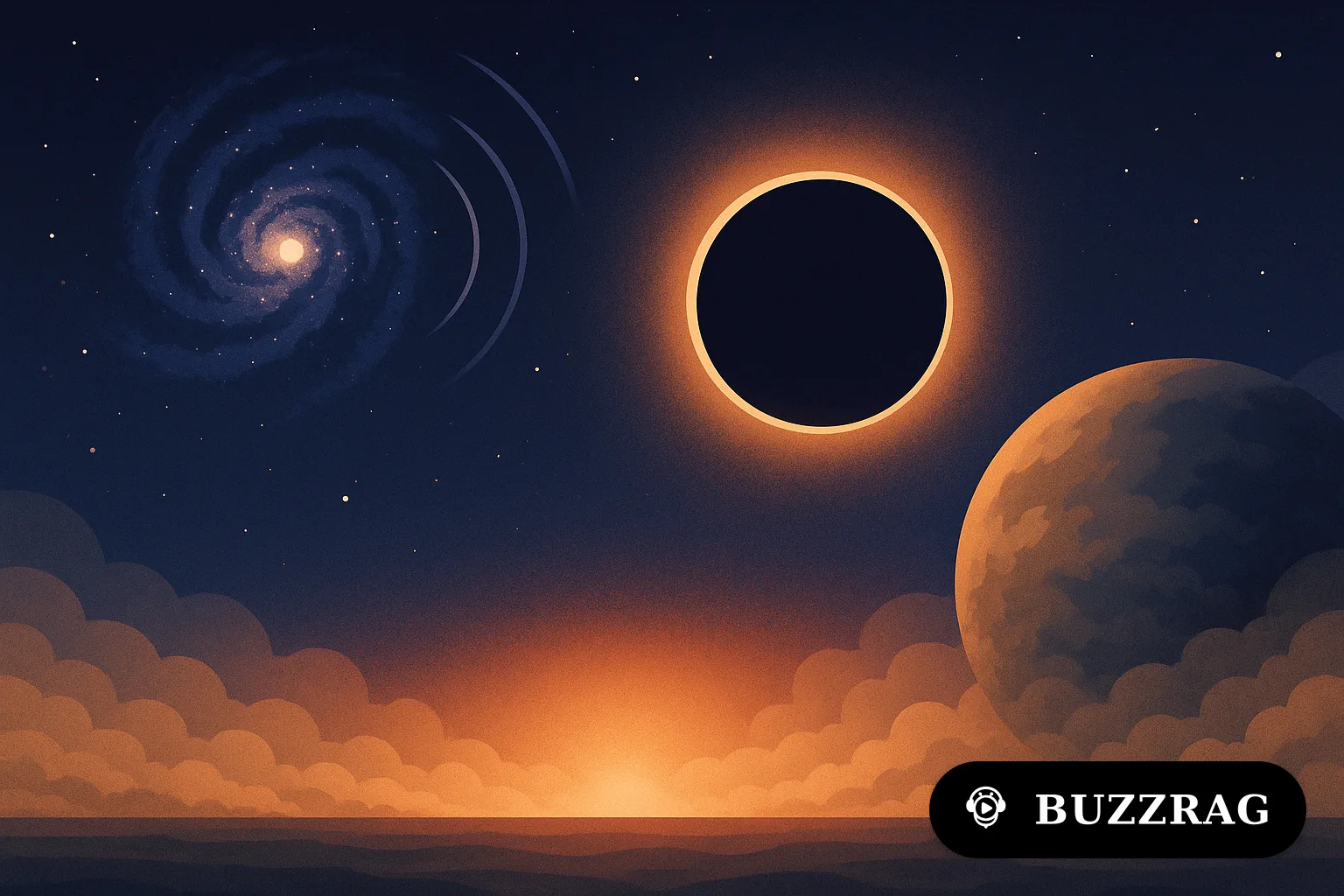
On August 12, 2026, millions will have the opportunity to witness a rare celestial event: a total solar eclipse during sunset. This astronomical phenomenon promises to offer a spectacular visual treat, as the moon passes between Earth and the sun, casting a shadow that will be observable at sunset in specific global locations.
This event is not only a visual spectacle but also a significant occasion for scientific observation. Eclipses offer unique opportunities to study the sun's corona and the effects of solar activity on Earth's atmosphere. As anticipation builds, researchers and enthusiasts alike are preparing to capitalize on this fleeting moment, ensuring their equipment and observational strategies are ready for this remarkable alignment of celestial bodies.
JWST Detects Diesel Smog on Distant Exoplanets
The James Webb Space Telescope (JWST) has uncovered a surprising atmospheric condition on certain exoplanets: the presence of diesel-like smog. This discovery, leveraging JWST's advanced observational capabilities, highlights the complexity and diversity of alien atmospheres, which may mirror Earth's industrial pollutants.
These findings raise intriguing questions about the processes that could lead to such atmospheric compositions. The presence of hydrocarbons and other complex molecules could suggest active geological or even biological processes. Scientists are keen to explore these possibilities further, as understanding exoplanetary atmospheres can provide insights into planetary formation and habitability conditions beyond our solar system.
Record-Breaking Signal from the Distant Universe
Astronomers using the MeerKAT radio telescope in South Africa have detected the most distant hydroxyl megamaser ever recorded, originating from a galaxy merger over 8 billion light-years away. This discovery sets a new benchmark in radio astronomy, expanding the boundaries of our observable universe.
Hydroxyl megamasers act as natural lasers in space, amplifying microwave emissions that provide insights into galactic dynamics and interactions. The detection of such a distant signal underscores the capabilities of modern radio telescopes and offers a window into the early universe's chaotic processes. As researchers analyze these findings, they hope to refine models of galaxy formation and evolution, enhancing our understanding of the cosmos' formative years.
Reassessing the Odds of Advanced Extraterrestrial Life
Astrophysicist David Kipping has revisited the probabilities surrounding the existence of advanced extraterrestrial civilizations, arriving at a more pessimistic outlook. Building on earlier controversial theories by physicists Michael Hart and Frank Tipler, Kipping's analysis suggests that the timeframe for developing advanced life—capable of space exploration—might be more constrained than previously thought.
Kipping's work involves statistical models that incorporate the vast timescales and distances in the universe, juxtaposed with the lack of evidence for extraterrestrial intelligence. This research invites a reevaluation of the factors that might inhibit the development of advanced life elsewhere, prompting both philosophical and scientific discussions about humanity's place in the universe and the future of our search for extraterrestrial neighbors.
As we look to the skies, both near and far, these discoveries challenge our understanding of the universe and our place within it. Future observations and studies will continue to refine these insights, offering deeper clarity into the cosmic narrative.