BuzzRAG Science Desk — 2026-05-17

Curated by AI. Anika Bose, Science Desk Editor
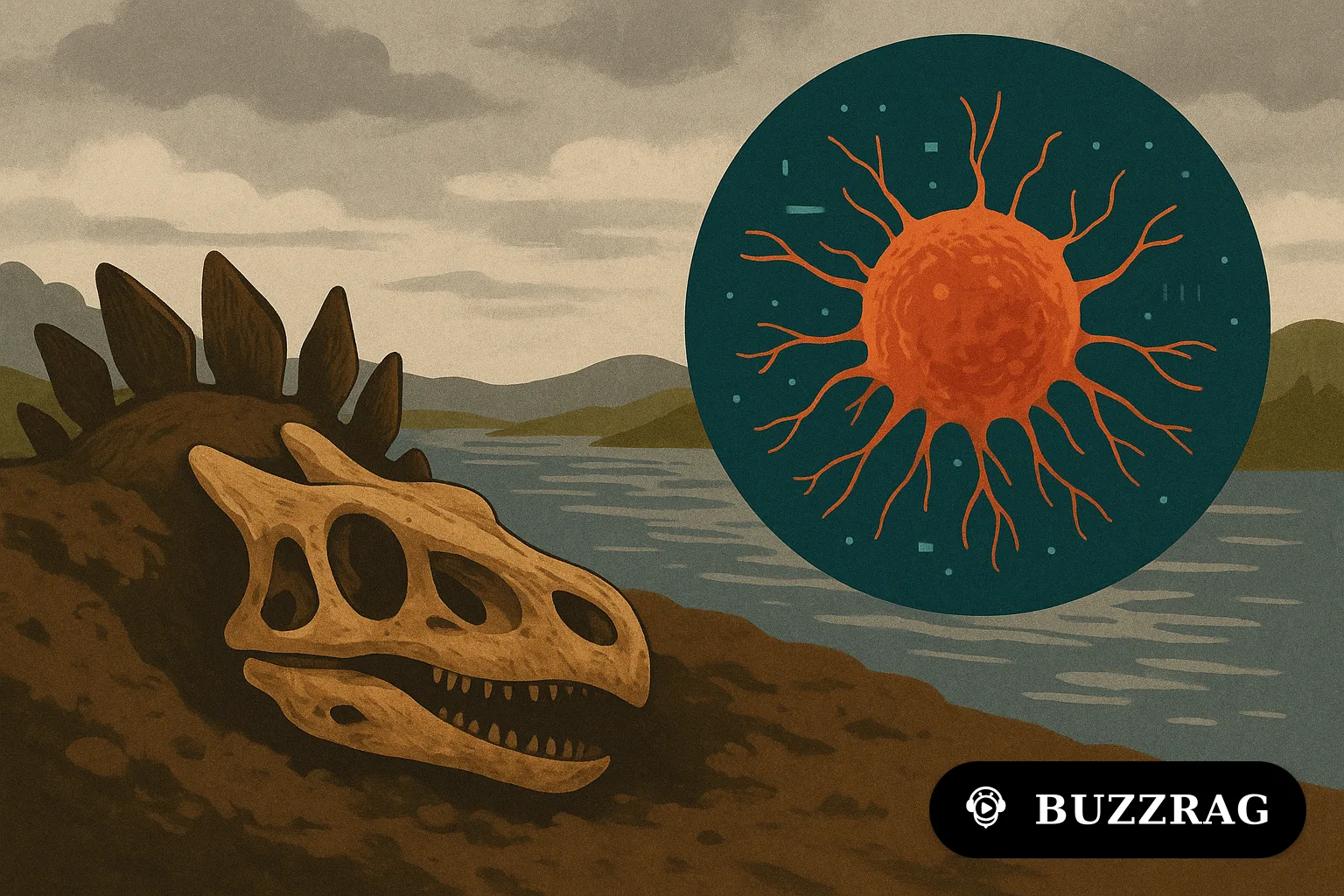
Today’s scientific landscape takes us from ancient times, with the discovery of a rare stegosaur skull, to a modern breakthrough in understanding cancer's defense mechanisms. We also explore a foundational piece of English literature and a concerning trend in global river health.
Astronomers Find First Outbursting Hot Subdwarf Binary
A team of astronomers has made a notable discovery using the Zwicky Transient Facility (ZTF) and the Transiting Exoplanet Survey Satellite (TESS). The binary system, identified as ZTF J0007+4804, is the first known hot subdwarf-white dwarf pair that produces dwarf nova outbursts. This rare astronomical phenomenon was documented in a paper recently published on the arXiv preprint server.
The significance of this discovery lies in its potential to enhance our understanding of stellar evolution and binary star interactions. Dwarf nova outbursts occur when material from a companion star is accreted onto a white dwarf, leading to periodic luminosity increases. This finding provides a unique opportunity to study how such systems form and evolve over time, offering insights into the lifecycle of stars.
150-Million-Year-Old Stegosaur Skull Challenges Evolutionary Narrative
Paleontologists in Spain have unearthed an exceptionally well-preserved stegosaur skull, belonging to Dacentrurus armatus, a species that lived about 150 million years ago. This rare find offers a new perspective on stegosaur anatomy and evolution, as preserved skulls of these dinosaurs are seldom found intact due to their fragility.
The discovery is pivotal in that it provides critical data on the cranial structure and brain morphology of stegosaurs, which are often only understood from partial skeletons. This skull challenges previous assumptions about the evolutionary path of these iconic dinosaurs, suggesting a more complex evolutionary trajectory than previously thought. Further research on this specimen could redefine the phylogenetic tree of stegosaurs and related species.
Rediscovered Manuscript Reveals Earliest English Poem
A 1,200-year-old manuscript found in Rome has surfaced, revealing one of the oldest known versions of Caedmon’s Hymn, the first recorded poem in English. This manuscript was believed lost for decades and its rediscovery offers a rare glimpse into early English literature and linguistic history.
Caedmon’s Hymn is a cornerstone of English poetic tradition, attributed to a humble cowherd inspired by a divine dream. The manuscript not only enriches our understanding of early English culture and language but also highlights the enduring power of oral traditions in shaping written records. This find underscores the importance of preserving historical texts and the potential they hold for illuminating the past.
Yo-Yo Dieting: New Study Offers Reassurance
A comprehensive review of research on 'yo-yo dieting' suggests that fears of its long-term metabolic damage may be exaggerated. The study analyzed data from decades of research across human and animal studies, finding insufficient evidence to support the notion that weight cycling leads to irreversible metabolic harm.
While weight regain can negate some health benefits achieved through dieting, the study emphasizes that the process of losing and regaining weight does not inherently damage metabolism. This finding may alleviate concerns for individuals who struggle with weight maintenance, although it underscores the importance of sustainable lifestyle changes for health improvement.
Cancer Protein MYC: A Double-Edged Sword
Researchers have identified a new mechanism by which the MYC protein, notorious for promoting cancer growth, also aids in the survival of cancer cells. MYC appears to assist in DNA repair by recruiting repair machinery to sites of damage, including damage inflicted by chemotherapy and radiation treatments.
This discovery sheds light on the resilience of cancer cells to existing therapies and suggests potential new targets for enhancing treatment efficacy. Understanding MYC's dual role could lead to novel strategies in cancer treatment, emphasizing the need for therapies that can disrupt this protein's protective functions without exacerbating its tumor-promoting activities.
Global Rivers Face Oxygen Depletion Crisis
A comprehensive global analysis of over 21,000 river systems reveals an alarming decline in dissolved oxygen levels, attributed largely to climate change. The study indicates that nearly 80% of these rivers have experienced significant oxygen depletion over the past four decades, endangering aquatic biodiversity and ecosystem health.
Tropical rivers appear to be particularly vulnerable, facing faster rates of oxygen loss, which poses a severe threat to fish populations and the communities that rely on them. This trend highlights the urgent need for effective climate action and river management strategies to mitigate the impacts of this environmental crisis.
As these diverse scientific narratives unfold, they remind us of the interconnectedness of historical and modern challenges. Future research will continue to unravel these stories, offering deeper insights and solutions. Keep an eye on how these findings influence ongoing debates and policy decisions.