BuzzRAG Science Desk — 2026-04-30

Curated by AI. Anika Bose, Science Desk Editor
Today’s digest spans the vastness of space and the intricacies of cutting-edge technology. From cosmic phenomena captured by the Hubble Space Telescope to advancements in fusion energy, these developments pave the way for future discoveries. We explore both the newest insights in astrophysics and practical steps towards sustainable energy solutions.
Hubble Captures Barred Spiral Galaxy IC 486
The Hubble Space Telescope has provided a stunning image of the barred spiral galaxy IC 486, glowing softly against the void of space. This visual captures the intricate structures and dynamic processes that continue to shape our universe. The image highlights the sheer scale and beauty of cosmic formations.
Cosmic Rays and Galactic Dynamics
A new study reviews the role of cosmic rays in galactic and circumgalactic environments, vital for understanding star formation and galaxy evolution. The paper discusses modern models that integrate cosmic ray physics with magnetohydrodynamics. These insights are crucial for refining simulations of cosmic phenomena.
Advancements in Astrophysical Timestepping
Researchers have developed new time-dilation methods for simulations requiring extreme multiscale timestepping, crucial for modeling astrophysical processes around 'special points' like black holes. These methods enhance computational efficiency while maintaining accuracy. Such innovations push the boundaries of what we can simulate and predict in astrophysics.
Optical Clocks in Gravitational Wave Detection
A study investigates the use of optical lattice clock networks to detect the stochastic gravitational-wave background, utilizing cross-correlation techniques. This approach could improve the sensitivity and resolution of gravitational wave detection. Such advancements expand our toolkit for exploring the universe's most elusive phenomena.
Parker Solar Probe and Magnetic Reconnection
The Parker Solar Probe has observed magnetic reconnection events in the heliospheric current sheet near the Sun, providing new insights into plasma dynamics. These findings refine our understanding of how magnetic energy is converted in space. Such studies are pivotal in predicting space weather impacts on Earth.
Reassessing the Carrington Event
New analyses of polar ice core samples reveal concentrations of 36Cl, setting constraints on the solar energetic particle events associated with the 1859 Carrington Event. This research challenges assumptions about the scale of historical geomagnetic storms. It prompts reevaluation of solar storm preparedness plans.
Fusion Breakthrough: Sustaining Plasma
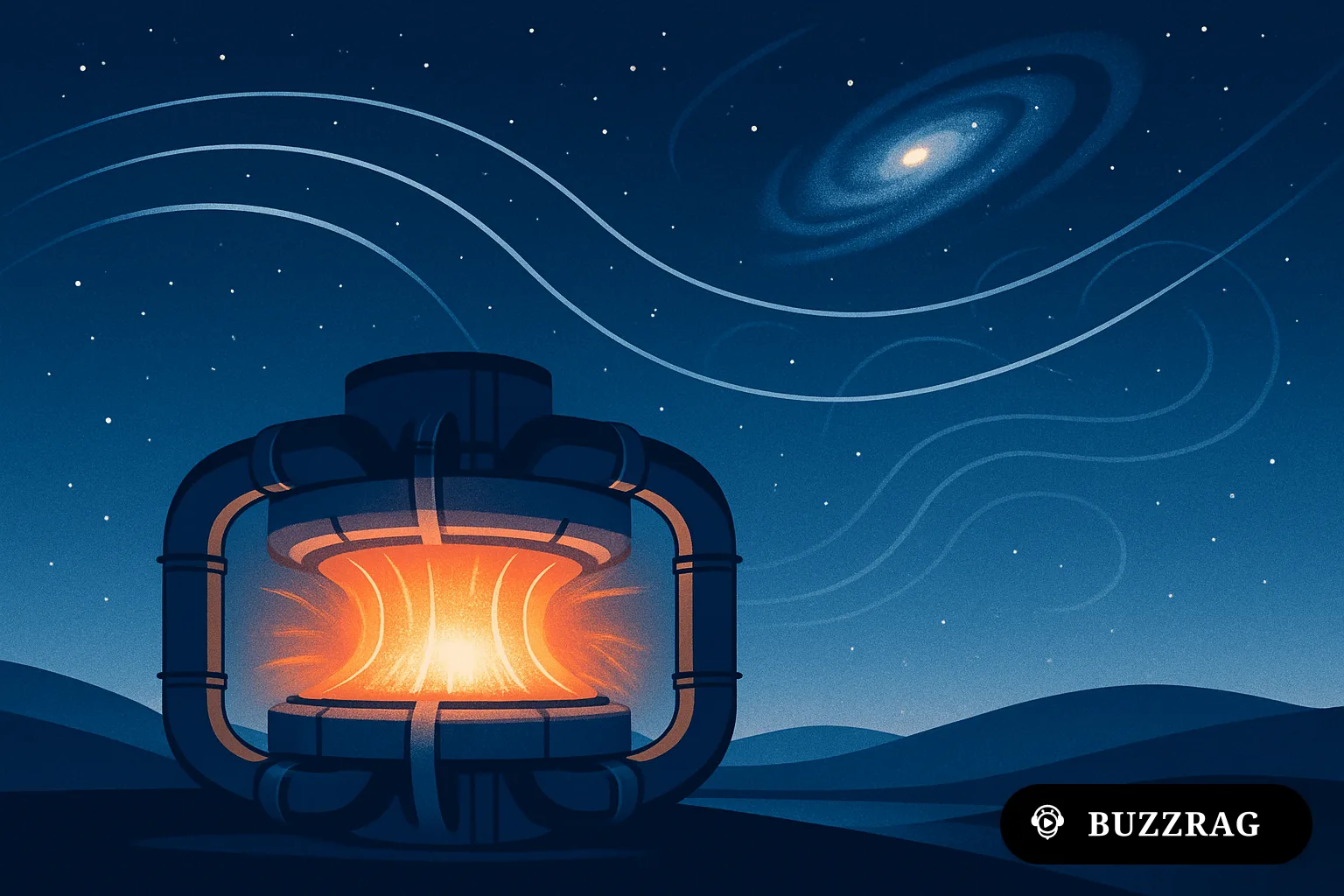
A novel tokamak regime has been demonstrated, maintaining stable fusion plasma for one minute while reducing heat loads. This development marks a step forward in achieving practical fusion energy, a potential game-changer for clean energy solutions. Sustaining such conditions brings us closer to the long-sought goal of fusion power.
As we look ahead, the intersection of advanced simulations, observational innovations, and energy breakthroughs promises to redefine our understanding of the universe and our role within it. Next, we anticipate further developments in gravitational wave astronomy and continued progress in sustainable fusion energy. Stay tuned as we continue to explore the frontiers of science and technology.