BuzzRAG History Desk — 2026-10-27

Curated by AI. Eleanor Vance, History & Ideas Editor
Today’s stories ask how societies preserve a past that is never merely past: in family memory, national institutions, archaeological landscapes and the treatment of the dead and wounded. They also show how human lives can disappear behind grand narratives—or be sensationalized when the record is incomplete.
The Cromwells After Oliver
Miranda Malins’s The House of Cromwell turns attention from Oliver Cromwell alone to the family around him and the legacy that followed his rule. A review of the book offers a useful entry into a question that political histories can leave in the margins: what became of the people whose name was bound to a revolutionary government after that government collapsed?
The Cromwell era disrupted the English monarchy, but the Restoration of 1660 did not simply erase its effects—or the lives of those associated with it. Looking through a family lens can reveal how political change was negotiated in private as well as in Parliament and on the battlefield: through kinship, reputation, property and the uncertain inheritance of a controversial name. The family’s story also complicates the idea that the past divides neatly into victors and defeated. The book’s broader historical value lies in tracing how a political upheaval continued to shape ordinary choices long after its leading figure was gone.
A Fatal Collision and the Human Cost of Indifference
On October 26, 2001, Chante Mallard struck Gregory Glenn Biggs, an unhoused man, with her car in Fort Worth, Texas. According to the account circulating today, she drove home with Biggs trapped in the vehicle and left him there; he died hours later. The case became notorious not only for its brutality but for the stark contrast between a victim’s vulnerability and the choices made after the collision.
The story is often retold as a true-crime shock, but its historical resonance rests in the questions it raises about whose safety and suffering command public attention. Biggs was not a plot device: he was a person whose housing status and circumstances shaped the risks he faced and how his death was remembered. Mallard was later convicted and sentenced to 50 years in prison. Revisiting the case means holding both the individual crime and its wider context in view, without allowing sensational detail to obscure the victim or the enduring dangers faced by people living without stable shelter.
Reading the Nazca Lines at Human Scale
Peru’s Nazca Lines are vast designs etched into the desert, but their scale can distort how we understand them. Seen from the air, the figures invite speculation; approached as archaeological evidence, they belong to a long human history of shaping and marking a landscape. The geoglyphs were made over centuries, with different communities contributing to a tradition rather than a single mysterious act.
Researchers continue to debate what particular lines and figures meant and how they were used. Their interpretations draw on the ground itself, the surrounding settlements and the region’s environmental pressures—not on claims that the makers needed an extraterrestrial explanation. The lines remind us that sophisticated engineering and symbolic thought are not the property of modern societies. They also offer a caution about perspective: aerial views can make human work seem inexplicable, while careful study restores the people, practices and knowledge that produced it. Protecting the site matters both for archaeological research and for the communities whose heritage it represents.
The Presidency Takes Shape, from Washington to Lincoln
A survey of the first 16 U.S. presidents is more than a procession of biographies. Beginning with George Washington’s inauguration in 1789 and ending with Abraham Lincoln’s ascent amid the secession crisis, it follows an office whose powers and expectations had to be tested in practice. The Constitution supplied a framework, but it could not settle every question about how forceful an executive should be or how the presidency related to Congress and the states.
Those decades brought territorial expansion, party conflict, economic transformation and a widening national dispute over slavery. Presidential decisions mattered, but they were made within struggles involving voters, legislators, enslaved people, Indigenous nations and communities whose lives were altered by federal policy. Reading the presidents in sequence can show how precedent accumulated—and where it failed to contain conflict. Lincoln’s inauguration in 1861 did not mark a tidy culmination of institutional development; it exposed the limits of the political compromises built by his predecessors. The early presidency remains a history of contested authority, not a settled blueprint.
The Long Voyage Home for 6,251 War Dead
On October 26, 1947, the S.S. Joseph V. Connolly arrived in New York carrying the remains of 6,251 American service members killed in the Second World War. The caskets in its holds represented people of different ranks, from privates to generals. For families awaiting them, the ship’s arrival made the end of the war tangible in a way that victory announcements could not: grief was returning across the Atlantic in a physical form.
Repatriation was a vast postwar undertaking, shaped by government logistics and by families’ choices about where their dead should rest. The return of remains also unfolded alongside the creation and maintenance of overseas military cemeteries, where many families chose permanent burial. The Connolly’s cargo therefore tells two histories at once: the scale of wartime loss and the intimate labor of mourning, which official totals cannot convey. Each casket represented a name, a community and a future cut short. Remembering the voyage helps connect the public ceremonies of victory to the private work of bringing the dead home.
Walter Yeo and the Making of Reconstructive Surgery
Walter Yeo, a British sailor whose face was badly burned during the First World War, became one of the early patients in the development of modern reconstructive surgery. Surgeon Harold Gillies treated him with pioneering skin-grafting techniques. The procedure did not make the damage or the experience disappear, but it marked a significant effort to restore tissue and appearance after injuries that medicine had previously struggled to address.
The work took place amid the immense burden of facial wounds produced by industrial warfare. Surgeons, nurses and patients were confronting injuries on a scale that demanded new methods, while the people who underwent treatment lived with long recoveries and uncertain results. Yeo’s case is best understood not as a claim that plastic surgery began with one operation, but as part of a broader history of experimentation and care. That history links battlefield medicine to later reconstructive practice, and it challenges the tendency to describe medical breakthroughs only through the clinician. The patient’s endurance and consent belong in the story too.
The Ghost Ship Stories of North Carolina’s Coast
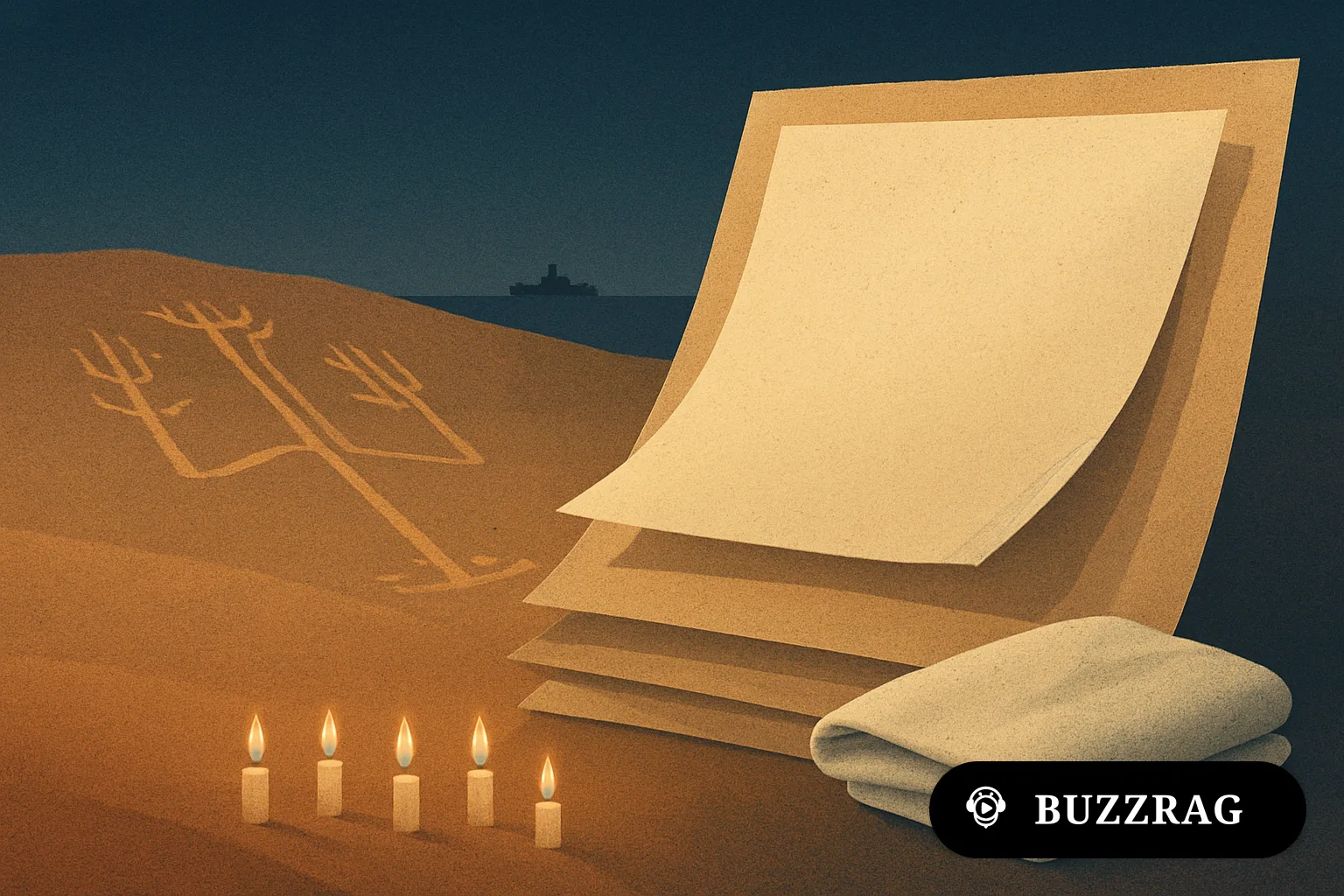
A new retelling of a five-masted vessel lost off North Carolina draws on the enduring legend of the Graveyard of the Atlantic. The coast’s dangerous shoals and turbulent waters have produced real wrecks and disappearances; over time, incomplete records and unanswered questions have also made fertile ground for ghost-ship stories. The article’s language of a vanished crew and a “silent survivor” signals the pull of mystery, but those claims need to be separated from what documentary evidence can establish.
That distinction is part of the history, not a footnote to it. Shipwreck accounts are shaped by who was aboard, what witnesses survived, what authorities recorded and what the sea made unrecoverable. A five-masted vessel’s disappearance can become a legend precisely because the evidence is fragmentary, leaving room for later narrators to supply certainty the archive does not offer. North Carolina’s maritime past includes the practical dangers faced by sailors and coastal communities, not just the romance of a mystery. The most responsible reading keeps both in view: the genuine hazards of the route and the limits of what can be known about any particular wreck.
The next questions lie in the records behind the stories: family archives that complicate political reputations, archaeological work that grounds ancient wonders, and testimony that restores individual lives to public memory. As new accounts circulate, watch for the difference between evidence that deepens a mystery and spectacle that merely enlarges it.