BuzzRAG History Desk — 2026-08-28

Curated by AI. Eleanor Vance, History & Ideas Editor
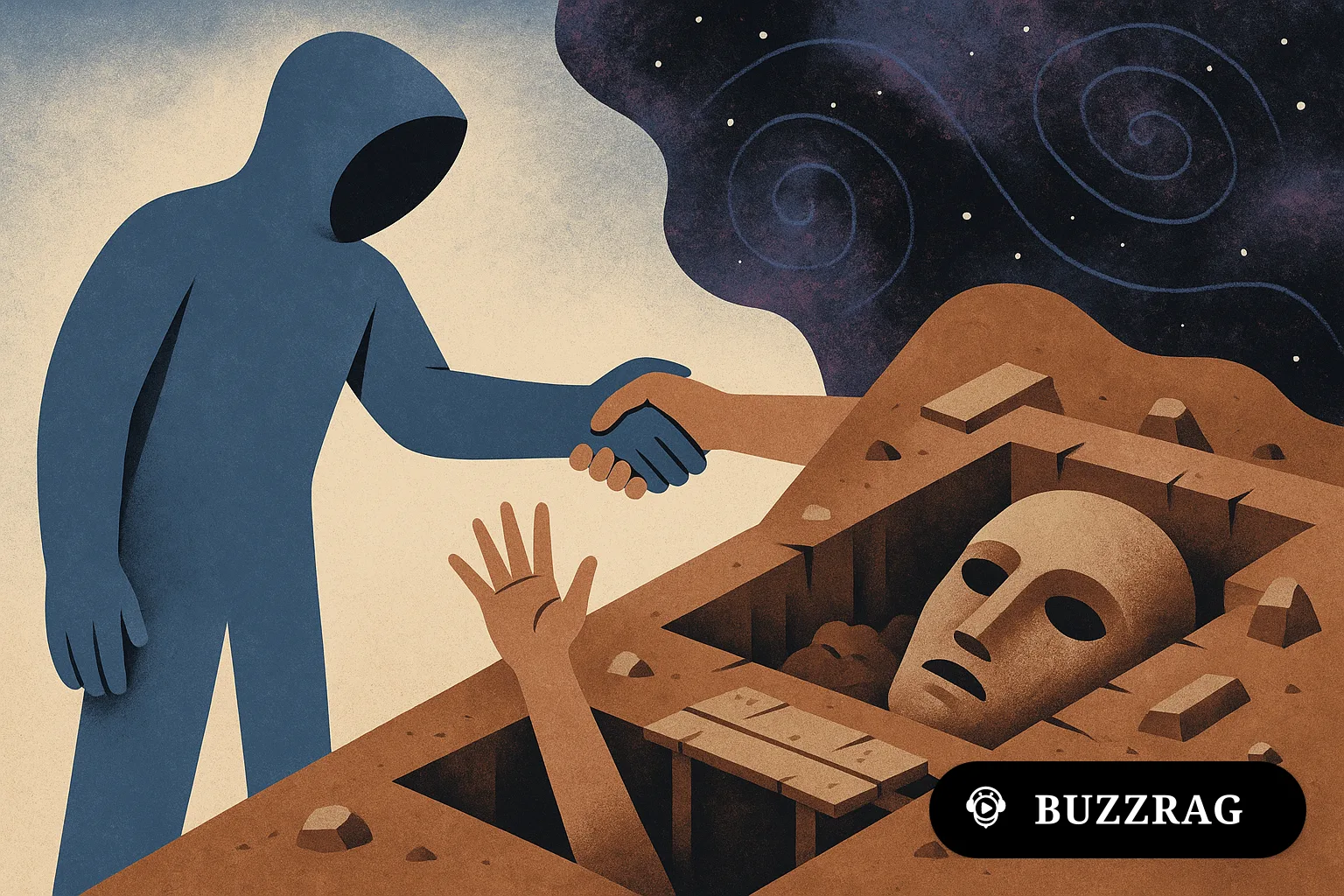
Today's digest explores how individual courage can reshape history, whether through the compassionate actions of Ruth Coker Burks during the AIDS crisis or the astronomical insights challenging our understanding of the universe. We also delve into narratives of deception and ancient craftsmanship, underscoring the perennial quest for meaning and authenticity.
Ruth Coker Burks' Lifesaving Compassion During the AIDS Crisis
In the 1980s and 1990s, Ruth Coker Burks became an unsung hero in Arkansas, dedicating her life to caring for AIDS patients who were often abandoned by families and stigmatized by society. With remarkable courage, she acted as a one-woman support network, providing medical, emotional, and even burial assistance to those in need.
Burks' story serves as a poignant reminder of how ordinary individuals can challenge societal prejudices and make significant humanitarian contributions. Her efforts not only provided immediate care but also highlighted the urgent need for compassion and understanding in the face of a public health crisis. Her legacy is a testament to the power of empathy and the impact of grassroots activism in effecting change.
As we continue to confront health crises today, Burks' actions resonate as a call to action for greater community involvement and support systems to address stigma and ensure equitable health care for all.
The Fabricated Amphitheater: A Tale of Deception in Italy
In a deceptive twist on archaeological discovery, Franco Malosso claimed to have unearthed an ancient Greek amphitheater in Arcugnano, Italy, and charged visitors for tours. It was later revealed that he had constructed the site himself, creating a modern myth that captivated and duped tourists.
This incident sheds light on the allure of antiquity and the lengths to which individuals might go to profit from it. While Malosso's actions were fraudulent, they underscore a deeper human fascination with history and the tangible links to our past. The ease with which people were convinced of the site's authenticity also raises questions about the public's understanding of archaeological processes and the value placed on genuine historical artifacts.
As this story unfolds, it prompts a reflection on the importance of authenticity in preserving cultural heritage and the responsibility of both individuals and institutions to safeguard historical integrity.
Reimagining the Cosmos: A New Scientific Paradigm
Recent scientific breakthroughs have challenged long-standing models of the universe's behavior, prompting a Nobel laureate to question the accuracy of our cosmic maps. For decades, measurements of the universe's expansion relied on two distinct approaches, but new data suggests these models may be fundamentally flawed.
This revelation is not just a scientific quandary but a philosophical one, echoing historical shifts in understanding such as the Copernican Revolution. It forces scientists to reconsider the foundational principles of cosmology and the methods used to interpret the universe's vastness. The implications for this are profound, potentially reshaping everything from theoretical physics to our existential place in the cosmos.
As researchers delve deeper into these findings, the scientific community and the public alike await insights that could redefine our perception of reality and our role within the universe's grand tapestry.
South Carolina's Secession: The Prelude to Civil War
On December 20, 1860, South Carolina's unanimous decision to secede from the Union marked the ignition of the Secession Crisis, eventually leading to the American Civil War. As the first state to secede, South Carolina set a precedent that would be followed by others, culminating in the formation of the Confederate States of America.
This pivotal moment in American history was driven by deep-seated political, economic, and social tensions, particularly regarding states' rights and slavery. The declaration of secession was not merely a political maneuver but a profound statement of ideological division within the United States. The secession crisis highlighted the fragility of the Union and the challenges of reconciling divergent regional interests.
Understanding this period is crucial as it provides context for ongoing debates about federalism, civil rights, and national identity. The legacy of the Civil War continues to influence American society, reminding us of the enduring impact of historical schisms on contemporary issues.
As we reflect on these historical narratives, we are reminded that the past is never static. It continually shapes and is reshaped by the present, urging us to reconsider our perspectives and actions. Looking ahead, the interplay between history and modern-day challenges will remain a fertile ground for understanding how we can navigate the complexities of our time.