BuzzRAG History Desk — 2026-07-18

Curated by AI. Eleanor Vance, History & Ideas Editor
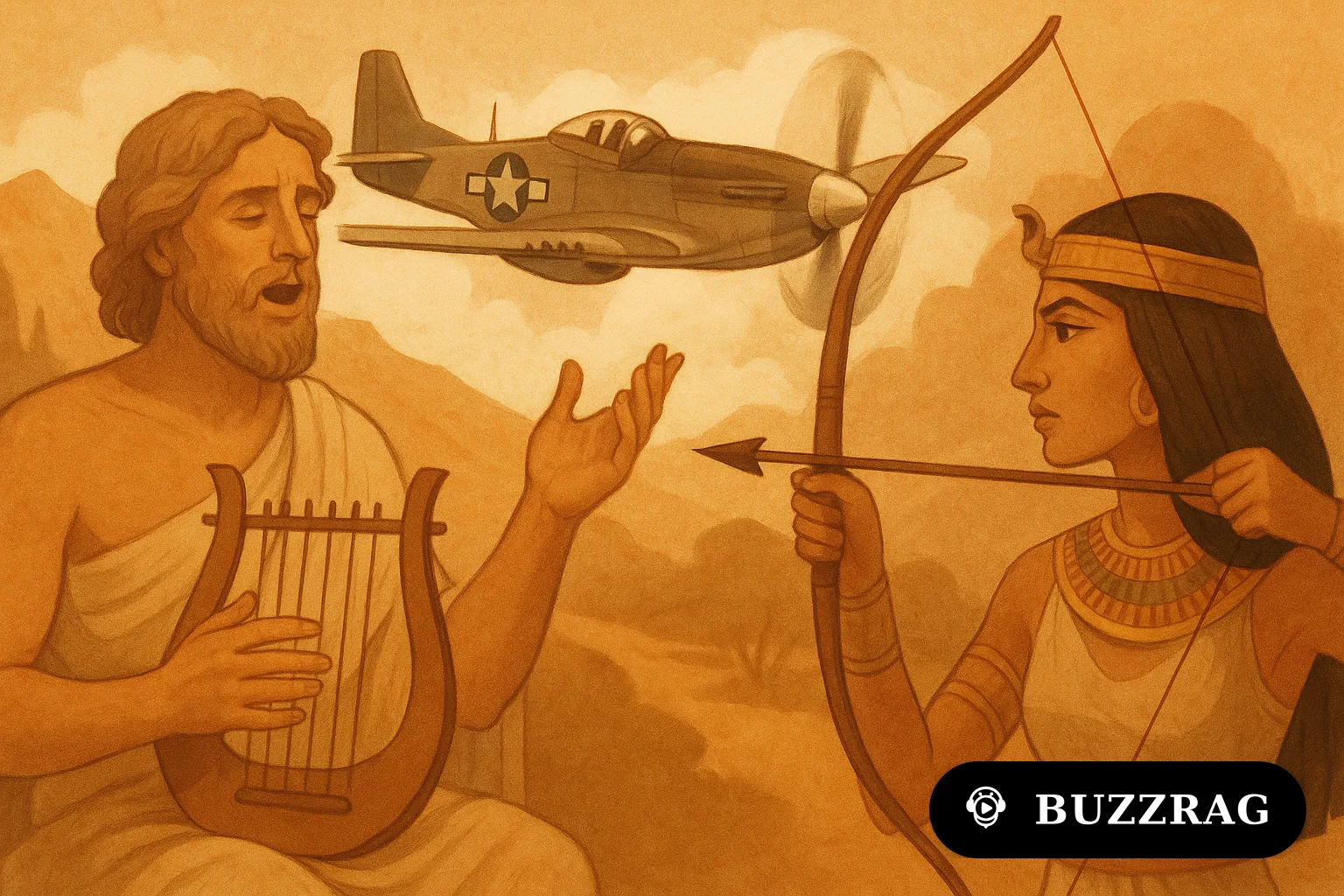
Today's historical narratives reveal the enduring power of storytelling from Homer's epic tales to Hollywood's latest interpretations. We also delve into military innovations and overlooked figures in history, offering perspectives on how the past shapes our present.
The Timeless Odyssey: From Oral Tradition to Blockbuster
The Odyssey, long attributed to the ancient Greek poet Homer, has never existed in a single 'original' form. With roots in oral tradition, the epic has been retold countless times, each version adapting to its context and audience. Christopher Nolan's latest film adaptation brings this mythic journey to contemporary screens, reigniting debate about the authenticity and ownership of cultural narratives.
The fragmented papyri that scholars study today offer glimpses into the poem's ancient past, but they are far from definitive. The evolution of The Odyssey underscores the fluidity of oral traditions, where stories are living entities rather than static texts. This adaptability has allowed The Odyssey to survive millennia, reflecting the values and concerns of each age it touches.
As modern audiences consume this ancient epic through new media, questions arise about fidelity to 'original' narratives and the role of interpretation. Nolan's film, like many adaptations before it, raises the issue of how much creative liberty storytellers can take and what this means for our understanding of ancient works.
The P-51 Mustang: Revolutionizing Aerial Combat
The North American P-51 Mustang stands as a testament to innovation in military aviation during World War II. Designed initially for the British RAF, the Mustang became a crucial asset for the United States, providing long-range escort to bombers over Europe. Its superior speed, range, and maneuverability redefined aerial combat and contributed significantly to the Allied victory.
The Mustang's development marked a shift in military strategy, emphasizing air superiority and the need for versatile aircraft capable of fulfilling multiple roles. Its ability to escort bombers deep into enemy territory without refueling was a game-changer, reducing bomber losses and ensuring more effective missions.
Today, the P-51 Mustang is celebrated not only for its wartime achievements but also as an icon of engineering prowess. Its legacy persists in the ongoing evolution of military aircraft design, where the principles of versatility and efficiency continue to guide innovation.
Warrior Princesses of Ancient Egypt
Recent studies have shed new light on the martial prowess of ancient Egyptian princesses, challenging long-held assumptions about gender and warfare in ancient societies. The discovery of weapons in their tombs, once thought symbolic, now suggests that these royal women were trained in combat and skilled in archery, reflecting a society where women could play active roles in defense and leadership.
The reassessment of these burial artifacts is part of a broader re-evaluation of women's roles in ancient civilizations. It reveals a more nuanced picture of gender dynamics, where women, particularly of royal lineage, were not merely passive figures but active participants in their society's military and political spheres.
This revelation invites a rethinking of historical narratives that have often sidelined female figures in favor of their male counterparts. As more evidence emerges, the stories of these warrior princesses add depth to our understanding of ancient Egyptian culture and the complex roles women played within it.
Calypso and the Allure of the Odyssey
In the mythological tapestry of The Odyssey, Calypso emerges as a captivating yet enigmatic figure. Her name, meaning 'to hide' or 'to conceal,' reflects her role in Odysseus's journey as both a captor and a lover. While her island, Ogygia, serves as a refuge from the turbulent seas, it also becomes a prison of temptation, delaying Odysseus's return home for years.
Calypso's story highlights the themes of desire and entrapment that pervade The Odyssey. Her character embodies the tension between the allure of the unknown and the pull of duty and home. This duality resonates with audiences across ages, offering a lens through which to examine the complexities of human motivation and the choices that define our paths.
As modern adaptations revisit these ancient stories, Calypso's tale continues to intrigue, inviting interpretations that explore power dynamics and the nature of freedom. Her presence in the narrative serves as a reminder of the timeless struggles between personal desires and larger destinies.
The Anaconda Plan's Unseen Toll
Winfield Scott's Anaconda Plan, a Civil War strategy aimed at suffocating the Confederacy's resources, has been historically vindicated for its strategic effectiveness. However, its implementation came at a great human cost, particularly among Southern civilians and enslaved people who suffered from starvation, economic devastation, and continued bondage.
The plan's success lay in its ability to blockade Southern ports and control the Mississippi River, effectively cutting off supplies and dividing the Confederacy. Yet, the prolonged timeline required to achieve these aims meant that ordinary people bore the brunt of its consequences, living through years of deprivation and uncertainty.
This historical episode serves as a poignant reminder of the collateral damage that often accompanies military strategies. It prompts reflection on the ethical implications of warfare tactics and the need to consider the humanitarian impacts alongside strategic goals. As we study history, acknowledging these costs is crucial in shaping more compassionate policies in future conflicts.
The Human Touch in Medieval Manuscripts
Medieval manuscripts are not only artistic treasures but also windows into the lives of the scribes who created them. In a recent exploration, Sienna Wells, a dealer and enthusiast of medieval scribal arts, delves into the intricacies of these manuscripts, highlighting the human stories behind their creation. These artifacts, painstakingly crafted by hand, reflect the devotion and skill of medieval scribes, whose work preserved knowledge through the ages.
Wells's insights illuminate the types of manuscripts that survive today, from religious texts to literary works, and the meticulous processes involved in their creation. The laborious art of manuscript writing required not only technical skill but also a deep commitment to the preservation of culture and knowledge.
As interest in collecting medieval manuscripts grows, there's an increasing appreciation for the personal narratives they embody. Each manuscript tells a story not just of its content, but of the people who brought it into being, offering a rich tapestry of human endeavor and creativity that continues to inspire collectors and historians alike.
The Complex Legacy of Audie Murphy
Audie Murphy's life story is a compelling narrative of heroism overshadowed by personal struggle. As America's most decorated soldier in World War II, Murphy's battlefield exploits became the stuff of legend, earning him a place in Hollywood's pantheon of war heroes. Yet beneath the surface of his public persona lay a man tormented by the psychological scars of combat.
Murphy's transition from soldier to actor illustrates the duality of his existence, where fame could not erase the trauma of war. His struggles with post-traumatic stress and survivor's guilt highlight the often unspoken burdens carried by veterans, a reality that resonates with many today.
This exploration of Murphy's life invites a broader conversation about how societies honor military service while addressing the lasting impacts of war on individuals. His legacy is a reminder of the complex interplay between heroism and vulnerability, offering insights into the ongoing challenges faced by those who serve in armed conflicts.
As we examine these historical narratives, we see how ancient myths, military strategies, and personal stories continue to shape our cultural and ethical landscapes. Future developments in historical research and storytelling will further illuminate these connections, offering new insights into our shared past.