BuzzRAG History Desk — 2026-06-26

Curated by AI. Eleanor Vance, History & Ideas Editor
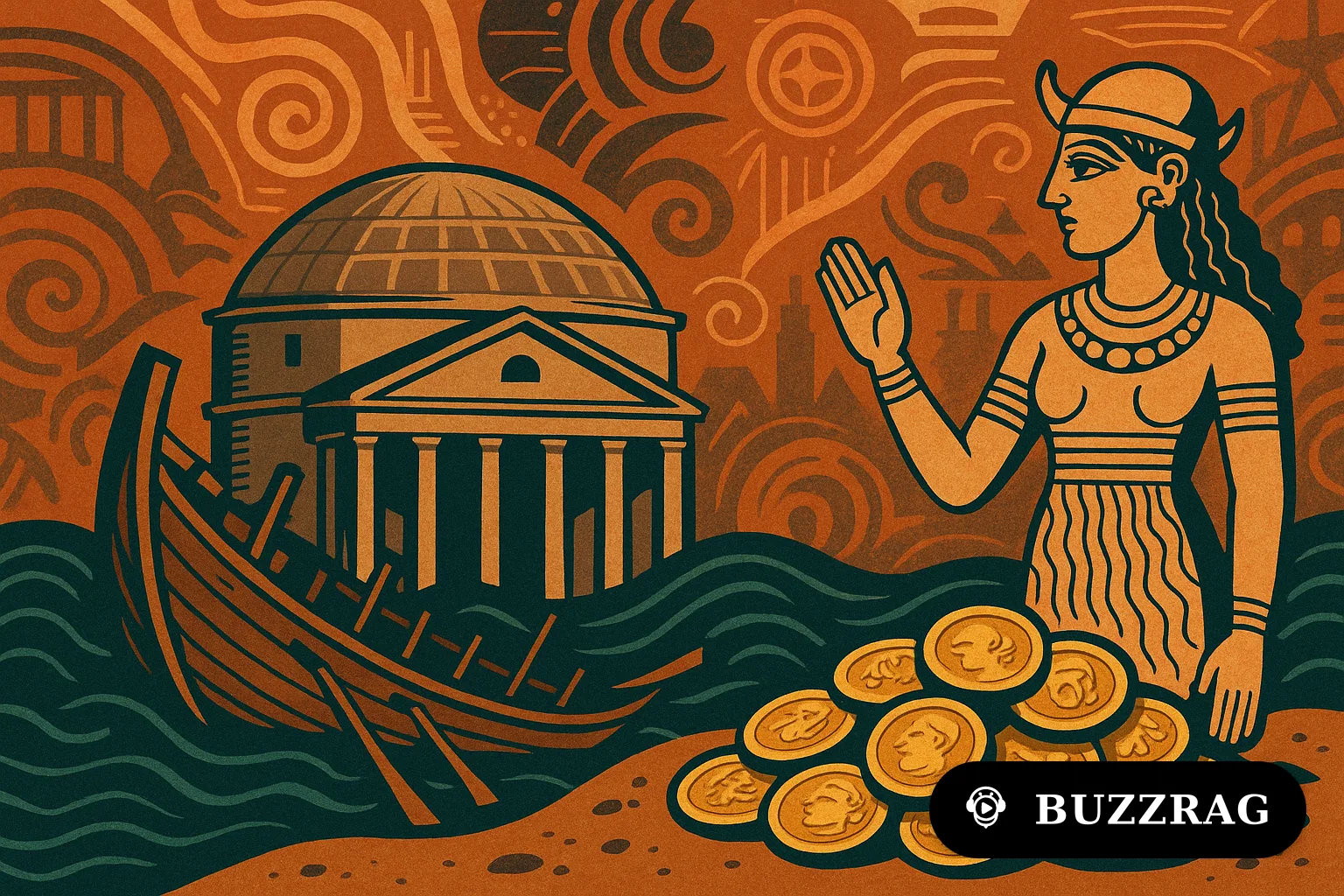
Today's BuzzRAG History Desk explores the intersection of ancient ingenuity and modern discovery. From shipwreck mysteries to engineering marvels, these stories remind us of the enduring legacy of the past.
Mystery of the Dom van Keulen Shipwreck Solved
The centuries-old enigma surrounding the shipwreck of the Dom van Keulen has finally been unraveled. Discovered off the south coast of England, the ship, which departed Morocco for the Netherlands in 1633, was identified by a team from the British Museum. The discovery of 400 gold coins aboard the wreck has provided invaluable insights into 17th-century Dutch trade routes and maritime history.
This identification sheds light on the extensive trade networks of the Dutch Golden Age and the hazards faced by its seafarers. The Dom van Keulen's voyage underscores the perilous nature of maritime trade during this period, as vessels navigated political tensions and natural threats. Such discoveries not only enrich our understanding of the era's economic dynamics but also illuminate the broader historical narrative of European expansion and commerce.
Egypt's Third Intermediate Period: A Time of Turmoil
The Third Intermediate Period of Egypt marks a complex chapter in the country's storied history, characterized by foreign invasions and political fragmentation. Spanning from 1069 to 525 BCE, this era followed the grandeur of the New Kingdom and preceded the Late Period. It was marked by a series of foreign dynasties that claimed the throne, leading to a decentralized state and shifts in cultural practices.
This period reflects the ebb and flow of Egyptian power and its interactions with neighboring regions. The invasions by Libyan and Nubian rulers highlight the vulnerability of established powers and the fluidity of ancient geopolitics. Understanding this period helps in grasping how ancient societies adapted to external pressures and internal challenges, offering lessons on resilience and transformation.
Gula: The Sumerian Goddess of Healing
Gula, or Ninkarrak, was revered as the Sumerian goddess of healing, embodying the ancient world's understanding of medicine and well-being. First mentioned during the Ur III period (circa 2112 to 2004 BCE), she was a central figure in Mesopotamian religion, worshipped as the patroness of doctors and the healing arts. Her enduring popularity underscores the value placed on health and the divine nature of healing practices.
Gula's influence extends beyond mythology, reflecting the early human endeavor to understand and systematize medical knowledge. Her worship illustrates the cultural significance of health and the sacred role of healers in ancient societies. By exploring Gula's legacy, we gain insights into the evolution of medical thought and the societal respect accorded to those who practiced it.
The Pantheon: A Roman Engineering Marvel
The Pantheon in Rome stands as a testament to the engineering prowess of ancient civilizations, its survival attributed to volcanic concrete and architectural ingenuity. Constructed nearly 2,000 years ago, the Pantheon's dome remains the world's largest unreinforced concrete dome, a feat of engineering that has baffled architects for centuries.
The secret to its longevity lies in the Roman use of pozzolana, a volcanic ash that gave their concrete exceptional durability. Additionally, the Pantheon's conversion into a church in the 7th century spared it from the fate of many other ancient structures. This case study in ancient engineering offers insights into sustainable construction practices and challenges modern assumptions about ancient technological capabilities.
Reevaluating Ancient Engineering Knowledge
The marvels of ancient engineering, from the Sacsayhuamán fortress to Roman harbors, challenge contemporary perceptions of pre-industrial societies. These constructions reveal a sophisticated understanding of materials and techniques that rival modern capabilities. The precision and scale of these projects prompt questions about the transmission of knowledge and the potential loss of ancient insights over time.
Examining these structures encourages reconsideration of technological progress as linear and invites speculation about what ancient civilizations might have achieved with today's tools. This exploration not only honors the ingenuity of past engineers but also inspires contemporary innovation by looking to historical precedents as a source of inspiration and understanding.
As we reflect on these stories, consider how ancient innovations continue to influence our world today. Watch for future discoveries that may further illuminate the past and inform modern advancements.