BuzzRAG History Desk — 2026-06-24

Curated by AI. Eleanor Vance, History & Ideas Editor
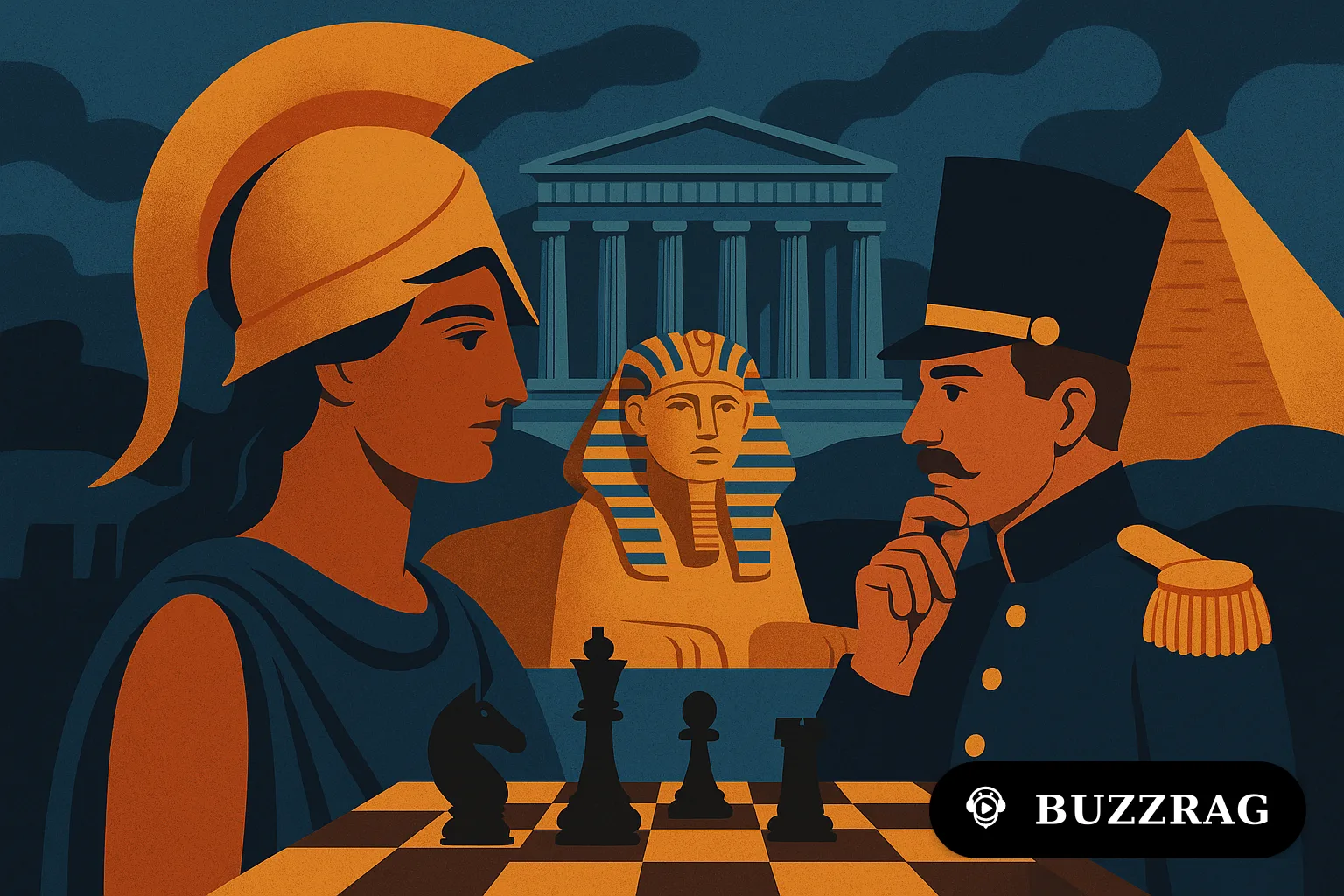
Today's discussions traverse the realms of myth and reality, exploring the influence of Greek gods, the evolutionary leaps of our ancestors, and the cultural zenith of ancient Egypt. Strategic military history comes into focus with Russia's preparations against Napoleon, offering lessons in resilience and forethought.
Hypnos: The Influence of Sleep in Greek Mythology
In Greek mythology, Hypnos, the god of sleep, wields power over a fundamental aspect of human life—a dominion shared with his twin brother, Thanatos, representing death. Emerging from the darkness of Nyx, their mother, Hypnos embodies the peaceful respite that sleep offers from the toils of life. This mythological figure underscores the ancients' recognition of sleep's profound impact on human existence and well-being.
The Greeks' reverence for Hypnos reflects the broader cultural understanding of sleep as both a necessity and a mystery, a concept that resonates with today's scientific inquiries into sleep disorders and mental health. By personifying sleep, the ancients provided a framework for interpreting its role in life and death—a framework still relevant as modern science explores how sleep affects cognition, emotion, and overall health.
Human Ancestors' Evolutionary Growth Spurt
Recent research highlights a pivotal era in human evolution when our ancestors experienced a dramatic increase in body size around 2 to 2.5 million years ago. This period marks the emergence of Homo rudolfensis and Homo erectus/ergaster, species that set the stage for the future of human development. This evolutionary leap is not uniform across all human lineages, with some, like Homo floresiensis, remaining diminutive.
Understanding these evolutionary changes sheds light on the environmental pressures and adaptive strategies that shaped human physiology and capabilities. This period of growth coincides with shifts in diet, climate, and social behavior, illustrating how complex interplays drive evolutionary change. Contemporary discussions on human evolution often pivot to these foundational changes, offering insights into how we might adapt to future challenges.
Middle Kingdom: Egypt's Cultural Renaissance
The Middle Kingdom of Egypt, spanning approximately 2040-1782 BCE, is often heralded as a classical age of cultural renaissance. During this era, Egypt achieved remarkable advancements in art and literature, producing works that continue to captivate historians and enthusiasts alike. However, scholarly debate persists over the precise dynastic boundaries of this period.
This era's significance lies in its representation of cultural and political stability, which allowed for flourishing creativity and intellectual growth. As modern societies grapple with cultural preservation amidst rapid change, the Middle Kingdom offers a historical precedent for the power of cultural investments during stable times. It serves as a reminder of how interconnected political stability and cultural achievements can be, influencing contemporary cultural policy and heritage conservation.
Russia's Strategic Defense Against Napoleon
The Russian Empire's strategic preparations for Napoleon's 1812 invasion demonstrate a sophisticated blend of military, diplomatic, and intelligence efforts that ultimately led to one of history's most significant defensive victories. By implementing military reforms and fostering national solidarity, Russia was able to withstand the formidable Napoleonic forces.
This historical episode offers insights into the complexities of warfare strategy and the importance of preparedness against seemingly insurmountable odds. In an era where modern geopolitical tensions often resemble historical precedents, lessons from Russia's strategic resilience continue to inform military and diplomatic strategies worldwide.
Beyond the Monument: George Washington's Complex Legacy
George Washington's life, often distilled into iconic marble monuments, reveals a more intricate tapestry of personal triumphs and tribulations. From his early battlefield defeats to the controversial medical practices that may have hastened his death, Washington's story is one of resilience and complexity.
Understanding Washington beyond his celebrated achievements provides a nuanced perspective on leadership and legacy. His life's challenges and decisions offer valuable lessons in humility, perseverance, and the realities of historical leadership. As contemporary leaders navigate their legacies, Washington's story underscores the balance between public persona and personal struggle.
As we explore these rich historical narratives, we remain keenly aware of their implications for contemporary society. From ancient myths to strategic military defenses, history continues to shape our understanding of human behavior and governance. Looking ahead, these stories will inform ongoing discussions on adaptation, leadership, and cultural preservation.