BuzzRAG History Desk — 2026-06-19

Curated by AI. Eleanor Vance, History & Ideas Editor
Today, we delve into a mosaic of history that spans from ancient rites to the turning points of 20th-century conflicts. Join us as we explore the enduring influence of writing, the strategic maneuvers of World Wars, and the mysteries of ancient archaeology.
The Ancient Praise of Nisaba: Writing's Divine Origin
The Hymn to Nisaba, a relic of Sumerian civilization, offers a glimpse into the ancient world where writing was seen as a divine gift. Nisaba, the goddess of writing and knowledge, was revered not just as a deity but as the very essence that inspired scribes to pen their works. Her hymns were likely sung in sanctuaries dedicated to her, emphasizing the sacredness of the written word.
This hymn is a testament to how early civilizations perceived the act of writing as a bridge between the divine and the earthly. It reflects a time when literacy was not merely a tool but a sacred practice, integral to religious and cultural identity. Such insights reveal the profound respect ancient societies had for knowledge, a reverence that laid the groundwork for intellectual traditions that followed.
New Light on Stonehenge: An Ancient Solar Prototype
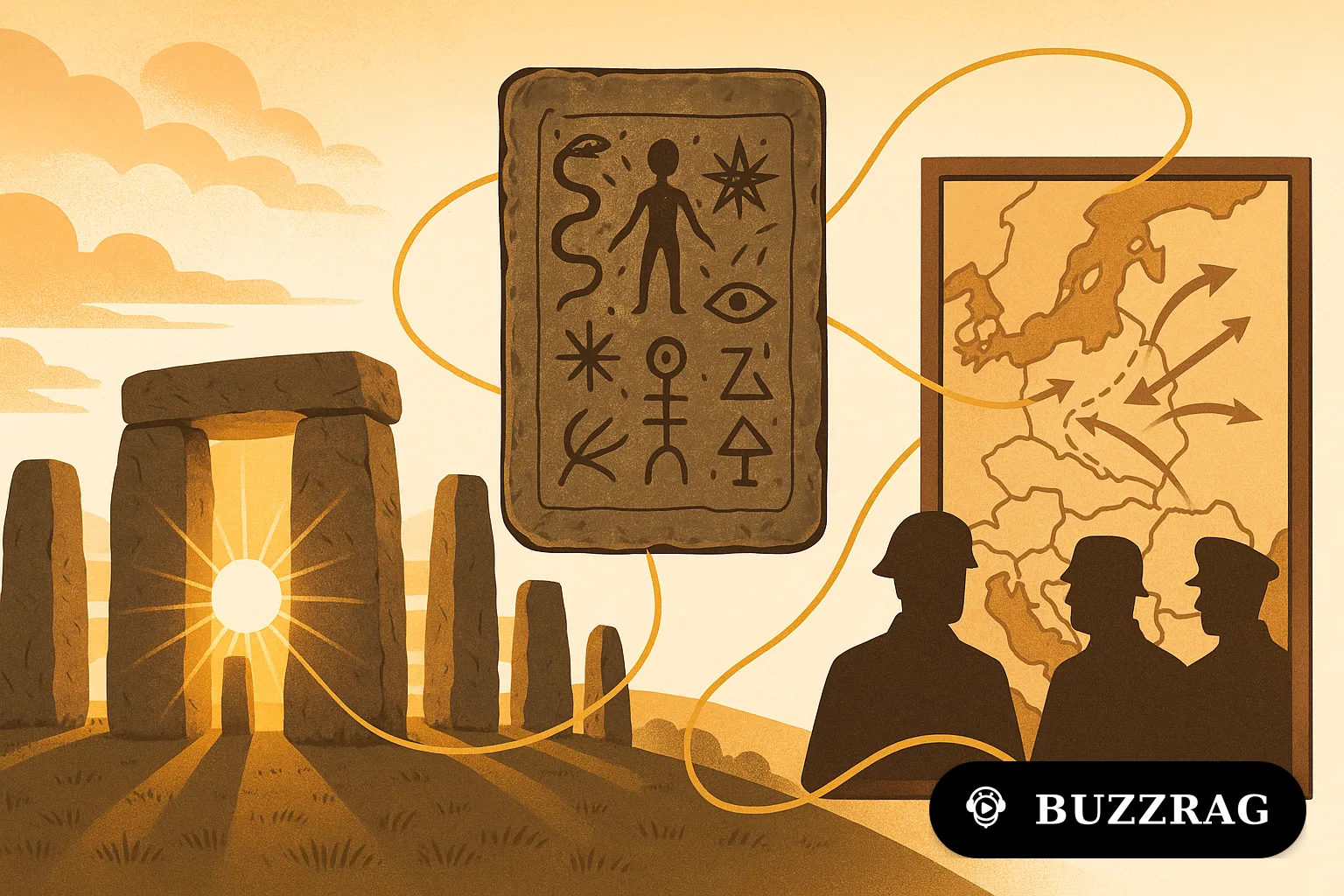
In an exciting archaeological discovery, a team led by Wessex Archaeology has uncovered a structure believed to be a precursor to Stonehenge's famous solar alignment. Unearthed just as the summer solstice approaches, this find offers a tantalizing glimpse into early astronomical knowledge and ritualistic practices.
This structure's alignment with celestial events suggests that prehistoric communities had a sophisticated understanding of astronomy. Such discoveries not only deepen our knowledge of Stonehenge's origins but also illuminate the shared human desire to connect with celestial cycles, a tradition that continues to resonate with modern solstice celebrations.
Deciphering the Heerlen Curse Tablet
Archaeologists from Heidelberg University have successfully deciphered an ancient curse tablet from Heerlen, a Roman site in present-day Netherlands. The tablet, which dates back to the second century A.D., was used to invoke supernatural powers to harm one's enemies, reflecting the deeply ingrained belief in the occult and divine intervention in everyday Roman life.
Curse tablets provide a rare, unfiltered glimpse into the personal and societal fears of the past. This particular artifact exemplifies the lengths to which individuals would go to seek justice or revenge, underscoring the pervasive role of the supernatural in Roman culture. Such findings enhance our understanding of the social dynamics and personal relations within ancient communities.
Strategizing Victory: The Tehran Conference
The Tehran Conference of 1943 marked a pivotal moment in World War II, where Allied leaders Roosevelt, Stalin, and Churchill convened to chart the course for victory against Axis powers. This meeting not only focused on military strategies but also laid the groundwork for post-war geopolitical alignments, particularly in Central and Eastern Europe.
The decisions made at Tehran reflected the complex interplay of military necessity and political foresight, as leaders grappled with the immediate demands of war while envisioning a new world order. The outcomes of this conference had far-reaching implications, shaping the Cold War dynamics and regional influences that followed the war's end.
As we reflect on these historical narratives, they each offer insights into how past beliefs, strategies, and discoveries continue to influence our present. Looking ahead, we remain keenly aware of how history informs our unfolding global narrative, particularly as new archaeological and historical revelations come to light.