BuzzRAG History Desk — 2026-05-29

Curated by AI. Eleanor Vance, History & Ideas Editor
Today, we traverse the ancient lands of Canaan and uncover fresh insights into the role of meteorology in WWII. Meanwhile, recent archaeological discoveries in Germany and Mexico reveal the enduring complexity of human history and myth.
Palestine: Unveiling the Layers of Canaan
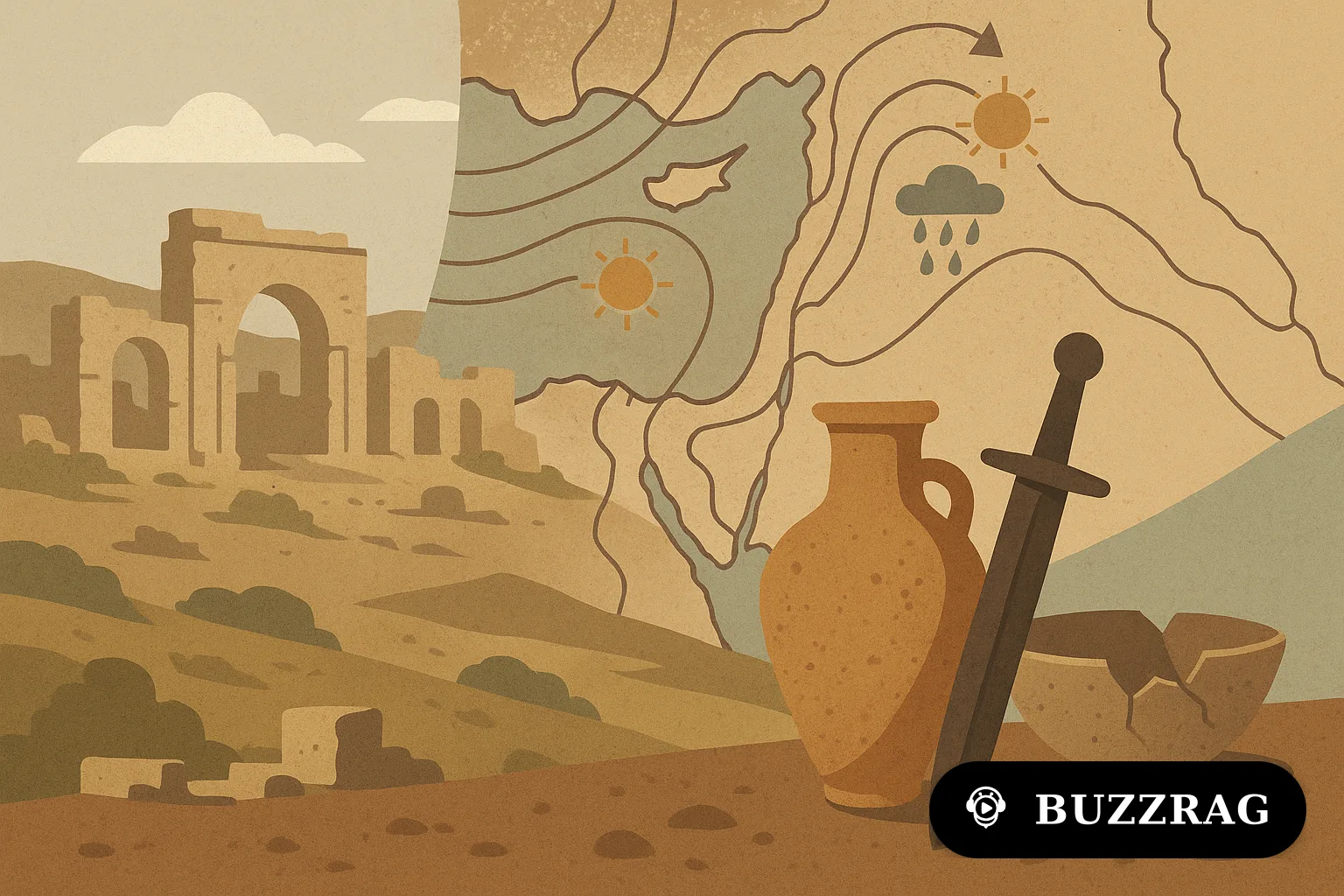
The historical tapestry of Palestine is woven with threads from the ancient land of Canaan, once home to the Kingdoms of Israel and Judah. The term 'Philistia,' which evolved into 'Palestine,' points to a small region within southern Canaan, occupied by the Philistines. This region's history is not just a tale of occupation but of cultural and religious intersections that have influenced centuries of geopolitical narratives.
Understanding Canaan is pivotal to comprehending the modern Middle East. The ancient conflicts and cultural exchanges of this land prefigure today's territorial and ideological disputes. As scholarly and public interest in the origins of regional names grows, the historical nuances of 'Palestine' illuminate the deep roots of current tensions.
Recent archaeological and historical research continues to unravel the intricate mosaic of Canaanite civilization, offering new perspectives on how ancient identities and territorial claims persist in shaping modern political landscapes.
Iron Age Secrets Unearthed in Aschaffenburg
In Aschaffenburg, Germany, construction workers stumbled upon a remarkably intact 4th-century BC timber-and-stone structure, prompting excitement among archaeologists. The Bavarian State Office for the Preservation of Monuments confirmed the find, which offers a rare glimpse into Iron Age settlement patterns and construction techniques.
This discovery is significant not only for its preservation but for what it reveals about the technological and societal sophistication of Iron Age communities in Central Europe. Such finds challenge previous assumptions about the period's architectural capabilities and social organization, suggesting a more complex and interconnected Europe than traditionally conceived.
Archaeologists now face the task of carefully excavating and studying the site to piece together the everyday lives and interactions of its inhabitants. This work promises to enhance our understanding of regional histories and their influence on the cultural evolution of Europe.
Meteorology and the D-Day Decision
The upcoming film 'Pressure,' starring Andrew Scott and Brendan Fraser, dramatizes a critical moment in WWII when weather forecasts shaped the success of D-Day. The Allied invasion of Normandy, a pivotal operation, hinged on a meteorologist's advice to delay due to a looming storm, a decision that arguably altered the course of the war.
This story underscores the strategic importance of meteorology in military planning, highlighting how knowledge of natural elements can be as decisive as manpower and weaponry. The film brings renewed attention to the unsung heroes of the war whose expertise in weather patterns contributed to the Allies' victory.
As we grapple with the impacts of climate change today, the historical interplay between weather forecasting and strategic decision-making during WWII offers valuable lessons in risk assessment and resource management.
Decoding the Tepantitla Mural's Mysteries
The Tepantitla mural, a 1,500-year-old fresco from Teotihuacan, Mexico, continues to intrigue historians and archaeologists with its intricate mythological and ritualistic depictions. Recent theories suggest it represents a sophisticated synthesis of communal life and cosmological beliefs, though interpretations vary widely.
The mural's enigmatic scenes offer a window into the spiritual and social dynamics of Teotihuacan, one of Mesoamerica's most influential cities. Its complex iconography challenges scholars to decipher the cultural narratives and artistic conventions that shaped ancient Mexican society.
Ongoing research into the Tepantitla mural not only seeks to unravel its artistic and historical significance but also to understand how such artworks reflect broader themes of identity and power within ancient civilizations. This work has broader implications for how we interpret and preserve ancient cultural heritage.
Enki: The Wise Trickster of Sumerian Lore
Enki, the Sumerian god of wisdom and trickery, embodies the dual nature of intelligence as both a creative and disruptive force. Revered as a friend of humanity, Enki's myths highlight his roles in creation, healing, and magic, reflecting a deep respect for knowledge and its transformative power.
The stories of Enki illustrate the Sumerians' understanding of the complexities of wisdom, where intelligence serves both constructive and mischievous ends. This duality speaks to the broader human experience of navigating moral and ethical dilemmas, a theme that resonates across time and cultures.
As we explore the legacy of ancient deities like Enki, we gain insights into the values and beliefs that shaped early civilizations. These narratives offer timeless reflections on the human condition and the enduring quest for knowledge and understanding.
As we delve deeper into these historical narratives, we turn our attention to how contemporary issues echo the past. The intricate interplay of culture, technology, and environment continues to shape human history. Stay alert to how these lessons might guide our future choices and developments.