BuzzRAG History Desk — 2026-05-27

Curated by AI. Eleanor Vance, History & Ideas Editor
Today's digest delves into the ancient past to uncover how the city of Mohenjo-Daro challenged historical norms of inequality. We also explore the enduring influence of Mesopotamian mythology and examine the evolution of transportation systems amidst modern challenges.
Mohenjo-Daro's Revolutionary Path to Equality
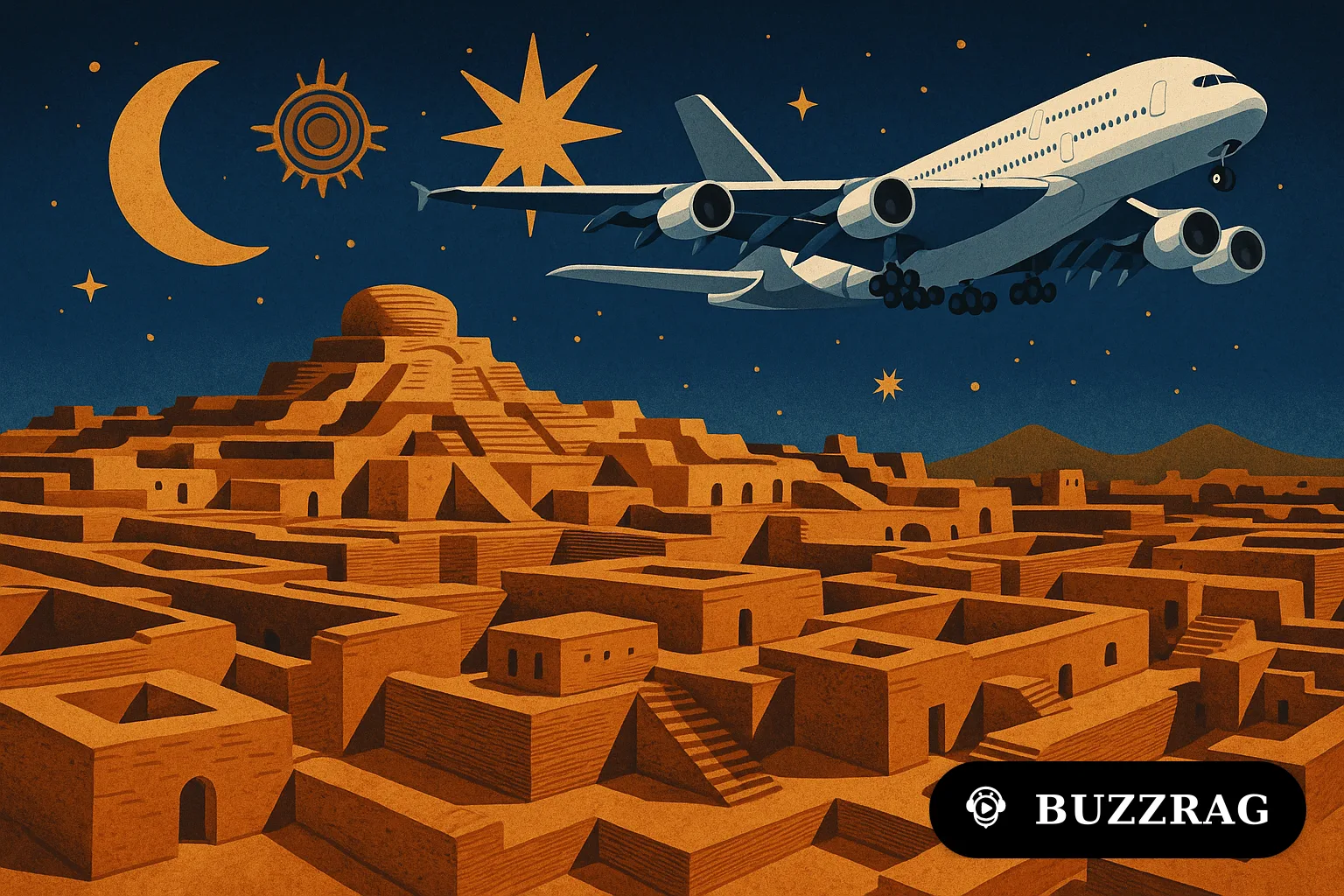
The ancient city of Mohenjo-Daro, a marvel of the Indus Valley Civilization, has long intrigued historians with its complex urban planning and advanced society. Recent research from the University of York suggests that, unlike other ancient cities where wealth concentrated among the elite, Mohenjo-Daro exhibited more equitable wealth distribution. This challenges the dominant narrative that urbanization inherently leads to increased social inequality.
The study posits that Mohenjo-Daro's unique social structure may have been facilitated by its trade networks and communal lifestyle, which emphasized cooperation over hierarchy. Public baths and granaries suggest a society invested in public welfare rather than the aggrandizement of a ruling class. This insight not only reshapes our understanding of ancient urban dynamics but also offers a historical precedent for modern movements advocating for equality and shared resources.
As urban centers today grapple with widening economic disparities, Mohenjo-Daro's model presents a compelling case for reimagining city planning and governance. The study invites further exploration into how ancient systems can inform contemporary solutions to enduring social challenges.
Anu: The Remote Sky God of Mesopotamia
Anu, or An, stands as a pivotal figure in the pantheon of Mesopotamian deities, embodying the Lord of the Heavens. His evolution from a prominent sky god to a more remote figure illustrates the changing dynamics of divine hierarchy and worship practices over millennia. Initially a central figure in Mesopotamian religion, Anu's role diminished as power and worship shifted to younger, more accessible gods like Enlil.
The veneration of Anu reflects broader societal changes in ancient Mesopotamia, where political and religious power often intersected. As cities grew and political entities evolved, so too did the gods' roles, mirroring human governance structures. Anu's gradual remoteness symbolizes the transition from direct divine rule to a more complex, stratified religious system, paralleling the development of centralized political power.
Understanding Anu's place in Mesopotamian mythology provides insight into how ancient societies conceptualized authority and order, themes that resonate in today's discussions of power and governance. As contemporary societies explore the role of tradition in modern statecraft, the story of Anu offers a lens through which to view the evolution of leadership and its social implications.
Airbus A380: A Giant's Journey Through Aviation
The Airbus A380, known as the world's largest passenger plane, represents a pinnacle of modern aviation technology with its impressive size and capacity. Despite its technological marvels, including fuel efficiency and cutting-edge avionics, the A380 has faced significant challenges in its integration into commercial fleets. Airlines like Lufthansa have grappled with the logistical complexities and economic considerations of operating such a massive aircraft.
The A380's journey reflects broader trends in the aviation industry, where the balance between innovation and practicality is constantly negotiated. While its inaugural flight to San Francisco symbolized a new era of air travel, offering unprecedented passenger capacity, the aircraft's future remains uncertain amidst evolving market demands and environmental considerations.
As the aviation industry continues to innovate in response to climate change and economic pressures, the A380's legacy prompts reflection on the sustainability of large-scale air travel. The aircraft serves as a case study in the challenges of aligning groundbreaking technology with operational viability, a theme increasingly relevant in discussions about the future of transportation.
Megaliths and the Ancient Roots of Modern Family
The spread of megalithic architecture across Europe is not just a testament to ancient engineering but also to the social structures that built them. Recent genetic analysis of remains from the Sorsum megalithic tomb reveals that the concept of 'patchwork families'—where biological and non-biological children are raised together—dates back to Neolithic times. This discovery challenges the notion that such family structures are a modern innovation.
These findings suggest that ancient communities were more socially complex than previously thought, with familial bonds extending beyond immediate biological ties. The communal nature of megalithic tombs, serving as shared burial sites, reflects a societal emphasis on collective identity and cooperation, principles that resonate with today's diverse family dynamics.
As modern societies continue to redefine family beyond traditional frameworks, the ancient precedent set by megalithic cultures underscores the timelessness of adaptable social structures. This research not only enriches our understanding of prehistoric Europe but also invites contemporary reflection on the enduring nature of communal living and familial diversity.
As the threads of history weave through today's narratives, we see ancient insights informing modern challenges. The stories of Mohenjo-Daro and megalithic Europe remind us that the past holds valuable lessons for creating equitable and inclusive societies. Watch for further research that continues to bridge our understanding of ancient and contemporary worlds.