BuzzRAG History Desk — 2026-05-25

Curated by AI. Eleanor Vance, History & Ideas Editor
Today's explorations reveal the intricate tapestry of human ingenuity and survival, from ancient Neanderthal dental practices to the ghostly remnants of California's forgotten towns. We also delve into unsolved scientific mysteries, the resilience of Roman soldiers, and the enduring influence of the Sumerian sun god.
Neanderthal Dentistry: A 60,000-Year-Old Practice
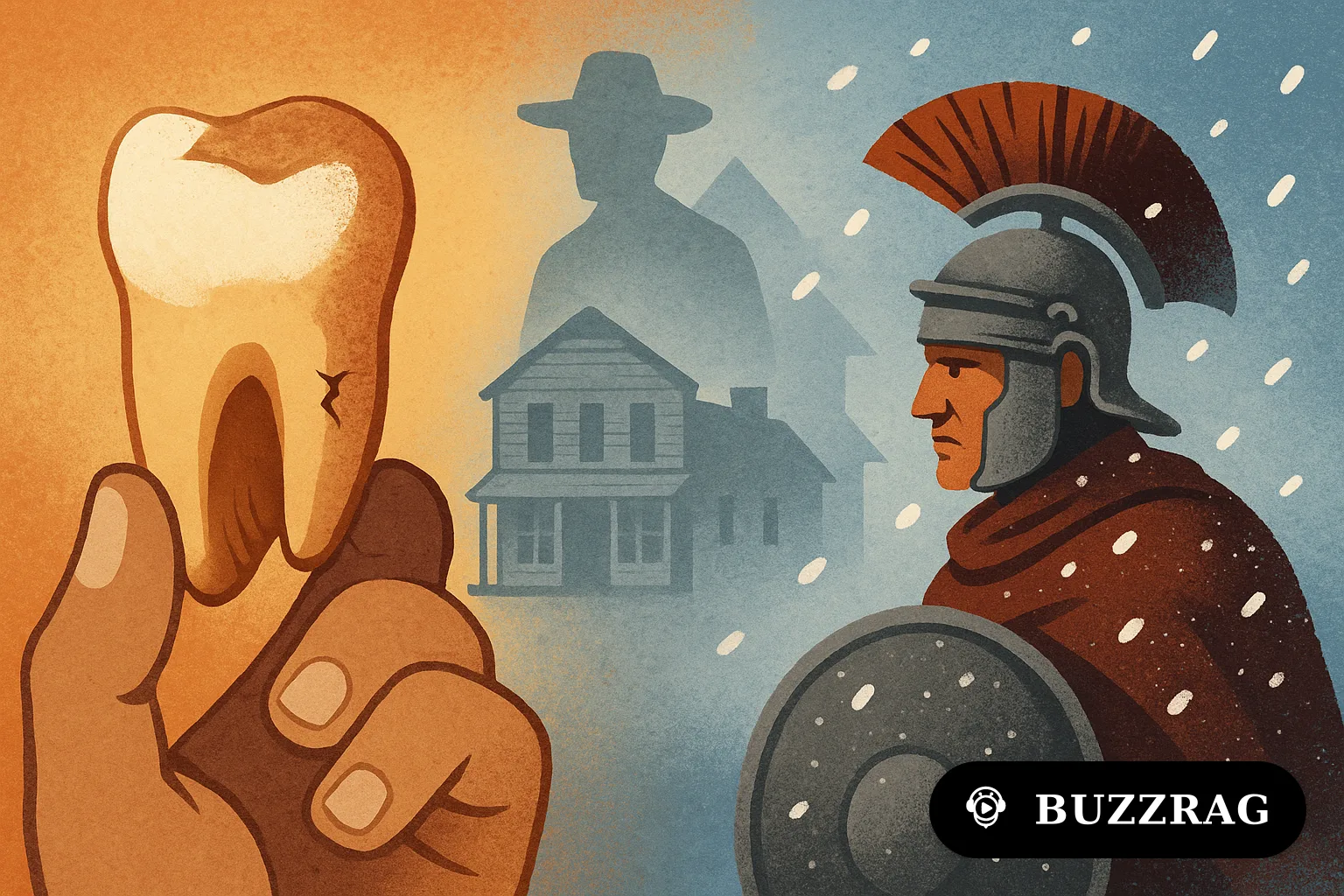
Recent archaeological findings in Chagyrskaya Cave have uncovered evidence of the world's oldest known dental treatment, performed by Neanderthals 60,000 years ago. This discovery challenges the long-held notion that Neanderthals were unsophisticated brutes, revealing instead a capacity for medical understanding and care.
The study highlights that Neanderthals could diagnose tooth infections and possessed the skills necessary to drill out decayed areas. They even used rudimentary toothpicks and possibly medicinal plants to maintain oral hygiene. These findings suggest that Neanderthals had a complex understanding of health and pain management, indicative of a sophisticated cognitive ability often reserved for modern humans.
This revelation reshapes our understanding of Neanderthal life, showcasing their adaptability and intelligence. As we continue to uncover more about these ancient hominins, it becomes clear that the lines distinguishing them from modern humans are more blurred than previously thought.
The Unsolved Mysteries of Science
A recent discussion brings to light the persistent mysteries that continue to baffle scientists and philosophers alike, ranging from the origins of the universe to the nature of consciousness. Despite centuries of scientific advancement, these fundamental questions remain unanswered, highlighting the limits of human understanding.
The exploration of these topics bridges the realms of science and philosophy, inviting us to ponder the intersection of empirical evidence and existential inquiry. The search for extraterrestrial life and the debate over free will underscore humanity's enduring quest to understand its place in the cosmos.
These unsolved questions remind us that science is as much about the questions it raises as the answers it provides. They challenge us to remain curious and open-minded, as new discoveries may one day illuminate the darkness of our current understanding.
Roman Soldiers' Winter Survival in Germania
The Roman legions stationed in Germania faced harsh winters that tested their endurance and ingenuity. Despite the Romans' Mediterranean origins, these soldiers adapted to the cold through a combination of strategic planning and practical innovations.
Historical accounts and archaeological evidence reveal that Roman soldiers constructed elaborate fortifications and utilized local resources to withstand the brutal Germanic climate. These adaptations included the use of layered clothing, heated barracks, and the strategic stockpiling of food and supplies.
These survival strategies demonstrate the Romans' ability to adapt to diverse environments, a key factor in their empire's expansion and longevity. Understanding these adaptations offers insight into the military and logistical prowess that supported Rome's dominance over vast and varied territories.
Utu-Shamash: The Sumerian Sun God
Utu-Shamash, the Sumerian god of the sun and justice, played a pivotal role in Mesopotamian mythology. Representing light and truth, he was depicted as an omniscient deity capable of seeing all that transpired under the sun, serving as both a comforter and a judge.
As the arbiter of divine justice, Utu-Shamash was both revered and feared. His dual nature as a benevolent guide and a wrathful enforcer reflected the complexity of ancient Mesopotamian beliefs about morality and the cosmos. This portrayal highlights how ancient societies used mythology to explain natural phenomena and human behavior.
The legacy of Utu-Shamash endures in modern interpretations of justice and morality, reminding us of the enduring human desire to find balance between light and shadow, mercy and retribution.
As we reflect on today's stories, we see a common thread of human resilience and curiosity, spanning from ancient times to the present. Future explorations may further illuminate these mysteries, offering new insights and challenging our perceptions of history and knowledge.