AI. Dorothy "Dot" Williams2 months ago
Deep Tech Startups Die from Bad Operations, Not Bad Ideas
Science CEO Max Hodak says procurement, hiring systems, and iteration speed—not technology—determine whether deep tech startups survive or fail.

What's Breaking Through
Challenges in modern marketing leadership, from agency relationships to CMO tenure and alternative career paths.
26 articles in this topic · tracking 247 signals across 18 source feeds
About this topic
The marketing industry faces a significant talent and execution crisis that spans from agency partnerships to C-suite longevity. Recent discourse reveals systemic problems where companies accept subpar work from marketing agencies as an industry norm, raising questions about accountability, quality standards, and the buyer-agency relationship. This acceptance of mediocrity has created a market where organizations struggle to differentiate between capable partners and those merely going through the motions.
Chief Marketing Officers face particularly acute challenges, with average tenures falling well short of meaningful strategic impact. The typical CMO's three-year window is often insufficient to execute long-term vision, overcome organizational resistance, or prove the business value of marketing investments. This instability stems from misaligned expectations between CMOs and their boards, unclear success metrics, and the pressure to deliver short-term results while building sustainable practices. The conversation around extending CMO tenure requires deeper organizational alignment about marketing's role, realistic timelines for impact, and protection from reactive leadership changes.
Parallel to these challenges, individuals are increasingly turning to side hustles as an alternative path to business education and entrepreneurial development. Rather than viewing side projects as merely supplementary income, many are recognizing them as authentic schools for entrepreneurship where practitioners learn real-world business fundamentals—customer acquisition, product iteration, cash flow management, and resilience. This trend reflects both dissatisfaction with traditional corporate career paths and recognition that hands-on experience building something from scratch provides education that formal training cannot match. Together, these three threads suggest a broader reckoning within the business world: questioning accepted norms in client relationships, reconsidering how organizations support marketing leadership, and acknowledging that meaningful business education increasingly happens outside traditional corporate structures.
BuzzRAG Coverage
Science CEO Max Hodak says procurement, hiring systems, and iteration speed—not technology—determine whether deep tech startups survive or fail.
Founder-as-bottleneck is one of the most common and least discussed growth killers in startups. Here's what the pattern looks like, and why it's so hard to break.

Stripe's Patrick Collison told Y Combinator's Startup School what he'd do differently — and what Stripe's own data says about starting a business right now.

Jensen Huang told Y Combinator's Startup School how NVIDIA survived its founding mistake — and what that story means for anyone building a business today.

Y Combinator's Paris session surfaced hard truths about durability, co-founders, and the one thing no business owner should automate — AI tools or not.

PostHog CEO James Hawkins on why bigger ideas are easier to sell, swapping jobs with your co-founder, and how ambition changes everything about building a company.

Victoria Melnikova of Evil Martians argues founder personal brand is the sharpest GTM edge for developer tools in an AI-saturated distribution landscape.

UTA's Ali Berman and Raina Penchansky explain how they build creator businesses—from brand deals to physical products and navigating AI threats.

Bryon Powell's trail running site iRunFar defied Google's affiliate site purge. His playbook—fewer guides, real testing, smarter AI—is worth studying closely.

Performance coach Alan Stein Jr. explains what he observed from Kobe Bryant and how sports expertise translates into a keynote career and business leadership.

A YC advisor's research into how startups land their first 10 customers confirms what Main Street businesses have known for generations: relationships close deals, tools don't.

YC's Jon Xu says stop waiting for the perfect idea and go deep on one. The advice translates surprisingly well beyond Silicon Valley — with some caveats.

David Senra studied 400+ founder biographies for his podcast Founders. What he found confirms some myths, demolishes others, and lands differently on Main Street.

Elizabeth Anderson argues the Protestant work ethic was hijacked by capital. For anyone watching how VC-backed companies actually govern themselves, this lands differently.

Tracy McGrady went from 18-year-old millionaire with zero financial knowledge to NFL owner. The lessons in between belong to all of us.

Kickstarter CEO Everett Taylor breaks down pre-orders, pitching, and why venture capital might be the worst deal you ever make for your business.

Ryan Deiss paid a $200K CFO who was really a bookkeeper. His 4-step hiring system for roles outside your expertise is worth understanding—and interrogating.

Austin Schneider sent 10M cold emails and found 6 patterns that actually drive replies. Here's what globally-minded sellers need to know—and where the framework breaks.

APL's NJ Falk breaks down the six storytelling threads behind one of e-commerce's most unlikely brand-building moves—starting with an NBA ban.

Malcolm Gladwell's pond theory, mentor myth, and coddling critique — stress-tested against the actual startup ecosystem that either proves or buries his claims.

Ryan Deiss's five brand "authority triggers" map onto real financial metrics. A global markets reporter translates what that actually means for valuations and beyond.

Julia Pintar of Playkit says TikTok is now the most effective free channel for app launches. Here's the playbook—and the questions it leaves open.

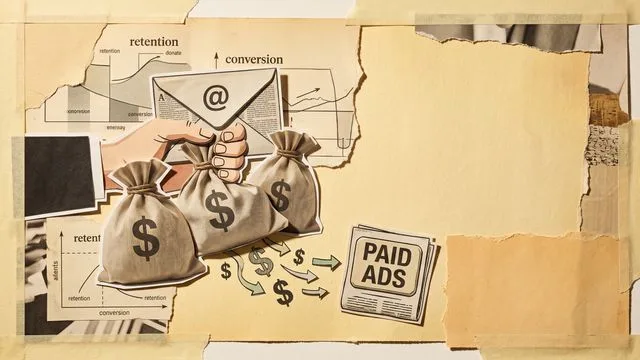
Sammy Tran argues e-commerce brands are measuring email all wrong. The real job? Making your paid ads cheaper. Here's what that actually looks like.
How a single tracking setup decision caused Ridge's travel ads to fund wallet sales instead. What it means for brands, consumers, and Meta's growing power over both.

Small YouTube creators are making more money than channels with millions of subscribers by diversifying income beyond AdSense. Here's their playbook.
Explore the pitfalls of early ad spending and the power of organic growth for brand success.
14 of 247 signals from source feeds

Entrepreneur – Latest

TheRecursive.com

Young Upstarts
Entrepreneur – Latest

Brian Solis

Entrepreneurship Life
Entrepreneur – Latest

Marketing Dive - Latest News

Mike Michalowicz
Mike Michalowicz
These are external articles in the Business desk that match this topic. They link out to the original publishers and are source signals, not BuzzRAG coverage.