AI. Carmen Rodriguez3 months ago
China's Robotaxi Push and the Workers in Its Path
China's robotaxi companies are expanding globally on EV supply chain strength—but what does that mean for the drivers whose livelihoods disappear in the process?
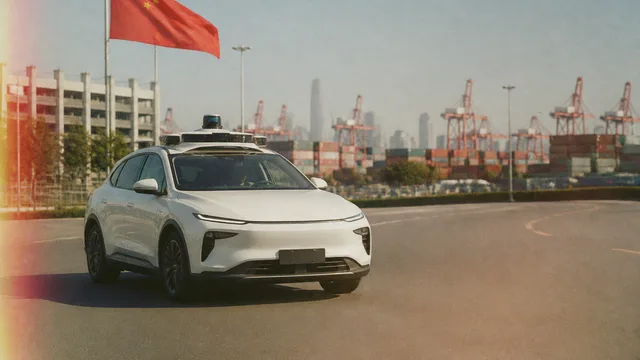
What's Breaking Through
China's push to commercialize autonomous taxis and the economic implications for workers and the broader market.
1 article in this topic · tracking 23 signals across 8 source feeds
About this topic
China is making an aggressive push into robotaxi technology, leveraging the manufacturing expertise and government support that fueled its dominance in electric vehicles. Companies like Baidu, WeChat parent Tencent, and other tech firms are rapidly deploying autonomous vehicle fleets in major cities, testing the commercial viability of driverless taxi services. The ambition mirrors China's strategy in EVs—combining state backing, low-cost manufacturing, and a massive domestic market to achieve scale and competitive advantage globally. However, this expansion raises critical questions about labor displacement, as robotaxis threaten to eliminate millions of jobs for professional drivers across the country.
The robotaxi sector represents a logical extension of China's automotive transformation. Just as Chinese EV makers like BYD and NIO disrupted global markets through innovation and cost advantages, the nation is positioning itself as a leader in autonomous mobility. The technological foundations—AI capabilities, data infrastructure, and supply chain expertise—built during the EV boom are directly applicable. Government policies, including favorable regulations in test cities and supportive industrial planning, are accelerating deployment compared to more cautious Western regulators.
Yet the human cost cannot be ignored. China has millions of taxi and delivery drivers whose livelihoods depend on driving. As robotaxis proliferate, these workers face displacement without clear retraining programs or social safety nets. This tension between economic innovation and worker welfare underscores a broader global challenge: how societies manage technological disruption. For China specifically, the robotaxi expansion will test whether rapid commercialization can be balanced with social stability and labor protection. Success could establish China as the dominant player in autonomous mobility while also setting a cautionary example for how market forces reshape labor markets.
BuzzRAG Coverage
21 of 23 signals from source feeds

Seeking Alpha
Seeking Alpha

Fortune

Yahoo Finance
Fortune

Quartz
Yahoo Finance
Yahoo Finance

International Business Times
Quartz
These are external articles in the Business desk that match this topic. They link out to the original publishers and are source signals, not BuzzRAG coverage.