AI. Yuki Okonkwo1 month ago
Xiaomi's AI Cube vs DGX Spark: Reading the Specs Honestly
The viral bandwidth claim comes from one chip, the memory from another. What actually separates Xiaomi's prototype from NVIDIA's shipping DGX Spark.

What's Breaking Through
Intel's new Arc Pro B-series GPUs target AI workloads with high VRAM at competitive price points, balancing hardware capability against soft
18 articles in this topic
About this topic
Intel has launched a new generation of Arc Pro graphics processors designed specifically for AI acceleration and professional workloads rather than gaming. The B-series lineup includes models like the B60 and B70, which offer substantial VRAM configurations—up to 96GB in some configurations—at price points ranging from $2,600 to $5,000. This represents Intel's strategic push to compete in the lucrative AI hardware market, particularly for tasks involving large language models and AI inference where VRAM capacity is critical.
The appeal of these GPUs centers on their cost-effectiveness relative to alternatives like NVIDIA's professional GPUs. By offering high VRAM at lower price points, Intel is targeting organizations and researchers who need significant GPU memory for running large models but may not require the premium performance characteristics of top-tier competitors. The B60 and B70 are positioned as workstation-class accelerators, designed for deployment in professional environments where they can handle demanding AI inference and processing tasks.
However, the cluster of articles reveals a significant tension between hardware potential and software readiness. While the Arc Pro B-series delivers impressive specifications on paper, reviewers note gaps between the promised capabilities and actual performance in real-world applications. Software compatibility and optimization remain ongoing challenges, with the ecosystem still maturing compared to established competitors. This gap between hardware promise and software reality underscores a broader challenge for Intel as it seeks to establish itself in the AI accelerator market—specifications alone don't guarantee adoption without robust software support, driver maturity, and proven performance on practical workloads.
BuzzRAG Coverage
The viral bandwidth claim comes from one chip, the memory from another. What actually separates Xiaomi's prototype from NVIDIA's shipping DGX Spark.
AMD's Instinct MI350 series has 288GB of HBM3E memory, real cost efficiency wins, and growing enterprise adoption. Is this the end of Nvidia's monopoly?

The Bosgame M5 packs AMD's Strix Halo chip and 128GB of RAM into a mini PC that costs significantly less than AMD's own version. Here's what you actually get.
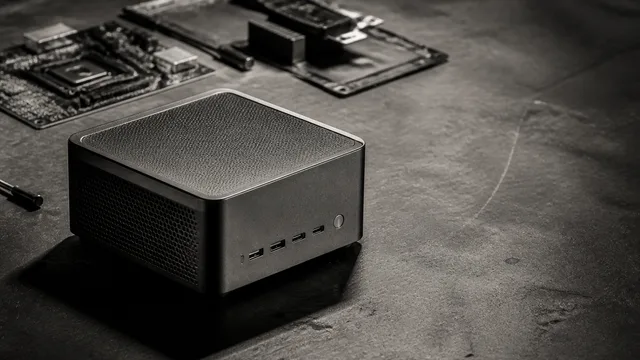
The Minisforum N5 Max stuffs a five-bay NAS, AMD Ryzen AI Max+ 395, and dual 10GbE into one box. Here's what that actually means in practice.

Intel's Arc Pro B70 offers 32GB of VRAM for $1,000 and free SR-IOV support. For homelabbers and AI tinkerers, it's a serious buy. Gamers should wait.
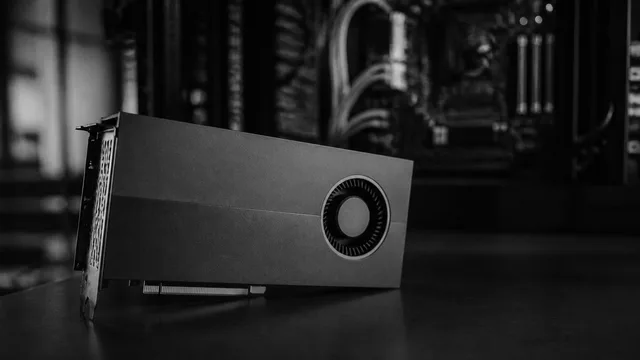
Alex Ziskind tests Nvidia's GB300-powered DGX Station desktop, running 128 simultaneous AI agents. Here's what the numbers actually reveal about on-premise AI.

Can two AMD Ryzen AI Halos act as one AI system? Alex Ziskind tested the cluster setup, performance, and real-world limits of AMD's 400B parameter claim.

AMD's Instinct MI350P brings 144GB of HBM3E and 3.6TB/s bandwidth to standard PCIe servers. Here's what it means for the mid-market AI infrastructure gap.
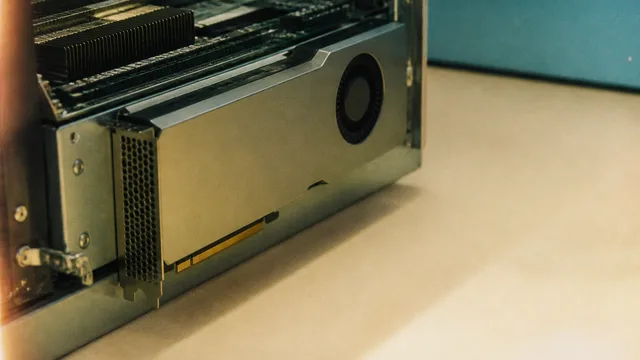
AMD's Ryzen AI Halo developer workstation arrives with polished software, 128GB unified memory, and a $4,000 price tag. But is it the platform—or the pipe cleaner?
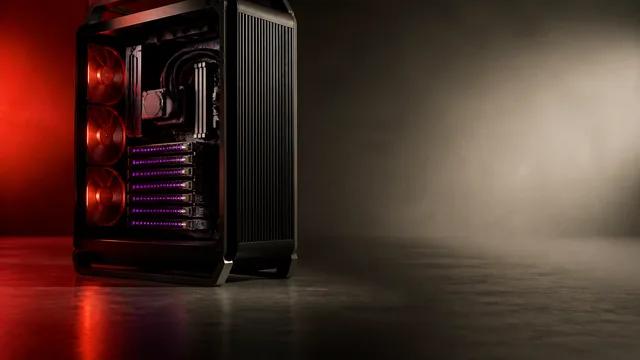
AMD's ROCm platform has quietly matured. Sam Witteveen tests a Threadripper + Radeon AI Pro workstation on LLMs, image gen, and training. Here's what he found.

The Acemagic M1A Pro+ packs 128GB of RAM and AMD's Strix Halo chip into a box with an RGB dial that changes performance modes on the fly—no reboot needed.
Intel's Arc Pro B70 outperforms pricier competitors on paper, but the software stack tells a different story. Real-world benchmarks reveal what matters.
Four Intel ARC Pro B60 cards deliver 96GB of VRAM at a fraction of Nvidia's cost. But cheap memory doesn't guarantee useful performance.
Intel's Arc Pro B70 packs 32GB VRAM for local AI inference, but its success hinges on whether Intel's software can keep pace with the model ecosystem.
The DGX Spark costs $4,000 and comes in gold. We tested it against AMD, Apple, and NVIDIA's own RTX 5090 to see who should actually buy it.
Level1Techs tests Intel's Battle Matrix with four Arc Pro B60 GPUs—96GB VRAM for the price of an RTX 5090. Real-world AI performance examined.
A YouTuber demonstrates how upgrading storage transforms the ASUS GX10 into the cheapest 4TB AI workstation, challenging premium pricing models.

When John Carmack reported power issues with NVIDIA's DGX Spark, headlines screamed 'throttling.' The reality is more interesting—and more fixable.