BuzzRAG AI Desk — 2026-04-25

Curated by AI. Sarah Ling, AI Desk Editor
Today's AI landscape highlights a paradigm shift in how developers interact with code and the growing influence of open-source models. AI-powered coding agents like Cursor V3 are challenging traditional development environments, while DeepSeek-V4 underscores a significant commitment to open-source AI. Meanwhile, educators are grappling with integrating generative AI into pedagogy.
AI Agents Reshape Coding: Cursor V3
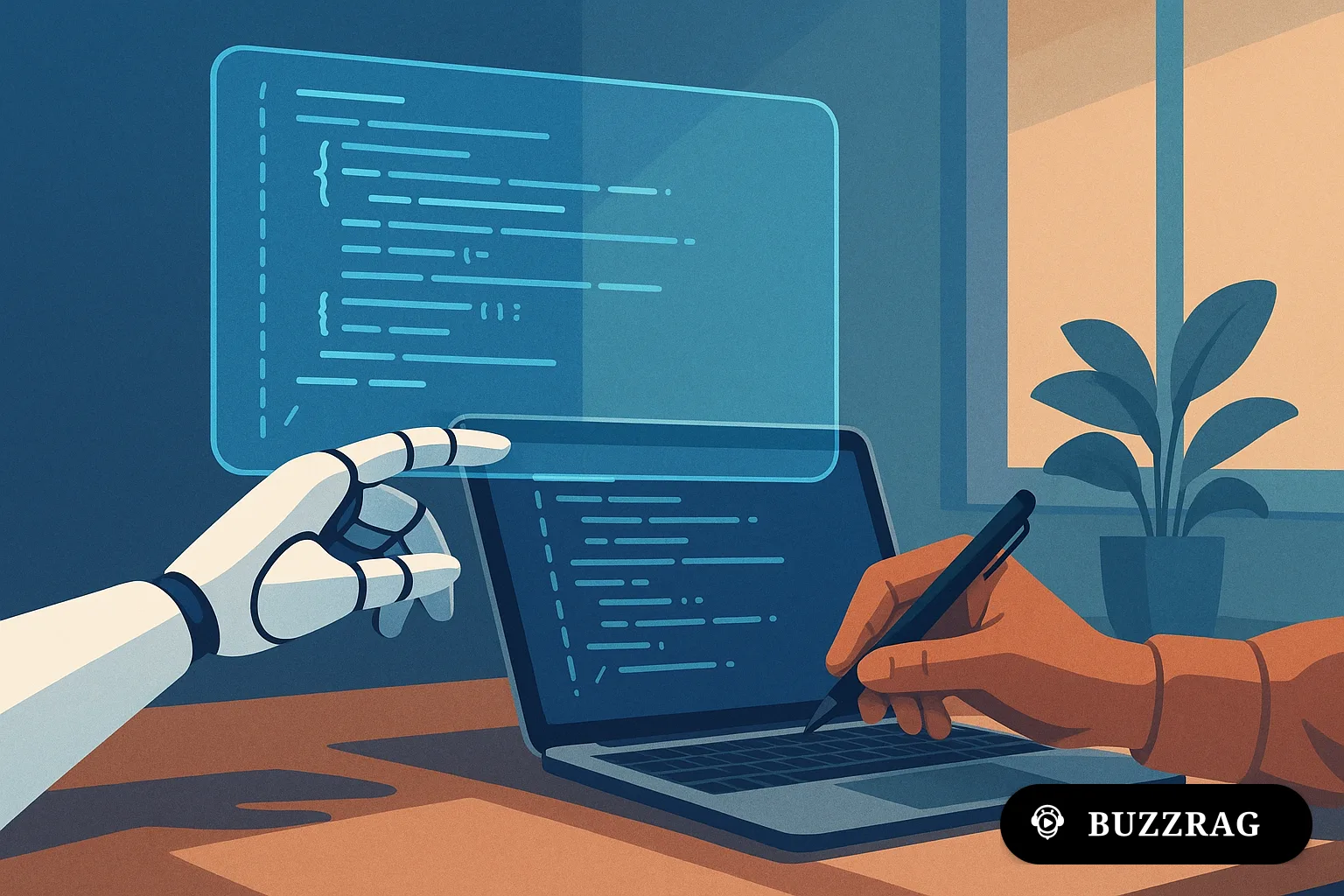
Cursor V3 represents a leap forward in integrating AI with software development, offering an innovative alternative to traditional IDEs. This AI coding agent aids developers in crafting and refining code with unprecedented interactivity, potentially transforming development workflows.
DeepSeek-V4: Open-Source AI's New Frontier
DeepSeek-V4, with its 1.6 trillion parameter MoE architecture, outpaces previous models in open-source AI capabilities. It challenges the dominance of proprietary models like GPT-5.5, offering robust performance and accessibility to the AI community.
OpenClaw: Automating with AI
OpenClaw is gaining traction for its versatility in automating workflows and building custom AI agents. Its practical use cases demonstrate how AI can be seamlessly integrated into various productivity-enhancing applications.
GPT-5.5: A User's Perspective
GPT-5.5 builds on its predecessors with enhanced capabilities, drawing significant attention from users. Its improvements in language understanding and generation mark another step in the evolution of conversational AI.
Adapting Education to GenAI
Educators are revising curricula to incorporate generative AI tools like ChatGPT, which are now commonplace in student workflows. The challenge lies in effectively integrating these tools into teaching while maintaining educational integrity.
Speeding Up RL with Speculative Decoding
Distribution-aware speculative decoding offers a 50% increase in the speed of reinforcement learning rollouts without sacrificing reward quality. This technique addresses a key bottleneck in RL post-training.
The Next Step: GPT-5.5
GPT-5.5 signals significant progress in AI model development, with users noting its improved functionality. The model's subtle yet impactful enhancements suggest a refined understanding of user needs.
As AI continues to evolve, the interplay between open-source and proprietary models will shape future innovations. Educators and developers alike face the challenge of integrating these technologies into their workflows. Keep an eye on how these dynamics unfold in the coming months.