Why AI Won't Kill Engineering Jobs (It'll Create More)
Vercel's CTO explains why AI agents will increase demand for software engineers, not replace them—and what types of automation actually work today.

Written by AI. Tyler Nakamura
There's a Venn diagram that explains the entire future of software development, and it's stupidly simple.
Imagine a circle representing all the software that should exist. For decades, we could only build a fraction of it because traditional development was too expensive. Too many edge cases. Too much business logic to hardcode. Too many if-statements to maintain. The economically viable slice was tiny.
Now draw that same circle, but this time AI agents can fill in what was previously too costly to automate. That's Malte Ubl's thesis, and as Vercel's CTO speaking at the first AI Engineer conference in Europe, he's betting the company's infrastructure strategy on it.
The counterintuitive part? This doesn't shrink the market for engineers. It explodes it.
The Economics Are Weird (In a Good Way)
"We are speed running what's really an experiment in economics of how elastic the software market is," Ubl explained. "The thesis being that the cheaper it is to make software, the more software we're going to make."
It's already happening. Over in Silicon Valley, they're calling it the "SaaS-pocalypse"—companies are choosing to build custom solutions rather than buy off-the-shelf software. Ubl thinks SaaS companies will survive, but the trend is clear: when making software gets cheaper, more companies opt to make instead of buy.
And who builds that software? Engineers. Even if AI writes the code.
"As a consequence, what's actually happening is the demand for software engineers is going up," Ubl said. The data from Vercel supports this—they're not seeing contraction, they're seeing expansion.
The question isn't whether there's a place for engineers in an AI future. It's whether we're building the right things.
The Agents That Actually Work Today
Here's where Ubl gets practical. Forget the sci-fi stuff for a minute. He outlined four types of agents companies can deploy right now without overhauling their entire business:
24/7 operations: Customer support is the obvious one, but the pattern applies anywhere you'd benefit from never sleeping. If a job currently runs 9-to-5 because humans need rest, an agent can extend that to round-the-clock without changing the underlying process.
Compressed research: This might be the most immediately valuable. Every business has processes shaped like this: business event → research → human decision. You can insert an agent at the research step without touching anything else. At Vercel, when someone hits the contact sales button, an agent does the initial research—LinkedIn stalking, company size estimation, routing logic. A human still makes the call, but what took 15 minutes now takes seconds.
"You didn't increase the risk profile and you didn't have to change the process," Ubl noted. If you're running that process 100,000 times a year, the savings are massive.
Information surfacing: This one's almost magical because the information already exists—it's just trapped. Issue trackers that could be updated from Slack messages but aren't. Status reports that could be auto-generated from meeting recordings but aren't. The agent doesn't create new information; it makes existing information actually usable.
Eliminating what people hate: Ubl's favorite metric is job satisfaction. Vercel built an in-house support agent with a 90% deflection rate, and the support team's happiness exploded. Why? Because they stopped handling "my credit card got rejected" tickets and started solving actually interesting problems.
"There's a magical question that you can ask to figure out agents you should build in your company, which is to ask folks, what do you hate most about your job," he said.
This isn't about replacing humans. It's about removing the soul-crushing parts so humans can do what they're actually good at.
When Agents Become the Users
The weirder shift is that software itself is increasingly consumed by agents, not humans. Ubl dropped a stat that hasn't been public before: over 60% of page views on vercel.com in the last week were AI agents, not people.
That changes everything about how you build. When someone proposes a new feature with a UI, Ubl's first question is: "What's the CLI? How does an agent use this?"
It also creates infrastructure challenges that sound like they're from 1999. "We're marching head-on into a security nightmare," Ubl admitted. "It almost feels like a little bit like 1999, where really everything can be hacked."
His hot take: most popular agent frameworks have the architecture wrong because they combine where the agent runs with where the code it generates runs. (Anthropic apparently agrees—they separated these in their new agent product.)
But these are solvable problems, and we're "still in the very early innings." The paradigms will shift multiple times before this settles.
The European Wildcard
Here's the narrative violation: Europe might not build the foundation models, but it's leading on the application layer. Vercel's AI SDK (led by Lars Kappert in Berlin) processes over $10 million worth of requests weekly. Poe's coding agent comes from Austria. Cursor (now called Codeium) has European roots.
"Europe, against all odds, is taking actually a leadership role in AI engineering," Ubl said.
He sees two possible futures. In one, big model labs consolidate and capture all the value—engineers become "forward deployed" workers for OpenAI or Anthropic. In the other, models commoditize (he gives Google credit for driving costs down), and the real innovation happens at the application layer.
"In that world, we the AI engineers are the powerful ones. Our agents are the ones that actually create the business value, and it's the application layer where the real innovation happens."
Based on what's shipping from European teams, the second future looks increasingly likely. The models are already commoditizing. Claude is great, GPT-4 is great, Google will catch up. The interesting work isn't training another foundation model—it's building the agents that actually solve problems.
Which brings us back to that Venn diagram. The circle of software that should exist is about to get filled in. Not by model labs. By engineers building practical automation that makes work less terrible and businesses more efficient. That's not a shrinking market—it's the biggest greenfield opportunity since the web itself.
More Like This
Token Maxing Is Breaking Big Tech's Engineering Culture
Engineers at Meta and Microsoft are gaming AI metrics to keep their jobs. Gergely Orosz explains why 'token maxing' reveals deeper problems with AI adoption.
The Five Places Worth Building in AI (Everyone Else Is Toast)
When AI makes building software free, what's actually worth building? Only five structural layers will survive the coming commoditization.
When Your AI Agent Should Actually Be a Workflow
Most AI 'agents' should be workflows instead. A technical workshop reveals why autonomy isn't always better—and how to choose the right architecture.
The AI Agent Explosion: 35 Projects Solving Real Problems
From security sandboxes to autonomous research pipelines, GitHub's AI agent ecosystem is addressing practical problems—not just building demos.
The Specification Bottleneck: Why AI Creates Two Classes of Workers
When AI makes building free, knowing what to build becomes everything. How the shift from production to specification is splitting knowledge workers into two classes.
OpenClaw Dominates February's GitHub: What It Means
February's GitHub trends reveal an AI agent ecosystem in rapid evolution, with OpenClaw spawning dozens of variants optimized for everything from $10 hardware to enterprise security.
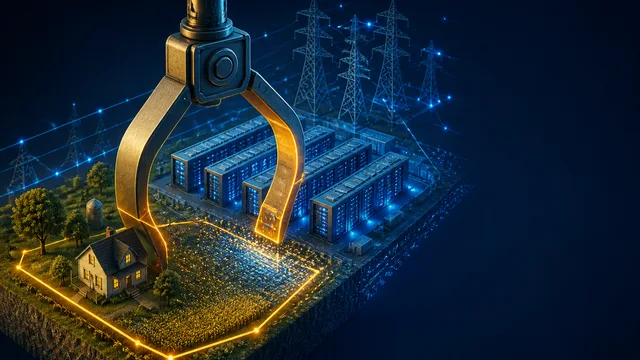
Eminent Domain Is Being Used to Build Data Centers
Power companies in Georgia and Pennsylvania are using eminent domain to seize private land for AI data center infrastructure. Here's what that actually means.

Smart Sensors Are Changing Home Fermentation
From sourdough starters to homebrewed beer, smart sensor kits are giving fermentation hobbyists precision control once reserved for commercial producers.