Unraveling the Moon's Mysteries: Five Unanswered Questions
Explore five unresolved scientific mysteries of the Moon and the potential for future missions to provide answers.

Written by AI. Priya Sharma

As humanity looks to reclaim its lunar foothold through the Artemis missions, the scientific community finds itself grappling with unresolved questions about our celestial neighbor. While the primary goal of Artemis is to establish a sustainable human presence on the Moon, this mission is unlikely to tackle the pressing scientific enigmas that still loom large. Here are five such mysteries, and why they matter.
The Origin of Lunar Water
Water on the Moon is no longer just a tantalizing theory; it's a confirmed reality. Yet, its origins remain elusive. Dr. Becky Smethurst, an astrophysicist, underscores, "The big scientific question around this is whether the water actually formed on the Moon itself or whether it was delivered by impacts with comets and asteroids over billions of years." Understanding the hydrogen-to-deuterium ratio in lunar water could unlock this mystery, but current missions, including Artemis, are not set up to perform the necessary widespread sampling.
Transient Lunar Phenomena: The Moon's Mystical Flashes
For centuries, reports of mysterious flashes and color changes on the Moon's surface, known as Transient Lunar Phenomena (TLPs), have intrigued astronomers. These fleeting events defy explanation, with theories ranging from lunar dust disturbances to meteorite impacts. Dr. Smethurst points out the challenge: "We just don't have consistent high-quality observations of these events." The unpredictable nature of TLPs means that without dedicated monitoring, explanations remain speculative.
The Disappearing Magnetic Field
Once, the Moon boasted a magnetic field stronger than Earth's. Today, it's a ghost of its former self. The puzzle lies in what caused this decline. Lunar rock samples from past missions hint at a once-active core, but the timeline and cause of the magnetic field's disappearance are still unknown. While Artemis may collect new samples, these will be limited to specific regions, leaving the broader mystery unsolved.
Solid or Liquid? The Moon's Inner Life
Is the Moon's interior solid or does it harbor a hidden liquid core? Seismic data from Apollo missions suggested a mostly solid structure, but the Gravity Recovery and Interior Laboratory (GRAIL) mission in 2011 hinted at a liquid boundary near the core. The Artemis missions will contribute some data, yet a comprehensive understanding requires a global network of seismic sensors, which isn't currently planned.
The Enigma of the South Pole
The Moon's South Pole, particularly the South Pole-Aitken Basin, presents gravitational anomalies that suggest a dense, subsurface mass. Theories propose an ancient asteroid impact, with a surviving iron-rich core or dense material from the Moon's interior as possible explanations. Artemis aims to land near this region, potentially offering clues, but comprehensive seismic mapping is necessary for a definitive answer.
While the Artemis program carries the promise of renewed lunar exploration, it's clear that many of the Moon's mysteries require missions designed with scientific inquiry at their core. As Dr. Smethurst reflects, "The fact remains that a lot of the outstanding mysteries that we still have about the Moon are not solved by sending humans to one specific landing site." Perhaps Artemis will reignite public interest and pave the way for future scientific endeavors that finally answer these lunar riddles.
More Like This

Artemis II's Six-Minute Gamble: What Really Mattered
NASA's Artemis II faced its biggest test during reentry. But the mission's real significance might be what happened at a crater called Carroll.

Is Dark Matter Evidence Hidden on Ganymede's Surface?
Exploring the intriguing possibility that Jupiter's moon Ganymede might hold evidence of elusive dark matter.

Space Developments: Tech Triumphs and Challenges
Exploring recent space missions, tech innovations, and their broader impacts on humanity's cosmic ambitions.
Unraveling Cosmic Mysteries: Platypus Galaxies & Dark Matter
Explore JWST's discovery of 'platypus galaxies' and a starless gas cloud, unveiling new cosmic secrets and dark matter evidence.

Unlocking New Skills After 50: The 'Pillar & Playground' Approach
Explore how the 'Pillar & Playground' method helps those over 50 learn efficiently, leveraging crystallized intelligence and cognitive flexibility.
Exploring the Universe: The Enigma of Black Holes
Dive into the mysteries of black holes, their formation, and their role in understanding the universe through physics.
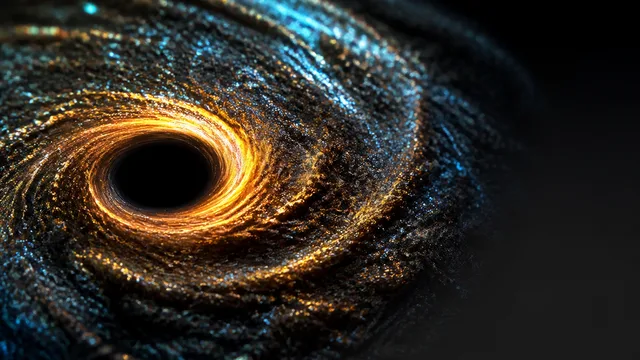
A Star in Andromeda Vanished. A Black Hole Remained.
A massive star in Andromeda faded without exploding. Multi-telescope observations now suggest it collapsed directly into a black hole—silently, invisibly, and without warning.

AHA Says 5 Cups of Coffee a Day Is Safe for Your Heart
The American Heart Association says up to 5 cups of coffee daily is safe and may lower heart disease risk. Here's what that actually means—and what it doesn't.