Skydance's New Leaders Face Merger and Debt Challenges
Skydance's co-CEOs must integrate Paramount and Warner Bros. Discovery while managing more than $80 billion in debt. Their first appointments show where power sits.

Written by AI. Jin Seo
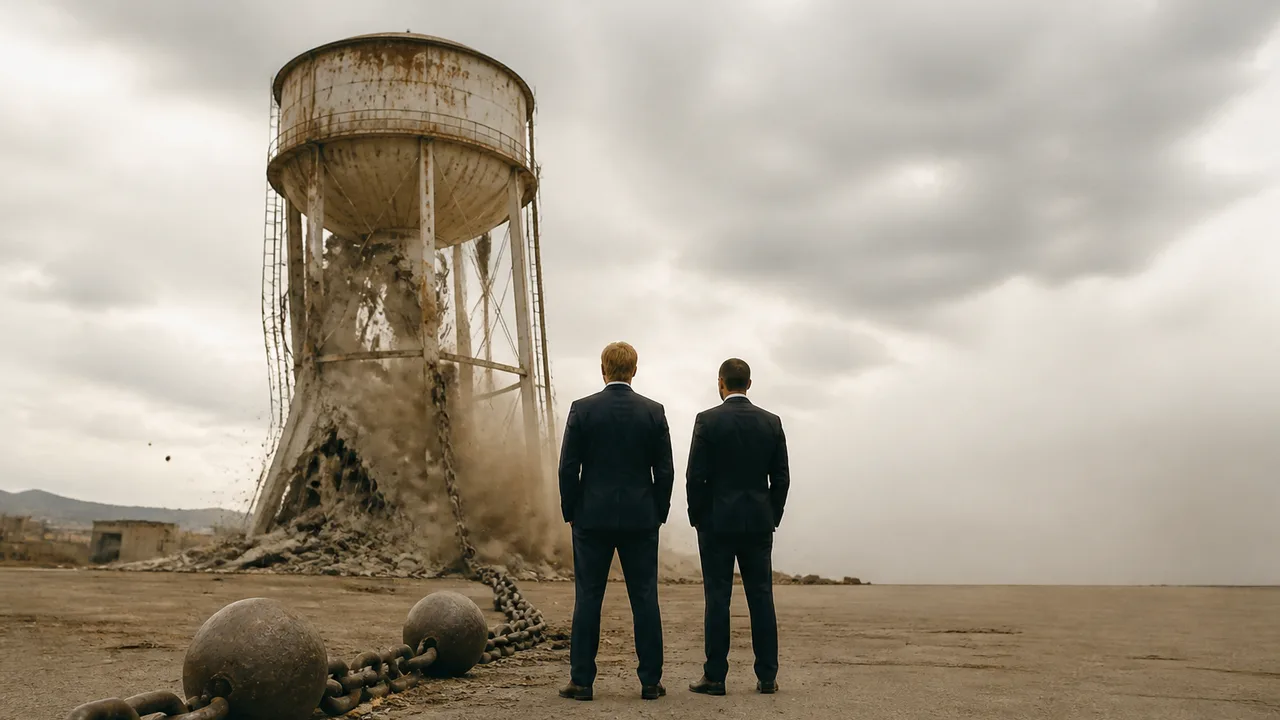
Paramount completed its takeover of Warner Bros. Discovery on Tuesday, putting David Ellison and co-CEO Ynon Kreiz in charge of a company called Skydance. They now oversee two film studios, television networks, two large streaming services and news organizations. They also inherit more than $80 billion in debt. The merger is closed; the work of deciding how those businesses operate together has begun.
Ellison has made the strongest case for the combination plainly: bringing the studios together should create a stronger competitor with the resources and reach to serve audiences across platforms. Scale could give Skydance more programming and more ways to distribute it in a market that includes Disney and Netflix. But a larger collection of assets also gives management more choices to coordinate, and debt gives those choices a financial deadline of sorts. Borrowing has to be serviced even while a company works out which businesses to invest in and which executives have authority over them.
The first leadership appointments offer a clearer guide to that authority than the corporate name does. Kreiz, a former Mattel chief executive, was appointed to run day-to-day operations alongside Ellison. The announced division heads jointly report to the two co-CEOs. That arrangement puts integration decisions at the top of a shared reporting structure. It does not, by itself, say which co-CEO will settle every disagreement over a budget, a product or a division.
A Roster with Consequences
Skydance has kept several Warner leaders in consequential jobs. HBO chairman Casey Bloys becomes co-chair and chief content officer of the combined direct-to-consumer streaming services. J.B. Perrette, who oversaw the HBO Max product, becomes co-chair and chief business officer for television and streaming. CNN remains under Mark Thompson; James Gunn and Peter Safran remain co-chairmen of DC Studios. Those appointments preserve people with knowledge of businesses Skydance has just acquired.
Other appointments put existing Paramount or Skydance executives over larger combined operations. George Cheeks becomes co-chair and chief content officer of Skydance TV, which includes CBS and entertainment cable channels from both companies. Dana Goldberg and Josh Greenstein become co-chairs of a motion-picture group that includes Warner Bros. Dennis Cinelli stays on as chief financial officer. Former Warner chief executive David Zaslav, finance chief Gunnar Wiedenfels and studio chiefs Mike DeLuca and Pam Abdy leave the leadership structure. Paramount streaming chief Cindy Holland resigned as Bloys took the combined streaming-programming role.
This is a practical division of labor, as well as a distribution of power. Keeping Bloys over streaming content could help retain expertise in HBO programming; putting Skydance film executives over a group that includes Warner Bros. places that business inside the buyer's management chain. Whether either choice improves results depends on decisions still to come. A title identifies who has a seat at the table. Budgets, commissioning choices and reporting lines will show what each seat can do.
For a person developing a series, a combined streaming-content chief could influence where a proposal goes. For employees in overlapping operations, new reporting lines could clarify supervision or influence evaluations; the arrangements for evaluating individual employees remain unknown. For viewers, the effect may eventually appear in what gets made and where it can be watched. Those are pathways through which an organizational chart can affect people, not announcements of changes to any particular show, job or subscription.
Some lines of authority are deliberately separate. Bari Weiss remains editor-in-chief of CBS News and will have no role at CNN Worldwide, which Thompson continues to manage. That tells employees which executive runs CNN. It does not answer every question about how the two news organizations will operate inside one owner; management assignments and editorial practice are different tests.
One substantial piece of the chart remains in motion. Kevin MacLellan will not take an anticipated top role outside North America, Variety reported, citing sources. Ellison and Kreiz want to reorganize the international business; the rest of that leadership team had yet to be identified, the source said. For operations outside North America, the account suggests the announced roster is only part of the integration job.
The Debt Behind the Decisions
The transaction was $111 billion and the combined company would carry more than $80 billion in debt, the Los Angeles Times said. Those figures describe different things: the first is the reported size of the merger; the second is a liability the new company must manage. Treating them as interchangeable would obscure the question facing Ellison, Kreiz and Cinelli. Can they make a larger collection of studios, networks and streaming businesses work together while meeting the obligations attached to the company?
Debt can make an operating choice more consequential because money used for one purpose cannot be used for another. Investing in programming, combining systems and reducing borrowings can each compete for management attention and resources. This is the financial logic connecting the integration chart to the balance sheet. It cannot identify a given production or job that Skydance will cut.
The company's own case for combining the businesses has a financial logic, too. A larger portfolio can offer more programming across more outlets. The question is whether those outlets generate enough value to justify what it costs to run and coordinate them while paying creditors. Bloys has responsibility for streaming content and Perrette for business matters across television and streaming, placing different parts of that question with different executives. Their titles specify areas of responsibility, but the answers will depend on operating choices that a launch roster cannot make for them.
Warner Bros. Discovery brings recent merger history into this one. It was itself formed in a debt-burdened deal about four and a half years before Zaslav's departure. Skydance is therefore taking over a company that has already been through a major combination. Both combinations put leadership and borrowing near the center of the task. They need not follow the same financial or operating path: the earlier deal's results cannot serve as a forecast for this one.
The comparison points to a test for the months ahead: whether Skydance can turn inherited expertise and newly centralized authority into an operating structure that supports the businesses carrying its debt. Retaining Bloys and Thompson, replacing Warner's studio chiefs and leaving international leadership to be reorganized are different answers to the same management question: who gets to decide? Ellison and Kreiz have begun answering it with names. Their next answers will arrive as budgets and responsibilities become clear.
More Like This

Skydance Name Puts Paramount Merger's Decisions in View
Skydance will be the name above Paramount and Warner Bros. The ticker will change too, but future spending decisions will show how the combined company operates.

June Jobs Report: 57K Jobs Added, Well Below Forecasts
The U.S. added just 57,000 jobs in June—roughly half what economists expected. Here's what the slowdown means for the Fed, markets, and hiring.

Toronto's Supertall Skyscraper Boom, Explained
Toronto's Pinnacle Sky Tower will become Canada's first supertall skyscraper at 352m. Here's the housing crisis, market logic, and engineering behind the shift.