OpenAI's ChatGPT Images 2.0: Text on Rice and What It Means
OpenAI's ChatGPT Images 2.0 launches with unprecedented text rendering capabilities, including writing on individual rice grains and multilingual support.

Written by AI. Samira Barnes
OpenAI demonstrated ChatGPT Images 2.0 yesterday with a peculiar party trick: rendering the text "GPT image" on a single grain of rice within a pile of thousands. The model generated a 4K image, and somewhere in the center, legible text appeared on one grain among the mass.
This is the kind of capability demonstration that policy people need to understand not as a novelty, but as a signal. When an AI system can handle that level of detail—text precision at scale, in high resolution—we're discussing something materially different from previous generation tools.
The launch comes at a moment when Congress is actively debating AI regulation frameworks, and the European Union's AI Act enforcement approaches. The question isn't whether this technology is impressive. The question is what obligations come with deploying it.
What Actually Changed
The technical improvements in Images 2.0 cluster around three areas: interactive refinement, what OpenAI calls "thinking mode," and multilingual text rendering. The interactive piece allows users to iterate on prompts conversationally rather than starting fresh each time—essentially bringing the ChatGPT interaction model to image generation.
The thinking mode is where things get interesting from a policy perspective. As Kenji, one of the OpenAI team members, explained during the demonstration: "A major capability that we've introduced in this model is the ability for image generation to think before it produces its final output. This is particularly useful for very complex prompts for things that require like web searches for require you to output multiple images that have to maintain coherence with each other or even for it to check its work."
The model can now perform web searches mid-generation. In one demo, it pulled social media reactions to OpenAI's beta test (conducted under the code name "duct tape"), synthesized quotes from Threads, LinkedIn, and Reddit, and embedded a working QR code linking to ChatGPT—all in a single image. That QR code worked when scanned.
This isn't just image generation anymore. It's research, synthesis, and production in one step.
The Multilingual Question
The text rendering capability deserves scrutiny beyond the technical achievement. Nitant, an engineer on the ChatGPT images team, stated the motivation plainly: "OpenAI is a San Francisco based company. We speak English and use English at work. However, we want everyone in the world to enjoy the same excitement we have when generating images."
The model now handles Hindi, Chinese, Korean, Japanese, Telugu, Kannada, Tamil, and Marathi with what the team described as near-perfect accuracy in dense text. The demo showed a Japanese bakery poster with correct hiragana characters, a Hindi recipe for aloo paratha, and a multilingual typography poster.
Buan, a member of the images research team, noted: "Those languages traditionally have thousands of characters in the alphabet unlike the 26 in English. So previously our model had a hard time memorizing these characters but now just prompted and generate entire pages of text in these languages without errors."
From a digital rights perspective, this capability expansion matters. Text generation in non-Latin scripts has historically been where AI systems fail most visibly. It's where the English-language training bias becomes concrete harm—when a tool simply cannot serve users in their language. Addressing that gap is necessary. But it also raises questions about content moderation, misinformation potential, and whether OpenAI's safety systems are equally robust across all these languages.
The EU AI Act includes specific requirements about linguistic accessibility and non-discrimination. OpenAI's expansion into complex character sets could be read as compliance preparation—or it could be genuine capability development that happens to align with regulatory requirements. Probably both.
The Benchmark Jump
During the demonstration, the hosts noted that ChatGPT Images 2.0 scored 1512 on the Artificial Analysis benchmark, compared to 1270 for Google's Gemini 3.1 Flash Image Preview (the previous leader). That's not an incremental improvement. That's a gap.
Benchmarks have limitations—they measure what they're designed to measure, and gaming them is always possible. But a 19% leap in measured capability suggests OpenAI has solved problems that were blocking other approaches. Whether through architectural changes, training data improvements, or compute scale, they've achieved something competitors haven't replicated yet.
This matters for antitrust consideration. When one company pulls ahead by this margin, the conversation shifts from "regulating AI" to "regulating this specific company's dominance." The FTC is already examining AI market concentration. A capability gap this wide strengthens the argument for structural intervention.
What the Demos Showed
The team generated images with aspect ratios up to 3:1 (both horizontal and vertical), 360-degree panoramas with correct lighting and shadow direction, and photorealistic outputs that mimicked specific camera styles. One demo requested images "shot on iPhone" or with "disposable camera" aesthetics. The model produced convincing grain, lighting imperfections, and lens characteristics.
This photorealism capability intersects uncomfortably with deepfake concerns. OpenAI has implemented watermarking and metadata tagging, but those are post-generation controls. They don't prevent creation; they attempt to track it after the fact. Several bills currently in Congress would mandate technical provenance markers for AI-generated content. The question is whether those requirements will be enforceable or merely performative.
The live stream also showed the model generating a fictional newspaper about Tim Cook leaving Apple, complete with plausible (if not entirely accurate) article text. The date was wrong, but the prose was coherent. This is the kind of output that can seed misinformation campaigns if deployed without guardrails.
The Unasked Questions
What OpenAI didn't discuss: content moderation at scale, the appeals process when the system refuses a prompt, training data provenance for these multilingual capabilities, or what happens when this tool is used for regulatory circumvention (generating compliance documents that look legitimate but aren't).
They also didn't address computational cost. Models this capable require infrastructure most competitors can't match. That's a market structure issue. When capability correlates perfectly with resource access, you get consolidation.
The API is live, which means third-party developers can now build on this. That's where policy really loses visibility—what happens when this capability layer gets embedded in tools the regulators don't even know exist yet?
Images 2.0 is a technical achievement. It's also a regulatory challenge arriving faster than the frameworks meant to govern it. The rice grain was a demo. The policy gap is real.
More Like This
ChatGPT Images 2.0 vs. Midjourney: Where Text Finally Works
ChatGPT's new image generator excels at text accuracy where competitors fail. A deep dive into what works, what doesn't, and what it means for AI images.
OpenAI's Image Gen 2.0 Thinks Before It Draws
ChatGPT Images 2.0 introduces 'thinking mode' for AI image generation—creating multi-page manga, error-free text in any language, and production-ready visuals.

NVIDIA Lyra 2.0 Builds 3D Worlds From One Photo
NVIDIA's Lyra 2.0 generates persistent 3D worlds from a single image. Here's the technical trick that finally keeps them from breaking down.
ByteDance's Seaweed 2.0 Rewrites AI Video Generation Rules
ByteDance's Seaweed 2.0 video model generates frighteningly realistic clips—and highlights how different regulatory approaches shape AI capabilities.
Google's Image AI Bets on Speed Over Perfection
Google's Nano Banana 2 signals a shift in AI image generation: good enough, fast enough, and cheap enough now matters more than perfect.
AI's Second Moment: When Agents Go From Hype to Reality
Enterprise AI shifted from pilots to production in Q2 2026, with agentic systems driving $650B in capex and sparking unprecedented political battles.
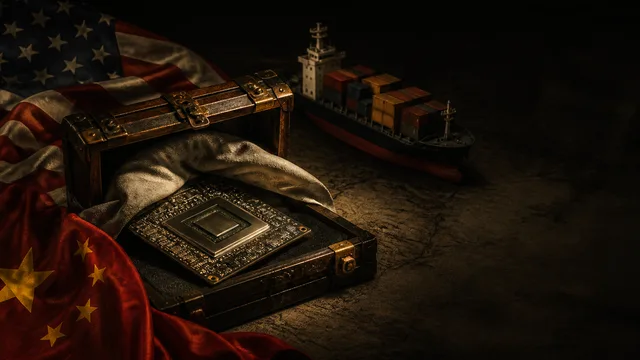
AI Chip Smuggling and the US-China Tech Divide
FT's Eleanor Olcott investigates the black market for Nvidia AI chips reaching China despite US export controls — and what it reveals about the tech race.

OpenAI Launches GPT-5.6 Sol, Terra, and Luna Models
OpenAI's GPT-5.6 family—Sol, Terra, and Luna—is rolling out globally. Real users, real tasks, real questions about what "capable" actually means.