Navigating AI-Generated Worlds with Google’s Project Genie
Explore the societal impacts and challenges of Google's Project Genie and AI-generated worlds.

Written by AI. Samira Barnes
In the ever-evolving landscape of artificial intelligence, Google's Project Genie emerges as a bold foray into AI-generated virtual worlds. A creation of Google DeepMind, this tool allows users to generate and explore immersive environments, pushing the boundaries of creativity and interaction in digital spaces.
Access and Eligibility
Project Genie, however, is not universally accessible. It remains a privilege for the few who are Google AI Ultra subscribers, a premium service reportedly priced at $200 a month—though this figure warrants verification. Access is also geographically restricted to users in the United States over the age of 18, with a phased rollout that hints at a broader but controlled release strategy. Such exclusivity raises questions about the democratization of emerging technologies, particularly as virtual environments become more integral to both professional and personal spheres.
The Mechanics of World Creation
The tutorial video by TheAIGRID provides a detailed walkthrough on how to navigate this tool. Users can create worlds by writing specific prompts or uploading images, each method offering unique creative possibilities. The prompts require clarity on environmental details and character traits, while image uploads can transform high-resolution photos into explorable terrains. A notable feature is the use of Nano Nana, another AI that generates a preview of the world before full rendering, giving users a chance to refine their visions.
Societal Impacts and Regulatory Challenges
The potential societal impacts of such technology are profound. Consider a scenario where educators use Project Genie to create interactive history lessons, or architects employ it to visualize urban planning projects. Yet, as with any powerful tool, it brings regulatory challenges. The ability to create immersive, realistic worlds raises questions about data privacy, intellectual property, and the potential for misuse.
Historically, similar technologies have faced regulatory scrutiny. The European Union's General Data Protection Regulation (GDPR) provides a framework that could be looked at for guidance. GDPR's emphasis on data protection and user consent could inform how we govern AI-generated content, ensuring that users' creations do not infringe on privacy or copyright laws.
Who Benefits and Who Is Left Behind?
While Project Genie showcases AI's creative potential, it also highlights the digital divide. The cost and access restrictions mean that this technology is currently out of reach for many potential innovators and users. As the tool develops, it will be crucial to balance innovation with accessibility to prevent a scenario where only a select few can leverage the full potential of AI-driven creativity.
A Glimpse Into the Future
The broader significance of Project Genie lies in its ability to act as a mirror reflecting the intersection of human creativity and artificial intelligence. As users craft worlds that defy physical limitations, they inadvertently push the boundaries of what AI can achieve. One cannot help but wonder: as these virtual landscapes become more advanced, how will our regulatory frameworks evolve to keep pace with the ethical and societal implications they introduce?
More Like This
AI's Evolution: Compute, Regulation, and Reality
Explore AI's trajectory in compute demands and regulatory challenges by 2026.

NVIDIA Lyra 2.0 Builds 3D Worlds From One Photo
NVIDIA's Lyra 2.0 generates persistent 3D worlds from a single image. Here's the technical trick that finally keeps them from breaking down.
AI's Real Constraint Isn't Intelligence—It's Everything Else
While Davos celebrates AI abundance, the real value concentrates where bottlenecks bind: infrastructure, trust, integration, and human judgment.
The Design Pattern Tension in Agent-Native Applications
Builder.io's Steve argues AI apps need user feedback loops and customization. But his framework raises questions about where applications end and agents begin.
AI's Leap in Math and Defense: Grok 4.20's Impact
Grok 4.20's AI advancements in math and defense pose critical regulatory challenges. Can policy keep pace with innovation?
Alibaba's Free Qwen 3.6 Plus: What the Specs Actually Mean
Alibaba's Qwen 3.6 Plus offers flagship AI capabilities for free during preview. We examine what matters beyond the benchmarks and marketing claims.

AI Chip Smuggling and the US-China Tech Divide
FT's Eleanor Olcott investigates the black market for Nvidia AI chips reaching China despite US export controls — and what it reveals about the tech race.
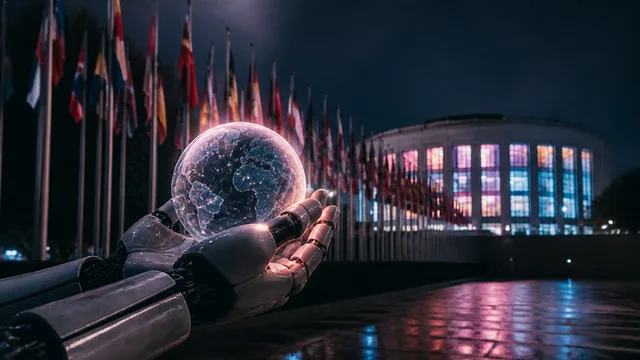
UN AI Summit: Big Room, Bigger Questions on Governance
193 countries met in Geneva to tackle AI governance. The warnings were credible. The robots were cool. The binding rules? Still not there.