Microsoft Majorana 2 Quantum Chip: Claims and Questions
Microsoft says its Majorana 2 chip is 1,000x more reliable. But the regulatory and verification questions around that claim deserve equal attention.

Written by AI. Samira Barnes
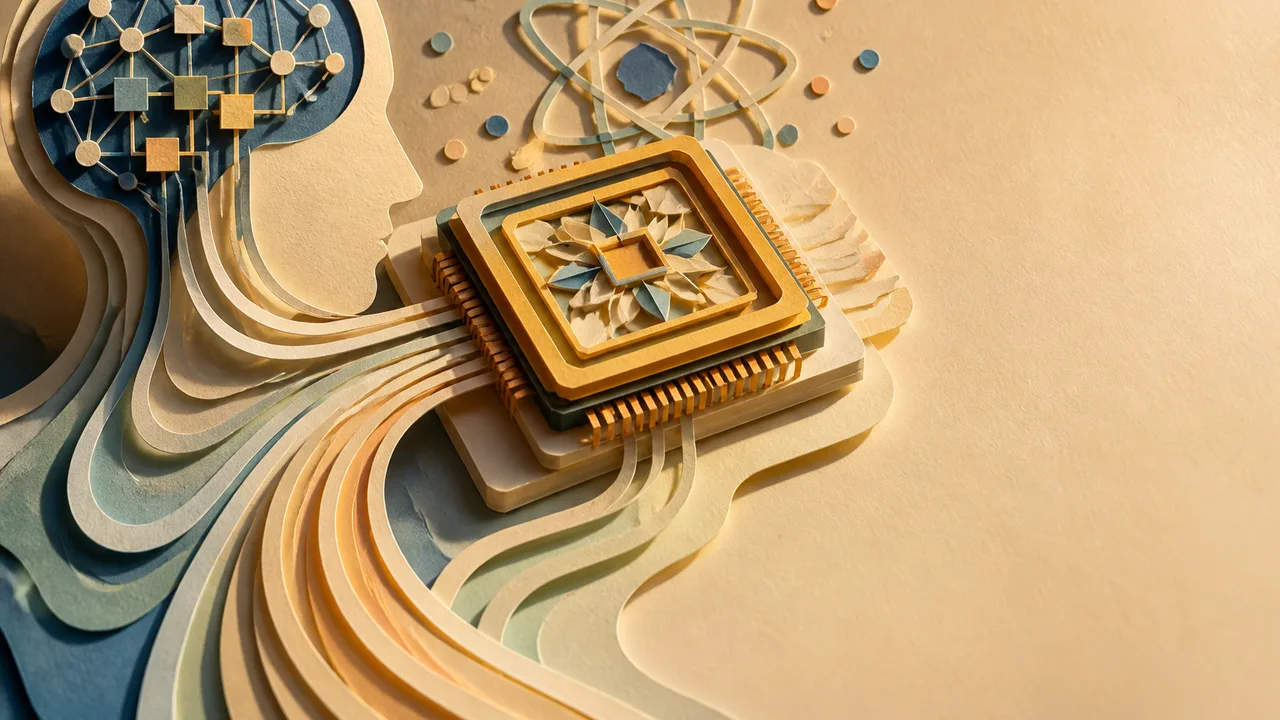
Photo: AI. Lila Bencher
Microsoft has a new quantum chip, a compressed commercial timeline, and a very large number it would like you to remember. What it does not have — not yet, and not by any independent accounting — is external verification of any of it.
That gap is not a scandal. It is, however, a structural feature of how Microsoft has chosen to announce Majorana 2, and understanding that structure matters more than the headline figure.
At what Microsoft has identified as Microsoft Build 2026, the company unveiled Majorana 2, a successor to last year's Majorana 1 chip. The headline claim, as Microsoft's quantum hardware lead Chetan Nayak reportedly put it at the event: "We are 1,000 times better." The company says Majorana 2 qubits — the basic units of quantum computation — sustain their quantum state for an average of 20 seconds, with some individual qubits lasting up to a full minute. Previous-generation qubits collapsed in microseconds. If that coherence figure holds under conditions not designed by Microsoft, the jump is genuinely significant. The physics of why is worth understanding before we get to the policy of why it matters.
What qubits are and why they keep failing
A classical computer operates on bits — ones and zeros. A quantum computer operates on qubits, which can represent far richer states of information through quantum mechanical properties, which is where their theoretical power comes from. The problem is that qubits are extraordinarily sensitive to outside interference: heat, vibration, stray electromagnetic fields, even cosmic-ray particles can knock a qubit out of its working state before any useful calculation completes. This phenomenon, called decoherence, is the central engineering problem in the field, and it is why quantum computers have remained largely confined to laboratory conditions despite decades of development.
Microsoft's reported solution for Majorana 2 is a material change: switching the chip's superconductor from aluminum to lead. Lead's radiation-shielding properties — familiar from medical imaging suites and industrial settings — appear to translate directly into qubit protection at the chip level, reducing the environmental noise that causes decoherence. The architecture also draws on topological qubit design, a Microsoft research program dating back years, which theoretically makes qubits more inherently stable than competing approaches. These are genuine technical choices with published research lineages, not marketing constructs.
The coherence figures Microsoft is publicizing — 20 seconds average, up to 60 seconds for individual qubits — come from Microsoft's own testing. They are company data points, not benchmarks established by NIST, not figures replicated by independent academic labs, and not numbers that have gone through peer review at a venue that would require methodology disclosure. This is normal at the announcement stage. It does not make the figures false. It does make them formally uncorroborated, and precision in that distinction is what separates coverage from amplification.
The loop Microsoft built, and what it discloses
Here is where the story acquires the regulatory texture that the chip announcement alone does not carry.
Microsoft did not develop Majorana 2 using conventional research methods alone. According to the company, AI agents operating within a platform called Microsoft Discovery did substantive work in the process: synthesizing nearly two decades of scattered experimental data, automating measurement workflows, optimizing manufacturing parameters, and — in the most concrete example Microsoft has offered — identifying a miscalibrated temperature sensor that had been skewing the team's results without anyone catching it. An AI system found the error that the human team missed.
Microsoft Discovery has now been made generally available. Other companies and research institutions can license the platform for their own scientific work. There is also a consumer-facing preview accessible via GitHub Copilot accounts. Microsoft's product description — which characterizes Discovery as combining specialized scientific research agents, workflow management tools, and enterprise-grade security and governance features — has not been independently benchmarked. That description is Microsoft's own.
The commercial logic is transparent and worth naming: Microsoft used its own AI platform to help build a breakthrough, then announced the breakthrough alongside the platform that built it, and is now selling that platform to the research community. This is not inherently improper. But it creates a disclosure question that no existing regulatory framework cleanly addresses.
When a pharmaceutical company funds a clinical trial for its own drug, disclosure requirements exist precisely because the funding relationship shapes incentives. The FDA does not simply accept a company's own efficacy data as settled science; it requires independent review against specified methodological standards. No equivalent framework governs AI-assisted research claims in quantum computing. There is no regulatory body with jurisdiction over what a company must disclose when its proprietary AI platform contributes materially to findings the company then uses to market that same platform. The gap between "this is how science has always been communicated" and "this is a new kind of conflict of interest that existing rules were not designed to catch" is worth watching.
The timeline and the geopolitical register it enters
Microsoft is now projecting a scalable, commercially useful quantum computer by 2029. According to the company, this represents roughly half the time it had previously projected — though the prior estimate Microsoft is measuring against has not been publicly specified in precise terms, which limits any independent assessment of whether 2029 represents a genuine acceleration or a rebasing of a previously vague target.
What 2029 means in practical terms depends heavily on context that the chip announcement does not provide. Commercially useful quantum hardware, once it exists, will not simply become a freely traded global commodity. Quantum computing systems sit within the jurisdiction of U.S. export control law, specifically the Export Administration Regulations administered by the Commerce Department's Bureau of Industry and Security. Advanced quantum hardware has been an area of active BIS attention as the U.S. and its allies work to restrict adversary access to technologies with potential dual-use applications in areas like cryptography and materials simulation for weapons development. A compressed timeline to commercial viability is also a compressed timeline to export-control relevance — and potentially to the kinds of procurement questions that arise when sensitive technology approaches market readiness.
None of this is Microsoft's problem to solve in a chip announcement. But any serious assessment of what a 2029 quantum target means has to account for the regulatory terrain the product would enter, not just the technical specifications of what it could do.
Who verifies this, and under what framework
The verification pathway for Majorana 2's coherence claims runs through academic physics, not regulatory review. Independent quantum computing research groups — at institutions including MIT, Caltech, Delft University in the Netherlands, and a growing number of national labs — have the instrumentation and expertise to reproduce Microsoft's results, or to fail to reproduce them, which would be equally informative. NIST's National Quantum Initiative, established under the National Quantum Initiative Act of 2018, provides a federal framework for quantum standards development, and coherence benchmarking is within its scope. Whether Microsoft's specific methodology will be submitted to that kind of review, or whether the company will pursue a faster path to market while independent verification proceeds in parallel, is an open question.
The distinction matters. Timeline pressure on commercial quantum has historically produced announcements that aged poorly — not because companies were fabricating results, but because lab conditions and real-world conditions diverge in ways that take years to fully characterize. The quantum computing field's record on projected timelines is not one that invites credulous interpretation of any single company's self-reported numbers, and Majorana 2 does not automatically exempt itself from that record simply by being the latest entry.
What is genuinely new in the Majorana 2 announcement is the AI-accelerated research methodology. The temperature sensor story — an AI agent catching a calibration error that the human team missed, an error that could have wasted months of work chasing a phantom result — is the most policy-relevant detail in the entire announcement, and it is buried. Because if AI agents can systematically catch the kinds of hidden measurement errors that quietly corrupt research programs, that capability will reshape how scientific claims get made and how they need to be evaluated. The regulatory and disclosure infrastructure for that world does not yet exist.
Microsoft is not waiting for it to be built.
More Like This
IBM Opens Real Quantum Computers to Anyone With Curiosity
IBM's new tutorial puts actual quantum processors—not simulations—in reach of beginners. What changes when quantum computing becomes accessible?
Unitree's Mech Robot and the Regulation Nobody Wrote
Unitree's GD01 manned mecha is commercially available and already deploying abroad. The regulatory framework to govern it doesn't exist yet.
Quantum Gates Explained: What Encryption's Future Hinges On
Hadamard, CNOT, T gate — the quantum circuits that could eventually crack RSA encryption, explained clearly for security-minded readers.
Quantum Computing Finally Found Its Killer App: Breaking Stuff
Google just moved up the timeline for quantum computers to break encryption to 2029. After decades of promises, code-breaking is what quantum actually does.
Regulatory Impact on Vlogging in 2026
Explore how DSA, GDPR, and CCPA regulations affect vlogging strategies and audience engagement in 2026.
Q-Day: What Quantum Computing Means for Encryption
Quantum computers may crack modern encryption within five years. Here's what Q-Day actually means, how close we are, and what can be done about it.

Quantum Computing Basics: Qubits, Gates, and Qiskit
Dr. Katie McCormick's Qiskit primer walks beginners through qubits, superposition, entanglement, and running real circuits on IBM quantum hardware.

AI Chip Smuggling and the US-China Tech Divide
FT's Eleanor Olcott investigates the black market for Nvidia AI chips reaching China despite US export controls — and what it reveals about the tech race.