Ledger Wallet Implant Exposes a Blind Spot in Device Checks
A Ledger wallet implant captured recovery phrases during setup. Learn what Genuine Check can verify, who faces risk, and what affected CryptoBilis buyers can do.

Written by AI. Rachel "Rach" Kovacs
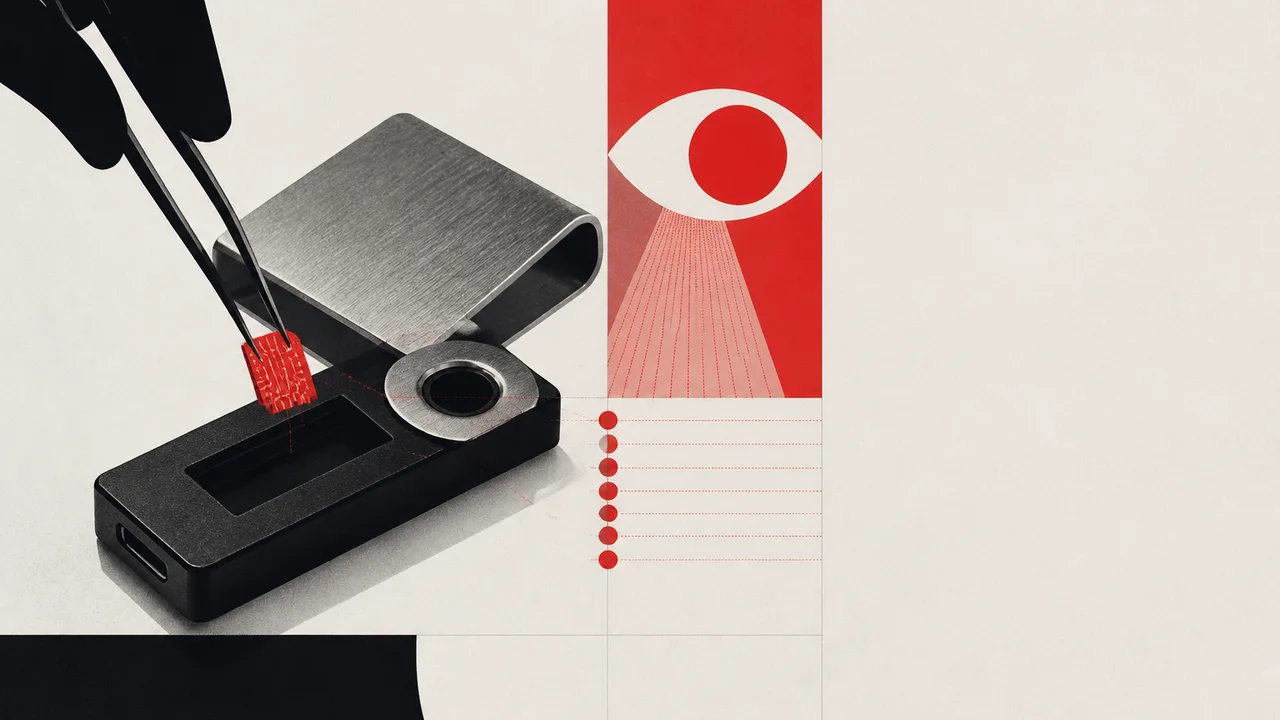
Ledger confirmed an unauthorized implant inside a wallet sold through CryptoBilis, a Southeast Asian reseller. The added hardware captured the recovery phrase shown during setup and sent it out over a cellular connection, Ledger says. That phrase is the backup that lets someone restore a wallet and control its funds. A device can keep its protected chip intact while an extra component watches the screen where the owner first sees the keys to everything.
The immediate risk is concentrated among people who bought Ledger devices through CryptoBilis, especially those who have already set one up. As of October 13, Ledger said all fund losses it had confirmed in this incident involved devices sold through that reseller. It had confirmed an implant in one affected user’s device; the total number of affected users and the amount lost remained unconfirmed. Ledger was also reviewing claims about devices elsewhere. A claim under review is a reason to investigate, not a reason to tell every hardware-wallet owner that their device has been altered.
The Screen Was the Route In
During setup, a Ledger signer displays a 24-word recovery phrase. The owner needs those words to recover access if the device is lost. Anyone else who obtains them can restore the wallet too. The usual advice to keep the phrase off websites and away from strangers assumes that the device displaying it can be trusted at that moment.
Ledger’s Donjon security team says the implant read what appeared on the screen. When the recovery-phrase screens appeared, a microcontroller decoded the words and transmitted them over LTE using an eSIM. Ledger says the added component did not modify the Secure Element, the operating system, transactions or signatures.
That sequence explains why this attack could succeed without making a transaction look suspicious on the device. Someone who has the recovery phrase can restore the wallet elsewhere. The attack path Ledger describes targets the owner’s backup during its creation, rather than a later instruction to sign a payment. It is a narrow but consequential gap: protecting operations inside a chip cannot, by itself, protect words exposed to a component sitting beside the display.
It also sets a limit on the lesson. The confirmed finding concerns an altered physical device. It does not show that Ledger’s software remotely leaked recovery phrases, or that an attacker can obtain one from an untouched wallet. Treating every device as compromised would send owners looking for a fix to a problem they may not have, while the people with a CryptoBilis purchase need a much more direct response.
What Changed Between October 9 and October 13
The sequence of Ledger’s warnings helps explain why the advice became more precise. On October 9, the company began investigating reports of lost funds associated with CryptoBilis purchases and asked the reseller to stop selling and shipping Ledger devices. The next day, it confirmed unauthorized hardware inside at least one affected user’s device. By October 13, Ledger had described how the implant intercepted the setup display and said the confirmed loss cases involved CryptoBilis devices.
That progression moved the problem from reports of missing cryptocurrency to an identified way a recovery phrase could leave a device. It did not locate the point in distribution where the hardware was added. The presence of an implant in a purchased wallet makes handling between manufacture and setup a security question; it does not identify who altered it or when.
CryptoBilis stopped selling Ledger devices while the investigation continued, Ledger said. Ledger’s response has focused on stopping additional setups and replacing a potentially exposed recovery phrase. Those steps address different moments in the same sequence: before setup, the implant has not had the described opportunity to read a newly displayed phrase; after setup, replacing the physical wallet alone would leave the old phrase usable by anyone who obtained it.
An Authentic Chip Cannot Vouch for Every Component
Consider two questions a buyer might ask a device check. Is the expected protected component present? Has someone added hardware elsewhere inside the enclosure? Ledger’s Genuine Check addresses authenticity, but Ledger warns that it cannot detect an added implant when the original Secure Element remains intact.
The reported implant illustrates the difference. On Ledger’s account, it left the Secure Element in place and intercepted information at the display. A successful authenticity check under those conditions would give the buyer an answer about the component being checked, while leaving the added hardware undiscovered. That is an inference about this reported design and this check, not a verdict on every hardware wallet or every method of physical inspection.
The two defenses still serve different jobs. A protected chip can make unauthorized access to keys and signing operations harder. A distribution process must also keep unwanted parts out of the enclosure before a customer turns it on. Buyers have limited ability to audit a circuit board; sellers and manufacturers can scrutinize sourcing, returns and device handling at a scale an individual opening one wallet cannot. Ledger has reminded resellers and distributors to use authorized channels and avoid restocking returned devices.
There is a practical trade-off here. A physical inspection might reveal an obvious added component, and BleepingComputer describes antenna wiring visible in devices examined by researchers. Opening a wallet can also damage it, and recognizing an unfamiliar part requires more than spotting a wire. Genuine Check remains useful for the question it answers. Neither a check result nor a casual look inside should be treated as a certificate covering every possible alteration.
What a Buyer Can Do
For someone who bought a Ledger device from CryptoBilis and has not set it up, Ledger’s advice is to leave it uninitialized and contact Ledger Support. For someone who already set it up, the company advises moving assets to a new signer with a new recovery phrase and never entering or restoring a phrase on a CryptoBilis device. This is a change of credentials as well as hardware: copying the old phrase onto a clean device would preserve the attacker’s potential access. These are Ledger’s incident-specific instructions, not a claim that every reseller purchase carries the same risk.
Ledger also advises people who lost funds or possess a tampered device to contact local law enforcement and to speak with Ledger Support or police before opening or sending the device anywhere. A request from a caller or direct message for the recovery phrase is another danger; Ledger says it will never ask for it. Owners who did not buy through CryptoBilis do not need to turn a reported distribution problem into a do-it-yourself teardown.
For Ledger, the next questions concern how altered units entered circulation and how many owners set them up. For a buyer, the question is more immediate: did the device come through the affected seller, and has its recovery phrase already appeared on that screen? Those answers determine whether the next step is to stop setup or to replace the phrase along with the wallet.
More Like This

Flock Safety Cameras: Crime Tool or Privacy Risk?
Flock Safety's license plate readers are spreading fast. Retired Microsoft engineer Dave Plummer breaks down what they actually capture—and what's at stake.

Why AI AppSec Needs Organizational Context to Work
AI finds more vulnerabilities than ever—but without organizational context, it still can't tell you which ones actually matter. Here's what that gap costs.