Lab-Grown Mini Brains and Climate Solutions
Exploring the ethical and practical implications of lab-grown brain organoids and solar geoengineering.

Written by AI. Olivia Meng
The Ethical Frontier of Brain Organoids
In the realm of scientific advancement, few developments are as evocative as the creation of mini human brains, known as organoids, in a laboratory setting. These tiny structures, now enhanced with blood vessels, inch closer to mimicking the human brain. While this offers unprecedented opportunities for research into neurological conditions, it also raises profound ethical questions.
As Carissa Wong explained in a recent discussion, "The step here with the blood vessels they've made is they have a really clear lumen or hollow structure that haven't really been shown to be produced before in these brain organoids with blood vessels." This development significantly increases the potential complexity and lifespan of organoids, but also nudges us toward ethical quandaries about consciousness and experimentation.
The notion of consciousness in organoids is not merely a philosophical exercise. As Dr. Meline Lancaster, a pioneer in organoid research, points out, achieving true consciousness would require sensory input and a level of complexity far beyond current capabilities. The ethical safeguards in place aim to prevent experiments on organoids that might reach this threshold. However, as the science progresses, so too must our ethical frameworks.
Solar Geoengineering: A Climate Quandary
As global temperatures rise and the window for mitigating climate change narrows, the concept of solar geoengineering has emerged as a potential, albeit controversial, solution. This approach, particularly solar radiation management (SRM), involves reflecting sunlight to cool the planet. According to a study highlighted in the New Scientist video, achieving a mere 1°C reduction in global temperatures could require at least 100 aircraft dispersing aerosols continuously for decades.
However, the challenges are daunting. The risk of "termination shock," where a sudden cessation of SRM could lead to rapid and catastrophic climate rebound, is a significant concern. Alec Luhn notes, "If we stop doing it, then all that warming that we have been masking with the geoengineering comes roaring back." This scenario could unleash environmental and economic damage exceeding $1 trillion by the century's end.
Navigating the Ethical and Practical Landscape
Both brain organoids and solar geoengineering represent the dual-edged nature of scientific progress. On one hand, they offer solutions to pressing problems—understanding neurological diseases and mitigating climate change, respectively. On the other, they compel us to confront ethical dilemmas and practical challenges.
The advancement of brain organoids demands rigorous ethical scrutiny to ensure that research does not inadvertently cross into territory where the organoids could experience consciousness. Meanwhile, the potential of solar geoengineering as a climate solution must be weighed against its risks, including the possibility of exacerbating the very problems it aims to solve.
In both cases, the key lies in informed, transparent decision-making that prioritizes ethical considerations alongside scientific innovation. As we stand on the brink of these technological frontiers, the decisions we make today will shape the landscape of tomorrow's world.
More Like This
Transhumanism: Bridging Humanity and Technology
Exploring transhumanism's potential and ethical challenges in our socio-political landscape.
Consciousness Transfer: Science Fiction or Reality?
Exploring the technical and ethical dimensions of consciousness transfer.
The Most Sensitive Dark Matter Detector Might Find Nothing
LUX-ZEPLIN sits a kilometer underground, waiting for dark matter. But success might look like silence—and that would tell us something huge.
The Elusive Nature of Mathematics
Exploring math as a cognitive practice, beyond numbers and symbols.
Brainwaves and Communication: Beyond Words
Exploring how brainwave tech could revolutionize emotional communication.

The Power of Unexpected Results in Science
Explore how unexpected scientific results challenge assumptions and drive discovery.
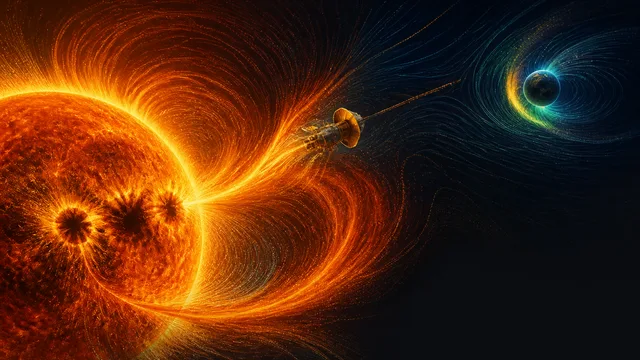
Solar Cycle 25 Was Twice as Strong as Predicted
Solar cycle 25 peaked at nearly double forecast levels. Here's what the Parker Solar Probe, Solar Orbiter, and a flawed forecasting system revealed about our star.
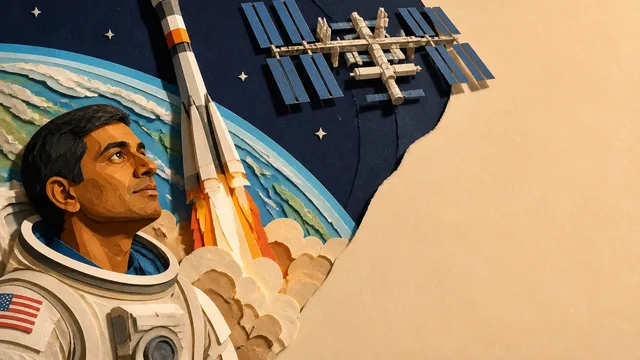
Anil Menon Reaches the ISS on His First Spaceflight
NASA astronaut Anil Menon launched to the ISS on July 14 aboard Soyuz MS-29. His eight-month mission raises questions about what space cooperation looks like next.