Decoding Extreme Hail: Inside the Ice Chip Campaign
Explore the Ice Chip campaign's quest to understand giant hail and its impacts.

Written by AI. Olivia Meng

In the vast expanse of the US Great Plains, a team of meteorologists embarks on a mission akin to storm-chasing adventurers but with a distinct scientific purpose. The Ice Chip campaign, touted as the largest-ever study aimed at understanding extreme hail, seeks to unravel the mysteries of these fierce weather phenomena that can unleash destruction worth billions annually.
The Anatomy of a Supercell
Supercells, the titans of the storm world, are notorious for spawning significant hail. These rotating thunderstorms, characterized by their longevity and organized structure, are the primary culprits. According to meteorologist John Allen, "These are rotating and organized thunderstorms that last for long periods of time," making them particularly adept at producing hailstones exceeding two inches in diameter—a threshold where damage to vehicles and homes becomes notably severe.
The economic toll is staggering. Hail damage in the United States surpasses $60 billion each year, a figure comparable to a major hurricane striking annually. Yet, despite this immense impact, our understanding of hail formation and its ground effects remains surprisingly limited—a knowledge gap the Ice Chip campaign aims to bridge.
Instruments of Discovery
The Ice Chip team employs a suite of innovative tools to capture real-time data on hail and storm dynamics. Among these are drones like the Raven, equipped to follow storms closely and collect vital meteorological data such as 3D winds, pressure, and humidity. Then there are the foam-based hail pads and impact disdrometers, designed to measure the size and density of hailstones upon impact. These devices, scattered in arrays ahead of storms, help map the hail swath with precision.
"Our goal is to be following right behind the storm and collect information about the hail on the ground as soon as it's dropped," explains a team member, highlighting the real-time chase element that makes this fieldwork both thrilling and perilous.
The Growing Threat of Urban Sprawl
Urban sprawl exacerbates the risk of hail damage. As cities expand, more structures become vulnerable to these severe weather events. Asphalt shingles, common in many residential areas, are notably susceptible to hail damage, necessitating frequent replacements and driving up repair costs.
The largest hailstone ever recorded in the United States measured eight inches in diameter, but the frequency of such colossal hailstones is still a subject of investigation. Preliminary evidence suggests that the threat posed by large hailstones might be underestimated, underscoring the importance of the Ice Chip campaign's findings.
The Dance with Danger
Deploying instruments in the path of an impending storm is no small feat. The team races against time to position their array of 50 instruments in the storm's path, a logistical challenge compounded by the storm's unpredictable nature. As one researcher noted, "Positioning this array is kind of the challenge of Ice Chip. How do you put an array of 50 instruments in front of a hailstorm under a radar load?"
There's an undeniable thrill to the chase, as evidenced when the team encountered a perfect hail storm with hailstones larger than baseballs. David Emmy, the project's expert forecaster, skillfully predicted the conditions that led to this optimal data collection scenario.
A Glimpse into the Future
While the Ice Chip campaign provides crucial insights into hail formation and its impacts, it also raises broader questions about how we adapt to and mitigate the effects of extreme weather. As urbanization continues, understanding and predicting hailstorms becomes ever more critical.
By improving our predictive capabilities and understanding of hail, campaigns like Ice Chip not only enhance our scientific knowledge but also inform the development of more resilient infrastructure. In the end, the quest to understand hail is as much about preparing for the future as it is about deciphering the present.
More Like This

Revolutionary Simulations: Grains That Dance
Discover how numerical homogenization transforms granular simulations, unlocking potential in material science.

Exploring Project Helix: A Dive into Blue Team Forensics
Uncover the methodology behind Project Helix, a CTF that challenges blue team forensic skills, with insights on tools like Cape and MFT analysis.

Lab-Grown Mini Brains and Climate Solutions
Exploring the ethical and practical implications of lab-grown brain organoids and solar geoengineering.

The Most Sensitive Dark Matter Detector Might Find Nothing
LUX-ZEPLIN sits a kilometer underground, waiting for dark matter. But success might look like silence—and that would tell us something huge.

The Elusive Nature of Mathematics
Exploring math as a cognitive practice, beyond numbers and symbols.

The Power of Unexpected Results in Science
Explore how unexpected scientific results challenge assumptions and drive discovery.
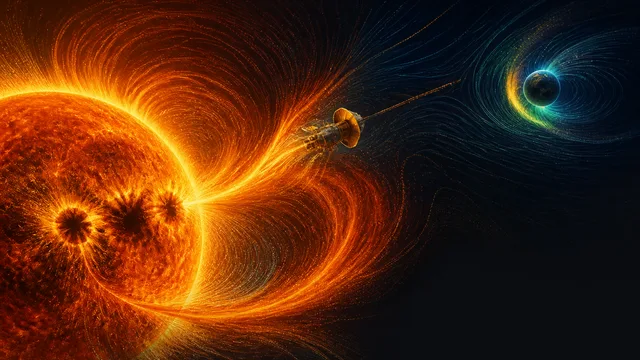
Solar Cycle 25 Was Twice as Strong as Predicted
Solar cycle 25 peaked at nearly double forecast levels. Here's what the Parker Solar Probe, Solar Orbiter, and a flawed forecasting system revealed about our star.
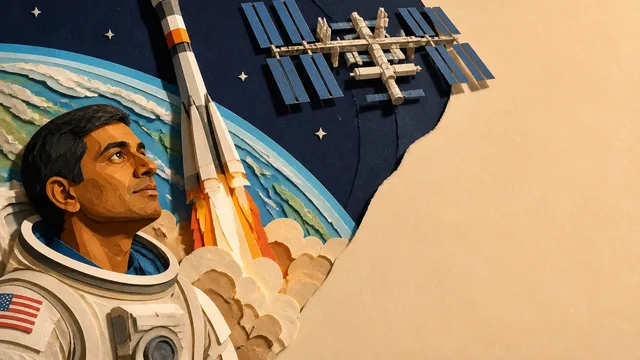
Anil Menon Reaches the ISS on His First Spaceflight
NASA astronaut Anil Menon launched to the ISS on July 14 aboard Soyuz MS-29. His eight-month mission raises questions about what space cooperation looks like next.