Grok Bot in Practice: Seven Workflows That Actually Work
Grok Bot launched in August 2025 with one underreported feature: all your bots share one computer. Here's what that makes possible across seven real workflows.

Written by AI. Yuki Okonkwo

Photo: AI. Liora Goldstein
Grok Bot launched in August 2025, and most coverage treated it like a scheduling app. The Verge noted that xAI was positioning it as an AI "teammate you can assign work" while your laptop stays closed. Fine.
All your bots share one computer. Same browser, same files, same saved logins. Sign into Stripe once and every bot you create can pull from it. Sign into a competitor's product once and your analysis bot can check back weekly without re-authenticating. That shared-state architecture is either a deliberate product decision or an infrastructure constraint that xAI decided to lean into. After watching the AI Labs team run it across seven workflows on a live product, I'm convinced it was a decision. The whole system only makes sense if you assume bots will collaborate, not just run independently in parallel.
The AI Labs channel, which builds and documents automation workflows for software teams, put Grok Bot against real work rather than demo scenarios. Here's what they found worth keeping, and where it earns the setup cost.
Multi-role testing is where the shared computer clicks
If your app gives different users different access levels (admin vs. customer, free tier vs. paid), testing that manually means logging in and out across a dozen accounts. The AI Labs setup: one bot per user role, plus a lead bot to coordinate. Drop a link into the group chat and the lead bot distributes test assignments. Each role-bot runs its tests from its own browser session on the shared machine, then reports back. The lead bot compiles everything into one document.
The comparison to Claude Code is instructive here. Claude Code can drive a browser and test your app, but it arrives cold, with no session state. When a Grok Bot test returns a wrong result, the lead bot can open Supabase and check what the database actually recorded. That's the difference between a test runner and a test investigator.
There's also a CLI tool that lets other agents (Claude Code, Codex) trigger Grok Bot directly. The AI Labs team links to the repo in their video description. Finish a feature, tell Claude Code to test it, and it spins up the bot group without you opening Grok Bot at all. I'd treat this as beta-within-beta territory for now, but the direction is obvious: agents calling agents, with the shared computer as the common substrate.
Support triage that actually checks the receipts
"Writing the replies is only part of the work," the AI Labs presenter explains. "Before you can answer a support email, you first need to check whether the problem the customer is talking about is actually there."
The support bot setup: connect Gmail via plugin, write instructions in the bot's description, let it run. When a login complaint arrives, the bot doesn't just draft a sympathetic reply. It opens the browser, repeats the customer's steps, then pulls up Supabase and Stripe to confirm whether the person actually has an active subscription. If the complaint checks out, the bot can make the fix and open a pull request for human approval before anything goes live.
It's the right default: automation that acts but requires sign-off before changes hit production. A lot of agent systems either do too little (draft a reply, wait for you to click send) or too much (fix it and ship it). This sits in a sensible middle.
Churn analysis with no prior knowledge
Stripe tells you someone cancelled. It doesn't tell you they cancelled because a modal blocked the upgrade button on mobile. That gap is where this use case lives.
The churn bot creates a fresh account and walks the product flow as a first-time user, with no context about how the feature was supposed to work. Dead pages, broken buttons, confusing instructions: everything gets a screenshot and a note. The AI Labs team points out the obvious thing developers miss: "Since you're the one who built the app, you already know how each feature works. That's what makes it hard to understand what it's like for someone using the app for the first time."
A bot with no prior product knowledge is a decent approximation of a confused new user. Not perfect, but better than you.
Competitor analysis from inside the product
Marketing pages lie by omission. Feature comparison tables are PR documents. The only way to know how a competitor's onboarding actually works is to go through it.
The Grok Bot approach: log into competitor accounts on the shared computer, schedule a weekly check, ask the bot to report what changed. Because it stays authenticated, it can track feature releases over time rather than giving you a one-time snapshot. The AI Labs team frames the output as: what the product does, how the experience compares to yours, and which features yours is missing.
Digital Trends covered Grok Bot's general premise when it launched, noting the "take work off your plate" positioning. Competitor analysis run this way is a more pointed version of that: it's intelligence gathering that would otherwise take hours of manual product testing per week.
AEO: checking whether AI recommends you
AEO stands for Answer Engine Optimization. When someone asks ChatGPT or Perplexity what tool to use for a task, you can't Google yourself to check where you rank. The AI Labs bot opens ChatGPT, Claude, and Perplexity, submits the kinds of questions a buyer would ask without naming the product, and reports back: did you show up, and if so, where?
The without-naming-it constraint is load-bearing. If you query an AI about your product by name, it'll tell you about it regardless of whether it would surface organically. The bot has to ask the way a stranger would ask.
They also built a "skill" (a document you upload to the bot that tells it how to run fixes) for improving AEO rankings. Whether that skill generalizes or is specific to their product's situation isn't clear from what they shared, but the workflow for checking your current position transfers to any product immediately.
Morning monitoring across scattered dashboards
Payment data in Stripe. Traffic in your analytics platform. Errors in Sentry. Three tabs, every morning, forever. The monitoring bot consolidates: set it on a schedule, tell it to attach a screenshot or link to every finding, and get one summary at the start of the day you can actually verify.
The screenshot instruction is non-optional. "If you don't add that," the AI Labs presenter says, "you get a report you can't verify." A monitoring bot that reports a number without showing you where the number came from is just a confident guesser. Make it show its work.
Role-based group chats as a lightweight org chart
The final setup is the most abstract but also the most interesting as a pattern: a group chat with four bots (product, marketing, support, growth), each with its own instructions. You talk to the product bot, it figures out which bot owns the task, routes it, and reports back.
This is a template for how multi-agent coordination could work inside a small team. The product bot as router is a useful mental model. You don't need to know which agent should handle a task; you just need one that does.
What the shared-state design is actually doing
Looking at all seven of these together, a pattern emerges. Multi-role testing only works because all bots share one authenticated session. Support triage only works because Stripe and Supabase are already logged in. Competitor analysis only works because the shared browser maintains sessions across weeks.
xAI could have given each bot its own isolated environment. The fact that they didn't, and that the workflows the AI Labs team found most compelling all depend on shared state, suggests the architecture is doing deliberate work. My read, after watching this system handle seven distinct job types: xAI built a collaboration substrate first and let agents be the interface. The shared computer isn't a limitation to work around; it's the product.
That distinction matters more to builders than whatever the model card says about Grok 4.
More Like This
AI Agents Promised to Do Your Work. They Can't Yet.
Wall Street lost $285B betting on AI agents that would replace SaaS tools. But the tech that triggered the panic still sleeps when you close your laptop.
Anthropic's Claude Managed Agents: The AI Agent Platform War Heats Up
Anthropic just launched Claude Managed Agents, a platform that lets you build autonomous AI agents in minutes. Here's what it means for the AI automation race.
Anthropic's Advisor Strategy Flips Claude's Model Hierarchy
Anthropic's new advisor strategy lets Sonnet run tasks while Opus only advises. AI LABS tested it on real apps—here's what actually works.

Claude Cowork Explained: What It Does and What It Costs
Claude Cowork promises to automate your work while you sleep. Here's what the desktop app actually does, how it differs from Claude chat, and what to consider before buying in.
Google's Gro Wants to Change How Developers Think About AI
Google's upcoming Gro coding agent shifts from task-based prompts to goal-oriented AI. What happens when you stop telling AI what to do and start telling it what to achieve?
AI Agents: The Future of Coding by 2026
Explore how AI agents are reshaping software development, making coding accessible to non-developers, and transforming engineering roles.
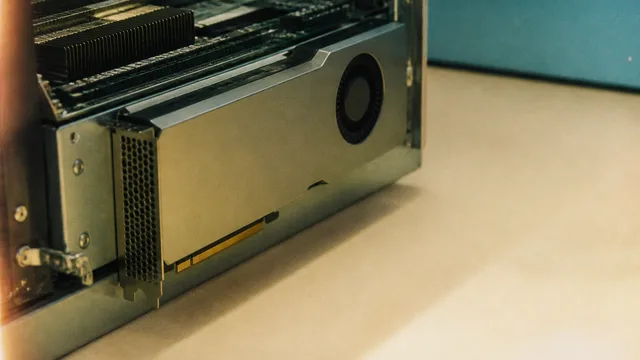
AMD Instinct MI350P: 144GB HBM3E in a PCIe GPU
AMD's Instinct MI350P brings 144GB of HBM3E and 3.6TB/s bandwidth to standard PCIe servers. Here's what it means for the mid-market AI infrastructure gap.

How Optimization Powers Modern AI and Engineering
From training ChatGPT to imaging black holes, optimization is the hidden engine behind modern AI and engineering. Steve Brunton's lecture explains how.