GoPro Labs: When a Camera Becomes a Dev Platform
GoPro Labs turns the Mission 1 Pro into a scriptable device. What does that mean for user autonomy—and can GoPro sustain it?

Written by AI. Dev Kapoor

Photo: AI. Jorah Maktoum
There's a moment in Jake Sloan's recent head-to-head between the GoPro Mission 1 Pro and the Insta360 Ace Pro 2 where the comparison quietly stops being about cameras. Sloan is walking through features—slow motion, HDR, waterproofing ratings, charging speeds—and then he gets to what he calls "the biggest advantage GoPro has had over any other action camera for years." Not the sensor. Not the specs. GoPro Labs.
"You can upload specialized firmware onto GoPro and then set up basically QR codes with your camera or with your phone that tell the GoPro what you want it to do," Sloan explains. "Say you want it to turn on once every 24 hours and take a photo, or you want it to turn on between 2 and 3 a.m. and do a time lapse, or you want to do some absurdly high bit rate like 500 megabits a second. Unbelievable amounts of stuff you can do with GoPro Labs."
That's not a camera feature. That's a runtime environment. And it's the thing in this entire comparison that actually interests me.
The part that's actually about developer autonomy
GoPro Labs has existed for a while—it's not new to the Mission 1 Pro—but the framing of it as the platform's defining competitive advantage, more durable than any single spec, is worth sitting with. What GoPro has built is a layer of programmability on top of consumer hardware: custom firmware, QR-code-based configuration scripts, access to extreme bitrate modes that don't ship in the default interface. You're not just buying a camera. You're buying a device that a motivated user can, within limits GoPro controls, reprogram.
If you've been in open source hardware circles for any length of time, this sounds familiar. Magic Lantern—the community-built firmware extension for Canon DSLRs—has been doing something structurally similar since 2009. Developers reverse-engineered Canon's firmware, added raw video recording, focus peaking, and dozens of features Canon never shipped, and distributed the whole thing for free. The community still maintains it. GoPro Labs is not that. It's not open source, it's not community-governed, and GoPro controls the experimental firmware you're loading onto the device. But the instinct it reflects—that the users who care most about a device are also the ones who want to push it past its factory settings—is the same instinct that made Magic Lantern matter.
The question is what GoPro has actually committed to here, and whether it will hold.
What Insta360 isn't doing
Sloan's comparison makes the contrast concrete. The Insta360 Ace Pro 2—a camera that, per Sloan, launched roughly two years ago and still competes credibly with GoPro's newest flagship—has no equivalent to Labs. It has gesture controls, a cloud upload service, and a flipscreen that has apparently survived heavy use without the hinge giving out. It does a lot of things well. What it doesn't do is let you write a configuration script that fires the camera between 2 and 3 a.m.
That asymmetry is a philosophical choice, not a technical limitation. Insta360 builds excellent cameras optimized for users who want the best possible result with minimum friction. The Ace Pro 2's approach to horizon leveling is illustrative: shoot in freeform mode, pull it into the Insta360 Studio app, handle it in post. The GoPro does the same thing in-camera. Both approaches work. They reflect different assumptions about who's using the camera and what they want to control.
GoPro Labs takes that further. The users it's designed for aren't just power users in the consumer sense—they're the people who, in another context, would be filing feature requests on a GitHub repo, or writing a bash script to automate something that wasn't supposed to be automatable. GoPro is, quietly, courting a developer mindset in a product category that doesn't usually think of itself that way.
The specs that matter as context
The Mission 1 Pro is a genuinely capable camera on the metrics Sloan tests. The 1-inch sensor delivers meaningfully better low-light performance than earlier GoPro generations. The 10-bit color profiles—including a Log 2 option the Ace Pro 2 doesn't offer—give colorists real latitude in post. Sloan reports slow-motion performance at 4K/240fps and 1080p/960fps (the latter is an extraordinary figure that GoPro's official spec sheet should be the authoritative reference for; Sloan presents it from his testing). Those are legitimately impressive numbers, though the 1-inch sensor brings its own tradeoff: minimum focus distance becomes a real constraint, and Sloan is honest that close-focus shooting—macro work, tight detail shots—is currently the Mission 1 Pro's clearest weakness relative to the Ace Pro 2's accessory lens ecosystem.
Waterproofing ratings (66 feet for the Mission 1 Pro versus 39 feet for the Ace Pro 2, per Sloan's reporting—verify against current manufacturer specs before purchase, as these figures shift) and fast-charging speeds (GoPro to 80% in 27 minutes, Ace Pro 2 in 18 minutes, per Sloan) are context, not the story. The story is what happens at the software layer.
The sustainability question nobody's asking
Here's where I want to push past Sloan's framing, because he covers this as a feature differentiator and I'm more interested in it as a governance question.
GoPro Labs is, at its core, a bet that a subset of your users being able to do weird, powerful, unsupported things with your hardware is good for the product long-term. That bet has a real history in software. Companies that maintained developer-friendly layers—even informal ones, even ones they didn't fully resource—built ecosystems that outlasted competitors with better-specced but more closed products. Companies that deprecated those layers when they caused support overhead, or when the product team changed, usually regretted it quietly and too late to recover the community trust.
GoPro's business situation is not exactly stable. The company has had financial turbulence, subscription pivots, layoffs. The question of whether GoPro Labs survives the next budget cycle is legitimate. And the Labs community—the people building time-lapse rigs, the researchers using GoPros in field conditions that require custom trigger logic, the cinematographers maxing out bitrate in ways the marketing team doesn't even advertise—those people have no governance seat. No contribution pathway. No fork rights if GoPro decides this costs more than it's worth to maintain.
Sloan frames this as an advantage: "If you were to really unlock the power of an action camera, GoPro Labs is where it's at." He's right. He's also describing a power that exists entirely at GoPro's discretion, with no community backstop. Magic Lantern survived Canon's indifference because it lived outside Canon's infrastructure. GoPro Labs doesn't have that option.
What this comparison actually illuminates
Sloan's honest takeaway is that the Ace Pro 2 "did a little better than I thought it was going to do considering" its age—and that the Mission 1 Pro is "an incredibly powerful action camera." Both of those things are true. They're also somewhat beside the point if what you're actually trying to understand is which platform has more headroom for users who want to push it.
Right now, on that question, GoPro is the only action camera maker that has made a real argument for programmability. Not open programmability—GoPro Labs is not Magic Lantern, and GoPro is not publishing its firmware specs. But programmability within a supported, documented framework that a technically fluent user can actually learn and exploit. Insta360 hasn't responded to this dimension of competition at all, and it shows.
Whether GoPro maintains that commitment through the next hardware cycle, or whether Labs quietly becomes a legacy page in the developer docs that nobody at the company owns anymore—that's the question that will define whether GoPro's actual differentiator is a platform or just a clever marketing section. Developer communities are very good at detecting the difference, usually before the company's own roadmap meetings catch up with the reality.
More Like This
Grok's Photo Editor: Magic Wand or Magic Beans?
X's Grok AI now edits photos with text prompts. Julian Goldie demos the feature—cleaning rooms, enhancing products. But what's actually new here?
The Drone Market in 2026: A Guide Through the Ecosystem
From $200 follow drones to $50K cinema rigs, Jake Sloan maps the drone landscape. What the price tiers actually get you, and what they don't.
Cursor's Composer 2 Drama: What Really Powers the Model
Cursor's impressive new Composer 2 model turns out to be built on Moonshot AI's Kimi—raising questions about disclosure, licensing, and transparency.
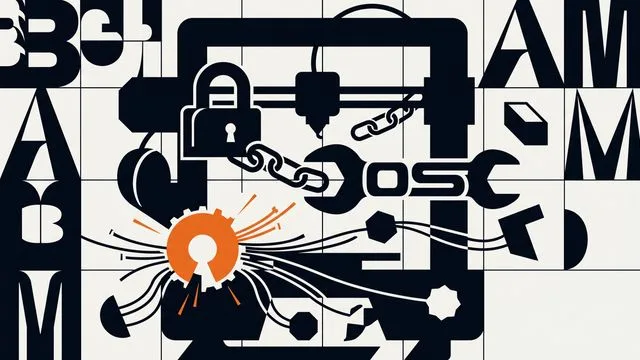
Bambu Lab Is Picking Fights It Doesn't Need to Win
Bambu Lab threatened an open-source developer over a slicer fork. Jeff Geerling breaks down why that move says everything about where the company is headed.

NotebookLM Gets an Agent OS Upgrade—Here's What That Means
Julian Goldie's new NotebookLM workflow pairs it with Hermes, Obsidian, and Hyperframes. Here's what the setup actually does—and what to think about before building it.
Unveiling Agent Skills in VS Code: A New Era in Workflow
Explore how Agent Skills in VS Code enhance productivity by enabling tailored workflows and automation.

Thinking Machines Launches Inkling, Its First Open-Weight AI Model
Mira Murati's Thinking Machines has released Inkling, an open-weight multimodal AI model built on DeepSeek's architecture—and the implications go well beyond benchmarks.

35 GitHub Projects Mapping the AI Agent Trust Gap
This week's GitHub trending list is less a catalog of tools and more a collective argument: developers don't fully trust AI agents yet—and they're building accordingly.