Gene Wilder's AI Voice Tests the Meaning of Consent
Netflix's Wonka reality show uses an estate-approved AI Gene Wilder voice, exposing the gap between permission, remembrance and convincing performance.

Written by AI. Harold "Harry" Goodman
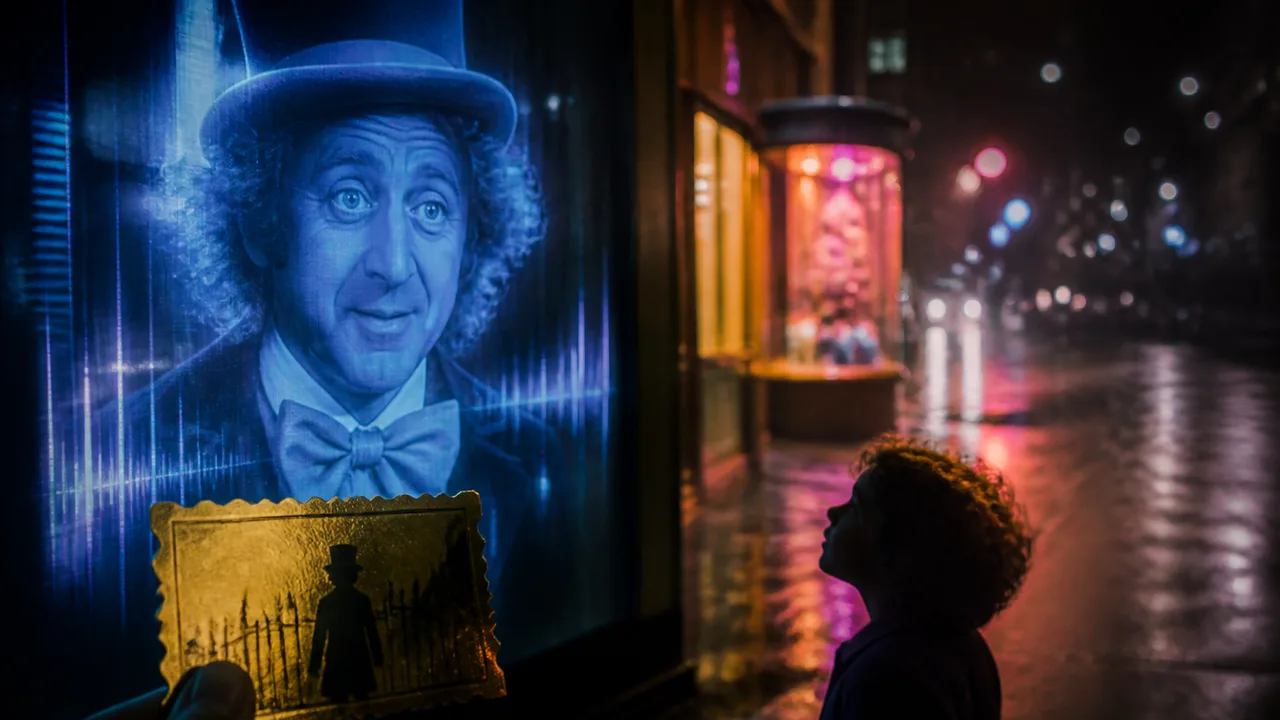
Netflix has given the late Gene Wilder a new speaking role in Wonka’s The Golden Ticket, an elimination contest built inside the scenery and memory of Willy Wonka & the Chocolate Factory.
The reality series, released on September 23, uses an AI rendering of Wilder’s voice as its unseen narrator. Twelve principal contestants enter with partners, producing a field described elsewhere as 24 participants. They face physical, mental and strategic challenges for a prize of about $3 million, presented as a six-figure annual income for 30 years. Seven of the nine episodes arrived at launch, with a two-part finale scheduled one week later, according to the reported release details.
Wilder, who died in 2016, cannot direct the performance attached to his identity. His estate approved the recreation. Karen B. Wilder said the program celebrates the “warmth and imagination” he brought to Wonka while introducing that magic to another generation.
That approval gives the production a stronger ethical foundation than an unauthorized imitation would have. It also leaves two questions open. How closely does the resulting voice represent Wilder’s craft, and what is that familiar sound being asked to endorse?
A Voice Returns to a Changed Factory
The answer begins with the peculiar afterlife of the 1971 film. The Los Angeles Times notes that it was not regarded as a success in its day, then became embedded in several generations of childhood through cable television and home video. A commercial disappointment ripened into reusable cultural property, with Wilder’s voice among its most recognizable assets.
This history helps explain the production’s design. Netflix acquired the rights to Roald Dahl’s literary estate about five years ago, Variety reported. The company can consequently bring several layers of Wonka memory under one roof: Dahl’s 1964 premise, imagery associated with the 1971 film, an original cast member and a synthetic version of its star.
Rusty Goffe, who played an Oompa-Loompa opposite Wilder, appears in the series with his son Ben. In Variety’s account of its interview, Goffe said he “shed a tear” upon hearing the recreated voice and called it “lovely hearing it again.” His response deserves its full emotional weight. A colleague heard the sound of someone he had known and found affection in the encounter.
Critics heard something else. Robert Lloyd, writing in the Los Angeles Times review, called the voice “lifeless.” NME’s critic found the AI narrator sinister, especially because this version of Wonka presides over embarrassment, alliances and elimination.
Those reactions address separate dimensions of the same sound. Goffe responds to recognition and memory. The critics judge dramatic expression and context. A synthetic voice can trigger the first response while failing the second, since resemblance supplies a timbre but does not by itself supply intention.
An actor’s voice is a sequence of decisions. Pace sets expectation. A pause can invite trust, conceal a joke or sharpen a threat. Stressing one word rather than its neighbor changes who appears to hold power. Even a close acoustic likeness may feel vacant when those decisions sound assembled rather than discovered in the moment.
The available reporting does not identify the system used, the recordings on which it was trained, the degree of human direction or whether another performer supplied timing that the model transformed. Without those production details, no responsible assessment can separate limitations in the underlying technology from choices made by writers, editors and directors. “AI voice” names a process category here, not a complete account of the performance.
Wonka Meets the Elimination Machine
The series also inherits a television form with its own stern machinery. Lloyd describes it as another costume for Survivor, the long-running task-and-elimination format. NME sees the more immediate resemblance to Squid Game: candy-colored architecture, ominous helpers, humiliating trials and contestants pushed toward betrayal.
The comparison has limits. Wonka’s The Golden Ticket offers a cash competition rather than the lethal stakes of the fictional Squid Game. Its factory includes a chocolate river, Wonkavator, giant gadgets and lickable wallpaper. The Australian production converted large buildings into an elaborate physical recreation, and Lloyd praised that interpretive stagecraft as clever and impressive.
Yet the format alters the moral mechanism inherited from Dahl. In the book, children suffer consequences tied to greed, entitlement or heedlessness. In the reality series, adults leave because they lose games or fail strategically. NME argues that the competition encourages the qualities Dahl punished, rewarding hard calculation while gentler participants disappear.
That judgment comes from an early review rather than audience research, and viewers may interpret the contestants or editing differently. The structural shift is still visible: moral fable has become competitive procedure. The factory once exposed character through temptation. This factory must repeatedly manufacture winners, losers and suspense across nine episodes.
The AI narrator sits at the hinge between those forms. Wilder’s vocal identity recalls a performance polished by decades of repeated viewing. The words assigned to that identity now guide a contemporary reality contest, where a “tour” can be terminated and a lifetime supply of chocolate has become a lifetime supply of money. The voice lends continuity to a format built on rupture.
What Estate Approval Can Settle
The strongest case for the recreation begins with consent. Wilder’s estate approved it, his widow publicly welcomed its commemorative purpose, and Goffe experienced the result as a moving reunion. The program also acknowledges its ancestry by returning Goffe to the factory rather than populating the set entirely with substitutes.
Estate approval settles an important question about whether the people charged with guarding Wilder’s legacy accepted this use. It cannot tell a listener whether the narration has dramatic life. Nor can it establish what Wilder himself would have thought of the series, because no statement in the available reporting addresses his wishes about posthumous synthetic performance.
The reverse is also true. A critic’s description of the voice as lifeless does not erase the estate’s consent or Goffe’s response. Artistic failure, if a listener hears one, does not prove exploitation by itself. The evidence supports a narrower and more useful division: permission, emotional recognition and performance quality require separate judgments.
That framework can help listeners approach future synthetic voices. First ask who authorized the use and whose consent remains unknowable. Then ask what material shaped the recreation and how much human performance survives inside it. Finally, listen to the work assigned to the voice. Does it extend the artist’s known craft, imitate its surface or use familiarity to bless a new product?
No audience data was available at publication, so the early reviews cannot show how broadly viewers will accept or reject this Wonka. The production details disclosed so far also cannot reveal whether its methods will become common practice. What the series already demonstrates is how efficiently an entertainment property can combine literary rights, reality television, original-cast nostalgia and synthetic performance.
The factory has always turned appetite into spectacle. Its newest machine processes memory, and Gene Wilder’s voice is now both the raw material and the invitation to enter.
More Like This
How a Programmer Tried to Crack the Rubik's Cube
Sebastian Lague's coding adventure to solve the Rubik's Cube reveals why 43 quintillion permutations humbles even clever algorithms. A craft-focused breakdown.
Martin Road Series Retro D12E: A Modern Acoustic Classic
Explore why the Martin Road Series Retro D12E is a hit with musicians, blending vintage aesthetics with modern features.