Disney's $20 Million Character.AI Bid Is for Limited Rights
Disney is the first bidder in Character.AI's bankruptcy sale. Its $20 million offer targets limited rights, while the platform's future remains unsettled.

Written by AI. Yuki Okonkwo
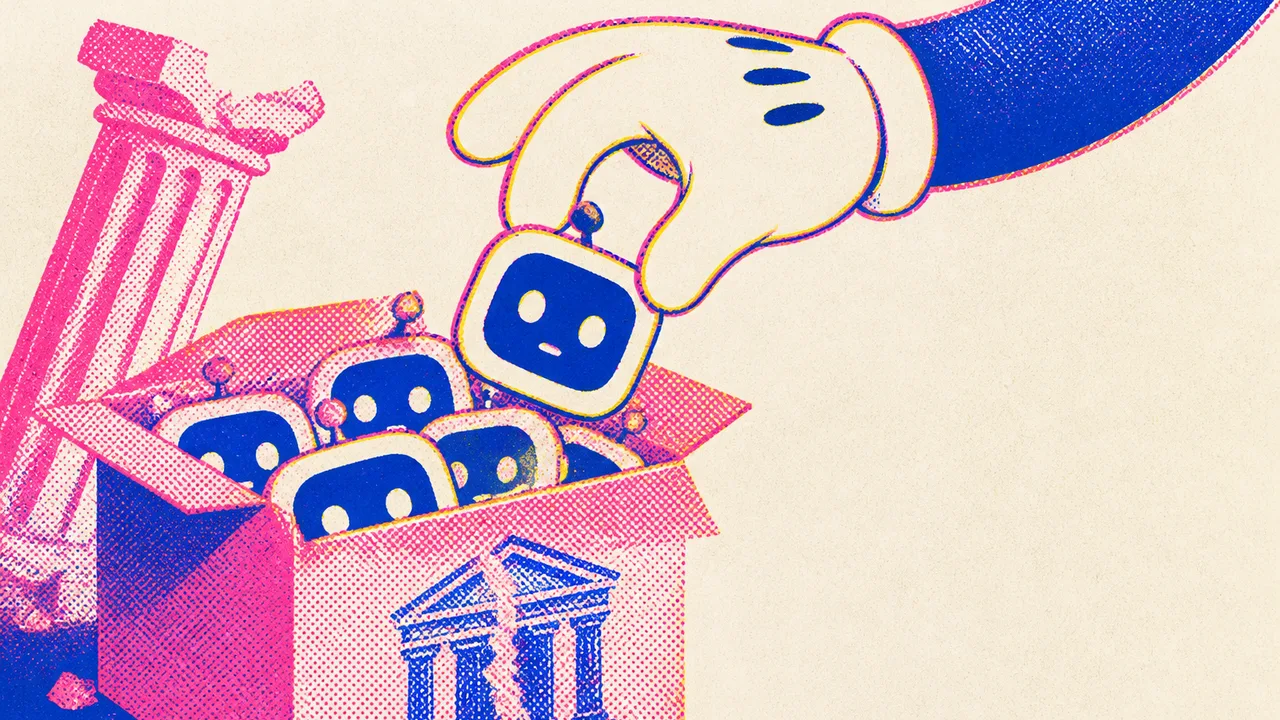
Character.AI has filed for Chapter 11 bankruptcy, and Disney has put up $20 million as the first bidder for some of its rights. If you use the chatbot platform, the immediate question is whether your chats will still be there. If you're watching Disney's AI plans, the question is what that $20 million would actually buy. Both questions lead to the same answer for now: the sale is still in progress.
Disney Worldwide Services, a Disney subsidiary, is the stalking-horse bidder. That means its offer sets an opening benchmark in a court-supervised sale; other bidders can compete. The reported terms of Disney's offer describe a non-exclusive, perpetual license to certain Character.AI intellectual property and certain company claims. In plain language, Disney is seeking lasting permission to use specified rights without locking everyone else out. The description doesn't identify every piece of intellectual property covered, so it cannot tell users whether Disney would run the app or what, if anything, they would see change inside it.
Character.AI lets people make and chat with AI characters, including original personas and ones inspired by fiction. Users can set details such as a character's voice, greeting and description, then share that character with others. This is a product built around relationships people create with bots, which makes the fate of the service more immediate than the fate of a license on a lawyer's spreadsheet.
The Opening Bid and the App
Character.AI filed in Delaware and plans to sell all or most of its assets through the bankruptcy process. Disney's $20 million offer acts as a floor, and rivals may bid more. Character.AI has asked the court to approve bidding rules and expects the sale to close in late November or early December. Disney's place at the front of the line gives it a chance to compete; it does not determine who ends up with the assets.
The company plans to keep its app and website running during the process. Former Character.AI employees hired by Disney are expected to provide temporary transition help, which Character.AI says will support safe operation for a limited period. That arrangement addresses the sale process, not the service's long-term ownership. Character.AI has said it would shut the platform down if no buyer wants to keep it going. A user trying to work out whether to keep building a character can take some reassurance from continued operation today, but no promise of continuity beyond the sale.
The money also needs careful reading. Character.AI listed liabilities between $50 million and $100 million, as described in its bankruptcy announcement. The $20 million is an opening offer tied to the specified license and claims, rather than a price tag for everything Character.AI owns. Comparing it with the liabilities as though Disney had agreed to take on the entire company would turn two different numbers into a misleading bargain-hunt story. Bankruptcy sales can separate rights that a bidder wants from the question of who, if anyone, keeps a consumer service alive.
Disney and Character.AI Were Already Connected
The bid has an unusual backstory. In September 2025, Disney sent Character.AI a cease-and-desist letter over user-created bots based on Disney-owned characters. Character.AI removed them, and the dispute did not become a lawsuit. A year later, Disney hired Character.AI's then CEO, Karandeep Anand, for its newly created company-wide chief technology officer role. The appointment and earlier dispute put this week's bid in focus: Disney has challenged unauthorized use of its characters while bringing people who built a character-chat product into its own technology operation.
Those events suggest an interest in the know-how behind conversational characters alongside an insistence on controlling Disney's own characters. They do not say Disney intends to put Mickey Mouse in an open-ended chat window. The rights Disney has offered to license are described as Character.AI's intellectual property and claims, not as permission for Character.AI's users to make Disney-character bots. The old cease-and-desist dispute and the proposed new license concern different directions of permission: who may use Disney's characters, and what Disney may use from Character.AI.
There's another audience in this story: families and users who want to know how character chat is governed. Character.AI announced age checks and an end to open-ended chats for under-18s after lawsuits in which families alleged harm to children. The changes for younger users show that operating this service involves decisions about access and safety, beyond owning software rights. A temporary staffing arrangement might help the platform through an auction; it cannot, by itself, answer what policies a future operator would choose.
A Useful Comparison, with a Big Limit
Disney has tried another route to AI-powered fan interaction. Its arrangement with OpenAI would have let users make videos with Disney characters through Sora. OpenAI discontinued Sora, and that arrangement was unwound. The proposed Sora experience put licensed Disney characters into a partner's video tool. The Character.AI offer runs in another direction: Disney is bidding for a license to some technology rights and claims associated with a chatbot company in bankruptcy.
That contrast is useful because the two arrangements give Disney different roles. With Sora, Disney would have supplied characters for people to use in a tool run by OpenAI. If the Character.AI bid succeeds on the reported terms, Disney would receive non-exclusive rights from Character.AI; the bid says little about what fan-facing product Disney might build with them. One partner discontinued the product at the center of the earlier arrangement. This time, a bankruptcy auction will decide who gets which assets. Neither arrangement makes a new Disney chatbot inevitable.
The strongest reading of the bid is also a modest one. Disney has hired Character.AI leadership, offered money for some of its rights and arranged short-term help for the service. Put together with the earlier character dispute and the ended Sora arrangement, those steps suggest Disney wants options for AI interaction while keeping its use of partners' technology and its own characters bounded by agreements. For Character.AI users, the decision with the clearest consequences still belongs to the sale process: who wants to keep the app running after the opening bid?
More Like This
David Patterson on CPUs, GPUs, TPUs, and 50 Years in Computing
Turing Award winner David Patterson breaks down RISC vs. CISC, the GPU-to-TPU shift, Moore's Law's real status, and what 50 years in computing actually taught him.
GPT 5.6 Sol vs Fable 5: Early Numbers, Real Tradeoffs
GPT 5.6 Sol is half the price of Fable 5 — but is it half as good? Early benchmark comparisons, alignment regressions, and the politics reshaping who gets access.