Dell Pro Max GB10 vs. Nvidia DGX Spark: A Deep Dive
Explore the Dell Pro Max GB10 and Nvidia DGX Spark in AI. Discover their features, performance, and who they're best suited for.

Written by AI. Yuki Okonkwo
Dell Pro Max GB10 vs. Nvidia DGX Spark: A Deep Dive
When it comes to AI hardware, the choices can be as overwhelming as trying to decide what to watch on Netflix. Today, we’re diving into the nitty-gritty of two contenders: the Dell Pro Max GB10 and the Nvidia DGX Spark. Buckle up as we explore the specs, features, and who these devices are really for.
User Experience & Setup
The Dell Pro Max GB10 is like the IKEA of AI hardware—easy to assemble and get started with, minus the missing screws! According to Level1Techs, Dell’s enhancements make for a “top-shelf” out-of-the-box experience, especially for researchers and students. The device boasts immediate deployment capabilities, making it a breeze to connect and start working without the need for a PhD in network configurations. 🎉
On the other hand, Nvidia's DGX Spark, while similar in core functionalities, doesn’t quite match Dell's user-friendly setup. The video notes that “Dell has also put that helpfully on a sticker on the side so that you don’t necessarily have to fight with a magnet to get to it,” referring to the network SSID and password. Handy, right?
Performance Capabilities
Performance-wise, both devices pack a punch, but the Dell Pro Max GB10 takes it to another level with up to a petaflop of compute. That's like having a mini supercomputer sitting on your desk! With 128 GB of LPDDR5 memory, it’s designed to handle demanding AI workloads with ease.
However, the Nvidia DGX Spark is no slouch either. It's capable of connecting multiple units to create a powerful GPU fabric, allowing for much the same software experience as larger Nvidia deployments. The debate continues on which offers better bang for the buck, as some users might prioritize the modular scalability of Nvidia.
Networking & Connectivity
Networking is another area where Dell shines. The Pro Max GB10 is designed for easy network connectivity and management, including PXE boot configuration for fleet management. This feature makes it particularly attractive for organizations that need to manage multiple units efficiently.
Nvidia’s DGX Spark, while also offering robust networking options, doesn't come pre-configured for network boots out of the box. For users looking to minimize setup time, this could be a deal-breaker.
Who Should Get What?
So, who are these devices really for? If you're an AI researcher or a student diving into the world of machine learning, the Dell Pro Max GB10 might just be your new BFF. Its user-friendly setup and powerful performance make it an excellent choice for academic settings.
For hobbyists or home lab enthusiasts, however, the Nvidia DGX Spark might be more your speed. While it requires a bit more elbow grease to set up, its modular nature allows for greater customization and scalability.
Two Boxes, Two Very Different Bets
There are valid points on both sides of the Dell Pro Max GB10 and Nvidia DGX Spark debate. Each has its strengths and potential drawbacks, depending on what you're looking to achieve in the AI and machine learning space. As the video from Level1Techs aptly puts it, “We are at the frontier of computer science,” and these devices are just the tools to help you explore it.
Whether you’re setting up a research lab or just geeking out at home, both options offer exciting possibilities. So, what’s your pick?
If you're still on the fence and want to see these devices in action, head over to Level1Techs for more insights. I'm Yuki Okonkwo, your guide in the AI jungle. Until next time, stay curious! 🌟
More Like This

Decoding MoE: Token Routing with a Twist
Explore how Mixture of Experts models use token routing to optimize AI model efficiency and performance.
Tiny Server, Big Potential: Beelink ME Pro Review
Explore the Beelink ME Pro, a compact storage server with modular design and surprising capabilities for data backup and media streaming.

Dual DGX Spark Matches Pricier AI Clusters in Testing
Level1Techs tests a dual DGX Spark against a far more expensive RTX Pro 6000 cluster—and the results challenge assumptions about what local AI actually costs.
AMD Ryzen AI Halo Review: Hardware Milestone, Software Story
AMD's Ryzen AI Halo developer workstation arrives with polished software, 128GB unified memory, and a $4,000 price tag. But is it the platform—or the pipe cleaner?

GitHub's Latest Trending Repos Reveal Where AI Is Actually Going
33 trending GitHub repos show how developers are solving real problems with AI agents, local models, and better tooling—no hype, just working code.
Intel's Arc B70: 32GB of VRAM for AI, Not Gaming
Intel's Arc Pro B70 packs 32GB VRAM for local AI inference, but its success hinges on whether Intel's software can keep pace with the model ecosystem.
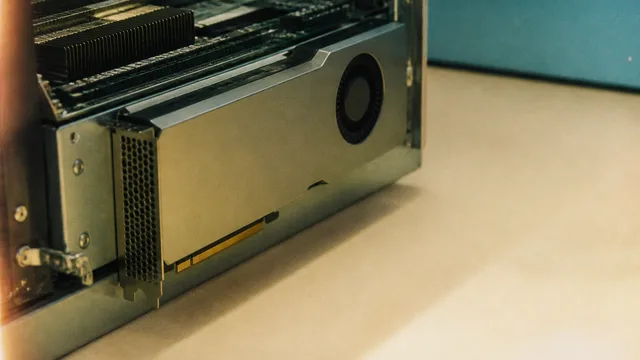
AMD Instinct MI350P: 144GB HBM3E in a PCIe GPU
AMD's Instinct MI350P brings 144GB of HBM3E and 3.6TB/s bandwidth to standard PCIe servers. Here's what it means for the mid-market AI infrastructure gap.

How Optimization Powers Modern AI and Engineering
From training ChatGPT to imaging black holes, optimization is the hidden engine behind modern AI and engineering. Steve Brunton's lecture explains how.