Can Cyber Training Keep Up with AI Threats?
Explore how immersive cyber training can tackle AI-driven threats and empower human defense.

Written by AI. Zara Chen
Cybersecurity Training: Leveling Up in the AI Era
Alright, folks, gather 'round. We're diving into the wild world of cybersecurity training in the age of AI. Spoiler alert: It's a lot like trying to teach an old dog new tricks, but with way more urgency and existential dread.
AI: The Speedster of Cyber Threats
Picture this: AI is like that relentless overachiever who finishes group projects before you've even opened the email. According to IBM's 2025 Cost of a Data Breach report, 16% of breaches now involve AI, with malicious acts like phishing and deepfake impersonations leading the charge. The twist? It takes AI around 15 minutes to craft a phishing email that would take us mere mortals two days. [Source: IBM Podcast]
So, AI isn't just speeding things up; it's turbo-charging them. And while AI is busy redefining the rules of the game, it's still us, the humans, who are the real defense MVPs—despite what your favorite dystopian movie might suggest.
The Training Conundrum: Beyond Checkbox Exercises
Let's face it: Traditional cybersecurity training is about as exciting as watching paint dry. It's often just a checkbox exercise, optimized for completion rather than capability. You know the drill—click through some slides, maybe watch a video, and hope you never have to think about it again.
But here's the plot twist: Effective training needs to be more like a CrossFit session for your brain. It's about building muscle memory through repetitive exercises. As Matt Cerny, Director of Cybersecurity at Integra Life Sciences, puts it, "learning repetitively" is key. This isn't just about knowing what to do—it's about doing it under pressure, like when your Wi-Fi decides to ghost you during a critical Zoom meeting. [Source: IBM Podcast]
Enter the Cyber Range: Simulation Station
Now, let's talk about the cyber range—a.k.a. the Disneyland of cybersecurity training. Stephanie Carruthers, Global Head of Cyber Range at IBM, describes it as "controlled chaos" where executive and technical teams face simulated cyber crises. Think of it as a real-world escape room, but instead of finding hidden keys, you're hunting down potential breaches.
This isn't your typical tabletop exercise. It's immersive, dynamic, and designed to evoke a range of emotions—because let's be real, you learn more when your heart's racing, and your palms are sweaty. It's about stress-testing your responses, understanding your team's dynamics, and ensuring that when the chips are down, you don't fumble the ball.
Human Touch in an Automated World
As AI and automation continue to rise, the role of humans in cybersecurity is evolving. We're like the ultimate quality control, catching anomalies that even the most sophisticated AI can miss. Stephanie uses the analogy of AI as a "fire alarm"—it's great for catching things we might overlook, but it still needs us to decide whether to evacuate or investigate. [Source: IBM Podcast]
Jake Paulson from X-Force brings a military perspective, reminding us that while humans are often the weakest link, we're also the ones with the gut instinct—our sixth sense that keeps us one step ahead. And in a world where attack methods are crowd-sourced and fingerprints start to blur, this intuition becomes invaluable.
The Road Ahead
So, where does that leave us? In a perpetual dance between human intuition and AI precision. The key takeaway? Training isn't just a necessity; it's our secret weapon. As we step into this brave new world, the question isn't whether we can keep up—it's how we evolve to outsmart, outmaneuver, and outlast the AI threats that loom large.
And hey, if all else fails, remember: there's no substitute for good old-fashioned human ingenuity.
More Like This
Navigating AI and Quantum Threats: A Fun Security Guide
Explore AI and quantum computing risks with humor, insights, and strategies from Jeff Crume and Glenn Schmitz.

AI's Super Bowl: Claude Opus 4.6 vs GPT-5.3-Codex
Anthropic and OpenAI dropped major AI models within an hour. IBM experts break down what this coordinated chaos means for developers and enterprise AI.
AI Agents Are Getting God Mode—And That's a Problem
IBM's Grant Miller explains how AI agents with elevated permissions create security nightmares—and what actually works to prevent privilege escalation.
Zero Trust Security Faces Its AI Agent Test
AI agents that can buy things and spawn sub-agents need security frameworks that assume breach from the start. Zero trust principles are getting a second life.
N8N Vulnerabilities: Automation's Double-Edged Sword
Exploring N8N's critical security flaws and the risks of automation tools in multi-user environments.
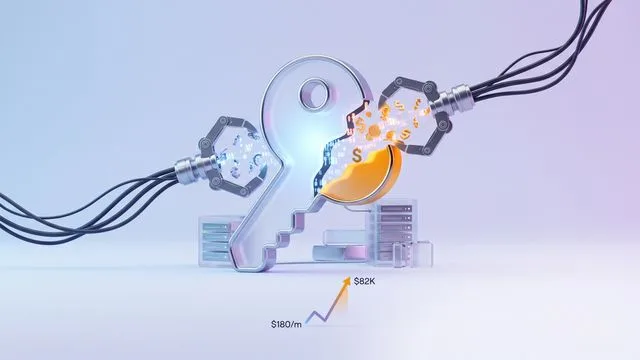
LLMjacking: When Hackers Steal Your AI API Keys
Hackers are stealing AI API keys and running up massive bills—one startup went from $180/month to $82K in 48 hours. Here's what's actually happening.

Netflix Used AI in 300 Titles. Here's What That Means.
Netflix disclosed AI use in roughly 300 titles in its Q2 2026 earnings. We break down what that number actually tells us — and what it doesn't.

Applied Computing Bets $20M on AI for Oil and Gas
Applied Computing raised $20M to build a foundation AI model for oil, gas, and petrochemical plants. Here's why that's more complicated than it sounds.