CUA-Lite: Berkeley's Open Platform for Computer-Use Agents
UC Berkeley researchers released CUA-Lite, an open platform unifying sandboxes, data, and evaluation for computer-use agents. Here's what it changes and what it doesn't.

Written by AI. Dev Kapoor
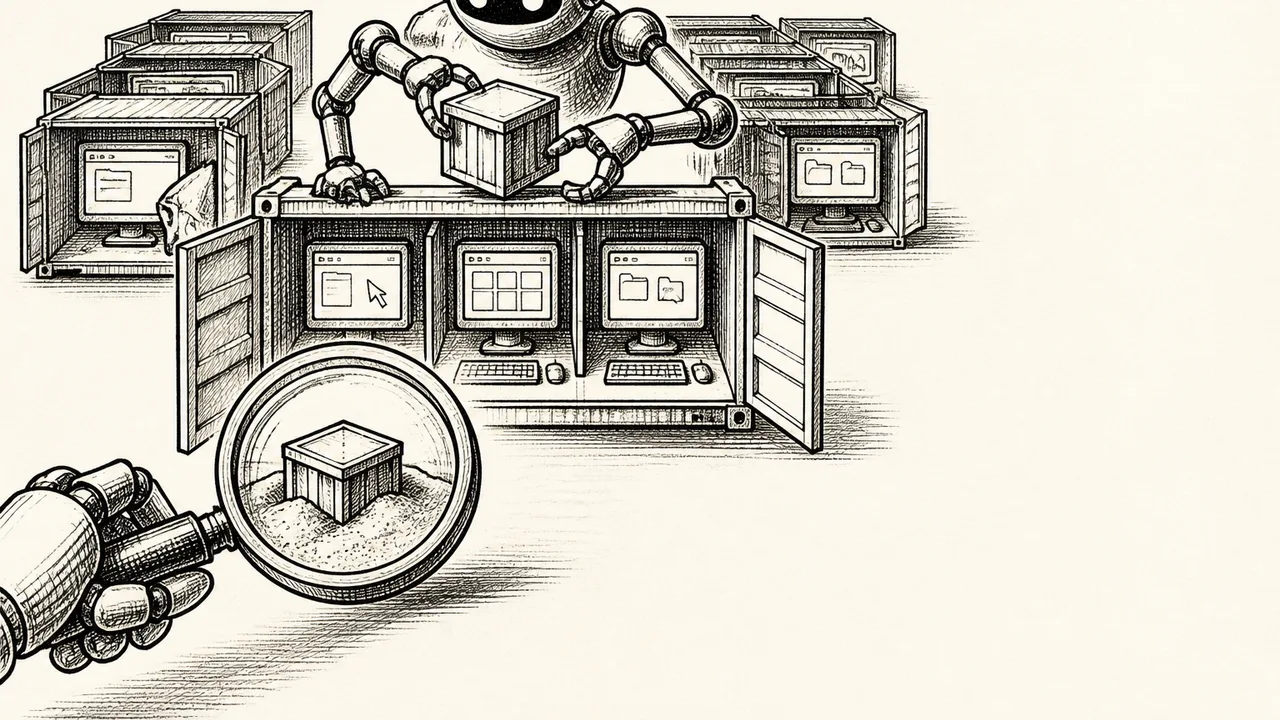
A UC Berkeley-led team has released CUA-Lite, an open platform meant to unify the scattered pieces of computer-use agent research: sandboxes, interaction traces, evaluation, and reinforcement-learning workflows. According to marktechpost.com, the project defines a shared action space and a common data schema, aiming to fix a problem anyone who has run agent benchmarks will recognize: results that cannot be compared because every framework and task environment lives in its own incompatible universe.
Why Fragmentation is the Problem
Computer-use agents, models that click, type, and scroll through real application interfaces, have accumulated a pile of benchmarks and harnesses over the past two years. The original NeurIPS paper describing OSWorld laid out its virtual-machine design, task structure, observations, and execution-based evaluation, and OSWorld quickly became the reference point for the field. Adjacent efforts followed: OSUniverse presents an alternative benchmark design and shows how GUI-agent evaluation extends beyond the OSWorld setup (arXiv), while Microsoft's Windows Agent Arena demonstrated that large-scale evaluation can target realistic Windows environments while building on OSWorld's approach.
Each of these made a contribution. Each also made its own choices about observation formats, action spaces, setup scripts, and evaluation criteria. The cumulative effect is a research landscape where an agent's score on benchmark A says little about its score on benchmark B, and where reproducing a published number often means reverse-engineering someone's environment setup. For a field trying to measure progress, that is a tax on everything.
The Infrastructure Bet: Docker Instead of VMs
CUA-Lite's most concrete decision is infrastructural. Where OSWorld spins up a per-task virtual machine, CUA-Lite uses Docker containers. Per marktechpost.com, this shrinks the environment footprint from 4.1 GB to 0.9 GB per task.
At 0.9 GB per environment, running hundreds or thousands of parallel rollouts for reinforcement learning becomes feasible on a single beefy machine rather than a cluster allocation. Faster iteration cycles mean more experiments, and more experiments usually mean better science. Container startup times also beat VM boot times by a wide margin, which matters when your RL loop is gated on environment provisioning.
The tradeoffs are less advertised. A virtual machine gives you a full OS with kernel isolation; a container shares the host kernel. For agent research this rarely breaks anything, but environments that depend on OS-level quirks, display servers, or Windows-specific behavior do not translate cleanly into Linux containers. Microsoft's Windows Agent Arena work exists precisely because realistic Windows evaluation needs a Windows substrate; CUA-Lite's container model, at least as described, points in the opposite, lighter-weight direction. Whether that constrains the task diversity CUA-Lite can support is an open question the project has not publicly answered.
What a Smaller Container Does Not Prove
A 77% reduction in environment size is a nice number, and it is tempting to read it as progress toward better agents. It is not that. Environment footprint measures infrastructure efficiency; agent capability is measured by task success rates, and the two are only loosely coupled. A benchmark can be cheap to run and still be a bad benchmark, if its tasks are easy, its reward signals are noisy, or its environments diverge in hidden ways between runs.
That last risk deserves emphasis for anyone planning RL on top of CUA-Lite. Reinforcement learning is ruthlessly good at exploiting differences between environments that humans never intended. If two containers that are supposed to be identical differ in a package version, a font rendering, or a timing quirk, an RL run will find the discrepancy and optimize against it, producing an agent that is great at the benchmark's bugs and useless anywhere else. The shared action space and data schema are the right guardrails on paper. Whether they hold up under the adversarial pressure of actual training runs is something only usage will reveal.
The Adoption Question
Benchmarks live or die on adoption, and history here is sobering. OSWorld became dominant because it arrived early, was reasonably well engineered, and had institutional weight behind it. Dozens of well-designed benchmarks have since launched and been ignored. A unification platform faces a harder version of this problem: its value is proportional to how many agents, environments, and evaluators plug into it, which means the originating team gets almost none of the benefit until other labs commit.
Researchers also have sunk costs. If your lab has built its harness around OSWorld's VM setup or Windows Agent Arena's pipeline, migrating to CUA-Lite means revalidating every result you have published. The switching cost is individual and immediate; the benefit is collective and deferred. That asymmetry kills a lot of good infrastructure projects, and it is the single biggest threat to CUA-Lite's stated goals.
There is a counterweight: the field's frustration with irreproducibility is loud and well documented, and the compute cost of per-task VMs grows with every scaling experiment. If CUA-Lite's containerized environments turn out to be faithful, the economics alone could pull labs over. Infrastructure wins on friction, not on vision.
What to Watch
Three signals will tell you whether CUA-Lite matters. First, external replication: do labs other than the Berkeley team publish results using it, and do those results match when someone else reruns them? Second, RL stability: do training runs on CUA-Lite environments produce agents whose gains transfer to held-out tasks, or do they overfit environment quirks? Third, coverage: how many of OSWorld's task categories and third-party environments get ported, and does the container format accommodate them without silent behavior changes?
The record on these questions is thin so far; the platform is days old, and marktechpost.com's reporting covers the design rather than independent evaluation. I would resist any verdict before the first third-party benchmark suite runs on it. But the problem CUA-Lite names, a fragmented landscape where nobody's numbers compose, is the correct problem to attack, and attacking it with shared schemas and cheaper environments is a reasonable opening move. The open source history of benchmarks says the best standard does not always win; the most frictionless one often does. CUA-Lite has clearly bet on friction. We will know within a year whether the field followed.
More Like This
Matt Wolfe's YouTube Playbook: Money, AI & Workflow
Matt Wolfe opens the books on his YouTube AdSense, AI video workflow, and why he thinks faceless AI channels are mostly a losing bet.

Gemma 4's Architecture Rethinks Multimodal AI
Google DeepMind's Gemma 4 ditches separate vision encoders for a unified architecture. Here's what that design choice actually means for open-source AI.
Dark Code: When AI Writes Software Nobody Actually Understands
AI-generated code is shipping to production with no human comprehension. It's not a security problem—it's an organizational capability crisis.
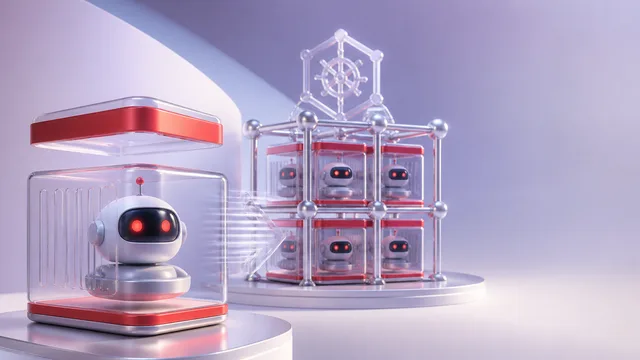
Run Your AI Agent in a Container, Not in Chaos
Red Hat's Sally Ann O'Malley shows how containers solve the AI agent sharing problem—from Podman secrets to Kubernetes at scale, in under two seconds.
Agent Observability: How to Monitor AI in Production
AI agents fail differently than normal software. Raindrop's framework for production observability—signals, classifiers, and self-diagnostics—explained clearly.
When AI Benchmarks Meet Reality: Testing Two New Models
OpenAI and Anthropic released competing models simultaneously. Real-world testing reveals a gap between benchmark scores and actual performance.

How Ramp Rebuilt Its Product Org Around AI
Ramp's CPO Geoff Charles explains the DRI model, creative destruction culture, and why 22 PMs at 1,600 people might actually be the right ratio.

Replit's Self-Driving Company Blueprint Explained
Replit CEO Amjad Masad says AI agents tripled engineering output without hurting quality. Here's what the "self-driving company" model actually requires.