Canadian Snowbirds Face Separate U.S. Entry and Goods Rules
Canadian snowbirds face a 30-day U.S. registration requirement and restrictions on some goods. Here is what travelers can check before and after crossing.

Written by AI. Tomas Reyes-Kim
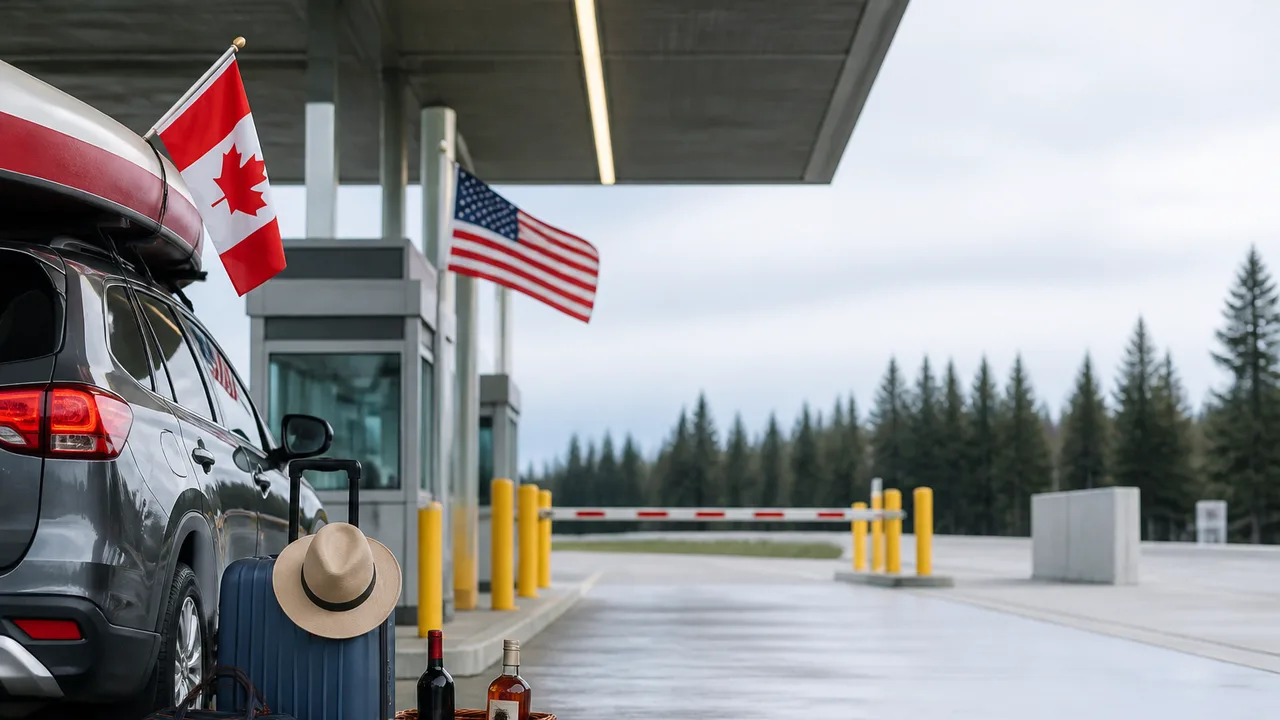
The Canadian Snowbird Association reminded travelers on October 8 to check U.S. registration requirements before a stay of 30 days or longer. A separate warning concerns Canadian-origin goods in the car. Those are two different jobs for a traveler planning a winter drive south: check the paperwork for the length of the visit, then check what is actually packed. Neither job can tell you how a conversation with a border officer will go.
The timing has made the warnings easy to lump together. Restrictions on certain Canadian-origin products took effect on September 29, 2026; the snowbird association’s registration reminder followed on October 8. The first concerned a new import restriction. The second reminded travelers about a registration requirement. A fresh reminder does not, by itself, mean every rule in it just changed. For someone budgeting a long trip, that timeline is more useful than treating both notices as one giant, vaguely ominous border alert.
The Stay-Length Check
The association says Canadian visitors staying in the United States for 30 days or longer must be registered. In many cases, a Form I-94 serves as proof. Travelers arriving by air typically receive an electronic I-94, while people arriving by land may not. That makes the first task after entry a check: did U.S. Customs and Border Protection issue an I-94, and what authorized stay does it show?
If an I-94 was issued, the traveler does not need to file Form G-325R for registration. If one was not issued and the stay will reach 30 days, its guidance points travelers to U.S. Citizenship and Immigration Services’ online Form G-325R process. It recommends carrying printed proof of registration. Travelers should check the I-94’s “Admit Until Date” rather than assuming that a plan to stay for a certain number of days is permission to do so.
NEXUS has its own wrinkle. The association says a Canadian traveler last admitted using NEXUS is considered registered for this purpose; simply owning a NEXUS membership does not qualify someone for that treatment. That is an easy detail to lose if a card lives permanently in your wallet and your memory of which lane you used does not. For a long stay, check the record of this entry, not the collection of travel cards you possess.
This is procedural guidance with legal and financial consequences, so check your individual registration status and authorized stay through the relevant U.S. government systems before relying on it. The association’s warning says failure to comply may bring penalties. It does not turn an I-94 printout into a promise of admission, and a registration document does not extend the date an officer authorized you to stay.
The Packing Check
The goods question starts at a different point in the trip: ideally before the cooler, trunk and RV cupboards are full. The association says the September 29 restrictions cover a range of Canadian-origin products, including many packaged alcoholic drinks. Its warning also identifies other affected categories, among them certain dairy-related goods, whey protein products, non-alcoholic beer and molasses. A product’s origin and the applicable restriction matter; “I bought it at home” is not a customs classification.
U.S. Customs and Border Protection says most Canadian-origin packaged alcoholic beverages cannot enter under the new ban. It also says travelers must declare all alcohol. Alcohol produced outside Canada that is exempt from the ban remains subject to the usual federal and state rules. So the question is not simply whether you have a bottle or whether you are willing to pay duty. A prohibited product cannot be made admissible by offering to pay at the booth.
The association advises travelers to inspect their vehicles and luggage and declare food, agricultural products and alcohol to U.S. officers. For a traveler trying to avoid replacing groceries halfway through a road trip, the low-cost move is to identify questionable items before departure and check the current rule for the product. The agency’s general warning did not spell out every product covered.
Compare the two checks and the planning logic becomes clearer. Stay registration follows the person and duration: a Canadian planning a long visit needs to establish whether this entry produced proof of registration. The import restriction follows the product and origin: a short-stay traveler can still have a prohibited item in the car. One task may require checking a record after entering by land; the other is most useful while packing. Your I-94 will not vouch for the wine in the trunk.
The possible consequences also need separate treatment. A banned item may be confiscated, while the registration warning concerns penalties for failing to meet a stay-related obligation. Trade lawyer John Boscariol told the Toronto Star, in remarks relayed by TheTravel, that a failure to declare something could bring greater scrutiny on later crossings. He described that future-scrutiny point as anecdotal, not an automatic official consequence. The immediate question for a traveler is concrete: what am I carrying, and have I declared it?
The Crossing You Cannot Schedule
A Canadian traveler described a third border problem after a summer trip to Forks, Washington. On returning through Peace Arch with his wife, he said Canadian officers asked about their U.S. trip, their plans around Vancouver and when they would go back to Calgary. The couple went to secondary inspection, where officers searched their car and checked them, the traveler told TheTravel. He said entering the United States had been calmer.
After he complained, the traveler said the Canada Border Services Agency told him the inspection followed procedure and sought to clarify their destination in light of their Alberta plate and Vancouver plans. It happened on the Canadian return leg, under a different agency from the one administering the U.S. entry and import rules.
That leaves a useful division of labor for trip planning. You can check the length of your intended stay, look for an I-94 after entry, review the authorized date, and inspect what you are carrying before you cross. You can also know where you stayed and where you are heading when you return. None of that buys a fast lane through every officer’s questions. It does mean the paperwork and the packed goods need not be the surprises.
More Like This

Delta's 2026 Profit Bet Rides on High Airfares Holding
Delta reaffirmed its 2026 earnings forecast despite fuel volatility—but the plan depends on keeping fares high for customers it says can afford it.

Accor and H World Link 19,000 Hotels in Loyalty Deal
Accor and H World are linking loyalty programs across 19,000 hotels and 430 million members. Here's what it means for travelers—and why execution is everything.